AfriqueUnie
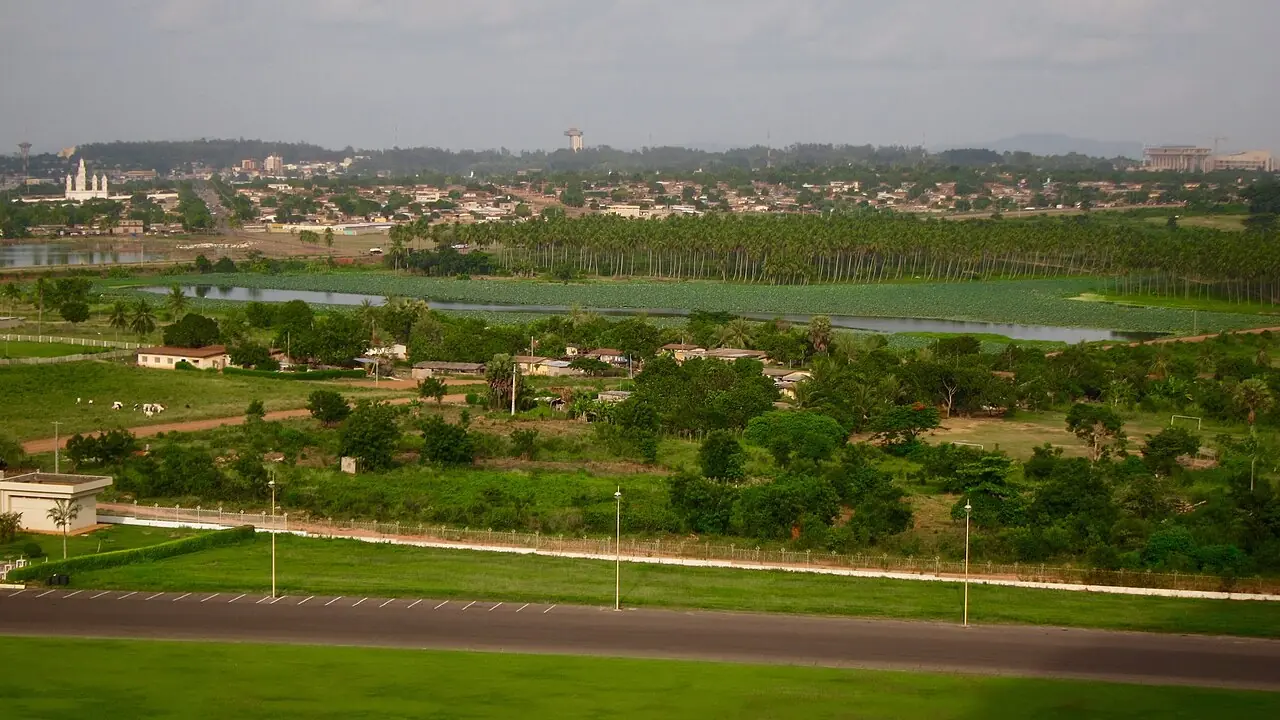 Photo: Mickaël T · CC BY 2.0
Published by Adama Doumbia, founder of Afrique Unie · updated 28 November 2026 · our method and sources
Why visit Yamoussoukro?
Yamoussoukro is a capital like no other. The home village of President Félix Houphouët-Boigny, it was named the country's political and administrative capital in 1983 and transformed according to a grandiose vision: wide, lit boulevards, monumental buildings, artificial lakes. The result is strange and fascinating, an airy, quiet city where four-lane avenues run through neighbourhoods that are still modest.
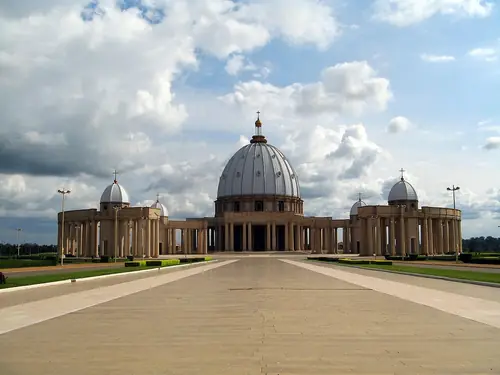
Its star attraction is the Basilica of Our Lady of Peace, whose dome rises out of the savannah and can be seen for miles around. But the city has other surprises in store: the lakes around the former presidential residence, home to crocodiles that are fed according to a tradition linked to the founder; the Félix Houphouët-Boigny Foundation for Peace Research, an immense building that looks like a palace; and the architecture of some of its higher-education institutions, such as the Polytechnic Institute.
Yamoussoukro also lies at the heart of Baoulé country, so you can discover the weaving villages and Akan traditions of the surrounding area. It is a logical stop between Abidjan and the north or west, about three hours from the economic capital by motorway.
Things to do in Yamoussoukro: 6 ideas
- 01Basilica of Our Lady of PeaceA guided tour of the building and its stained glass and, if it's open, the terrace beneath the dome.
- 02The crocodile lakeThe crocodiles in the lakes beside the former presidential palace can be watched from the bank, at a respectful distance.
- 03Houphouët-Boigny FoundationA monumental complex of marble and gardens dedicated to peace, worth seeing at least from the outside.
- 04The Great MosqueAn imposing building, to be visited discreetly and modestly dressed, outside prayer times.
- 05Baoulé villagesHead to the villages nearby to see cloth being woven and sculptors at work.
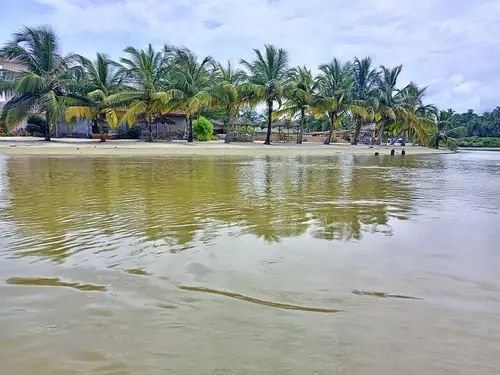
- 06Sunset over the lakesStroll along the artificial lakes late in the day, as the city lights up.
Yamoussoukro in one day
- 01MorningStart at opening time with the Basilica of Our Lady of Peace, before the heat: the guided tour takes in the nave, the stained-glass windows and, when open, the terrace beneath the dome. Wear clothes covering shoulders and knees, and check opening times, which change on Sundays and feast days.
- 02LunchHave yam foutou with palm-nut sauce, chicken kedjenou or attiéké with braised fish at a maquis. Keep CFA francs in cash for the meal and the taxi. Then take a break in the shade, as the city is spread out and has little shelter during the hottest hours.
- 03AfternoonTake a taxi to the Félix Houphouët-Boigny Foundation for Peace Research, a vast complex of marble and gardens worth seeing at least from outside, then to the crocodile lake beside the presidential palace, watching from the bank at a safe distance and without photographing the palace or its guards. Negotiate an hourly taxi fare.
- 04EveningStroll along the artificial lakes at sunset, when the wide boulevards light up, then dine on braised fish and alloco at a lively maquis. Return by taxi: avoid walking at night in poorly lit districts and, as France recommends, stay alert when leaving a maquis.
A second day in Yamoussoukro
- 01MorningGo back to see the basilica in the morning light, then admire the Grand Mosque, completed in 1968, asking on site whether a visit is possible, outside prayer times and in modest dress. Afterwards, pass by the Félix Houphouët-Boigny National Polytechnic Institute, whose monumental architecture reflects the first president's vision for his home town.
- 02LunchHead out by day with a driver to a Baoulé village on a main road: France advises staying on main roads and travelling with at least two vehicles. Once there, have a simple lunch of foutou or rice with peanut sauce, and try bangui, fresh palm wine, in moderation. Let your accommodation know your route.
- 03AfternoonWatch weavers assembling strips of Baoulé cloth on their looms and carvers at work. Greet the village chief or elders on arrival, as is customary, and ask before taking photos. Buy directly from the craftspeople, then return to Yamoussoukro well before dark.
- 04EveningFor your last evening, have grilled meat along one of the main roads or at a maquis in the Habitat district, with a ginger or bissap juice. If you are heading back to Abidjan, take a coach the next morning: France advises against travelling at night, and the northern motorway takes about three hours.
A little history
Yamoussoukro began as a Baoulé village called N'Gokro. In colonial times it took the name of Queen Yamousso, a relative of Félix Houphouët-Boigny, with “kro” meaning village in Baoulé. Born here in the early 20th century, the future president became its traditional chief and later led the country to independence in 1960. From the 1960s onwards he turned his home village into a showcase: roads, hotels, engineering schools and plantations transformed the small town into a new city.
In 1983 Yamoussoukro was named the political and administrative capital of Côte d'Ivoire, although most institutions and embassies stayed in Abidjan. The Basilica of Our Lady of Peace, built in the late 1980s, was consecrated by Pope John Paul II in 1990. Houphouët-Boigny died in 1993 and is buried in his home town. Today the capital keeps its oversized avenues and grand buildings, while remaining a manageable town of students and traders.
What to eat in Yamoussoukro
In the heart of Baoulé country, foutou, yam pounded at length in a mortar, is the staple, served with sauce graine (made from palm nuts), a light soup or a peanut sauce. You'll also find attiéké with grilled fish or chicken everywhere, alloco (fried plantain), garba and kedjenou, chicken slow-cooked in a sealed clay pot. Maquis, the open-air local eateries, and the evening grills along the main roads are the best places to try this food.
To drink, bissap and gnamakoudji, a fiery ginger juice, go with every meal. Bangui, fresh palm wine, is drunk in the surrounding villages, and koutoukou, a spirit distilled from it, is very strong: go easy. Stick to well-cooked dishes and bottled water.
Where to stay in Yamoussoukro
The city is spread out and sparsely built, so the question is less which district than how close you are to the sights. The big historic hotels, some of which have kept a retro charm, are near the centre and the lakes. Mid-sized hotels and apartment residences are scattered along the main roads, around the Habitat district and the road to the basilica. Staying near the basilica lets you see it at dawn and dusk.
Getting there and getting around
Yamoussoukro has no regular commercial flights: you arrive at Abidjan's Félix Houphouët-Boigny International Airport (code ABJ), about 240 km to the south-east. The northern motorway links the two cities in around three hours; air-conditioned coaches leave Abidjan's bus stations regularly, or you can hire a car with a driver.
In town, taxis are the easiest way to get between sights; agree the fare before getting in or negotiate an hourly rate. The currency is the West African CFA franc, pegged to the euro: there are a few ATMs in the centre, but cash is essential in maquis and taxis.
The French authorities place Yamoussoukro in their heightened-vigilance zone and strongly advise against the border areas with Mali and Burkina Faso in the north; the UK Foreign Office advises against all travel within 40 km of the borders with Burkina Faso and Mali, to the northern Zanzan and Savanes provinces and to Comoé National Park. The best time to go is the dry season, from November to March.
See places to stay in Yamoussoukro
Frequently asked questions
How long do you need in Yamoussoukro?
One day is enough for the basilica, the crocodile lake and the Houphouët-Boigny Foundation. A night there lets you see the basilica in the morning light and add a visit to a nearby Baoulé village.
How do you get from Abidjan to Yamoussoukro?
By the northern motorway, in about three hours. Coach companies leave Abidjan's bus stations several times a day; a car with a driver gives you more flexibility to string the sights together. There are no scheduled flights between the two cities.
When is the best time to visit Yamoussoukro?
The dry season, from November to March, is the most pleasant, although the harmattan sometimes hazes the sky in December and January. Rain is more frequent from April to July, then again in September and October.
Is Yamoussoukro safe?
Yamoussoukro is a quiet city, placed in the heightened-vigilance zone by the French authorities, like most of the country. Avoid walking at night in poorly lit areas, keep away from gatherings and check your government's travel advice before you go, especially if you are heading further north.
What is there to do in Yamoussoukro in the evening?
Enjoy sunset over the artificial lakes, when the illuminated avenues give the city its capital-city air, then dine at a maquis on braised fish, alloco or kedjenou. The atmosphere is far calmer than in Abidjan. Get around by taxi and stay alert when leaving maquis late at night.
How do I visit the Basilica of Our Lady of Peace?
With the guided tour offered on site, which covers the nave, the stained-glass windows and, on some days, the terrace beneath the dome. Come in the morning, before the heat, wearing clothes that cover shoulders and knees. Opening times change on Sundays and feast days, so check with your accommodation the day before.
 Côte d'Ivoire