 AfriqueUnie
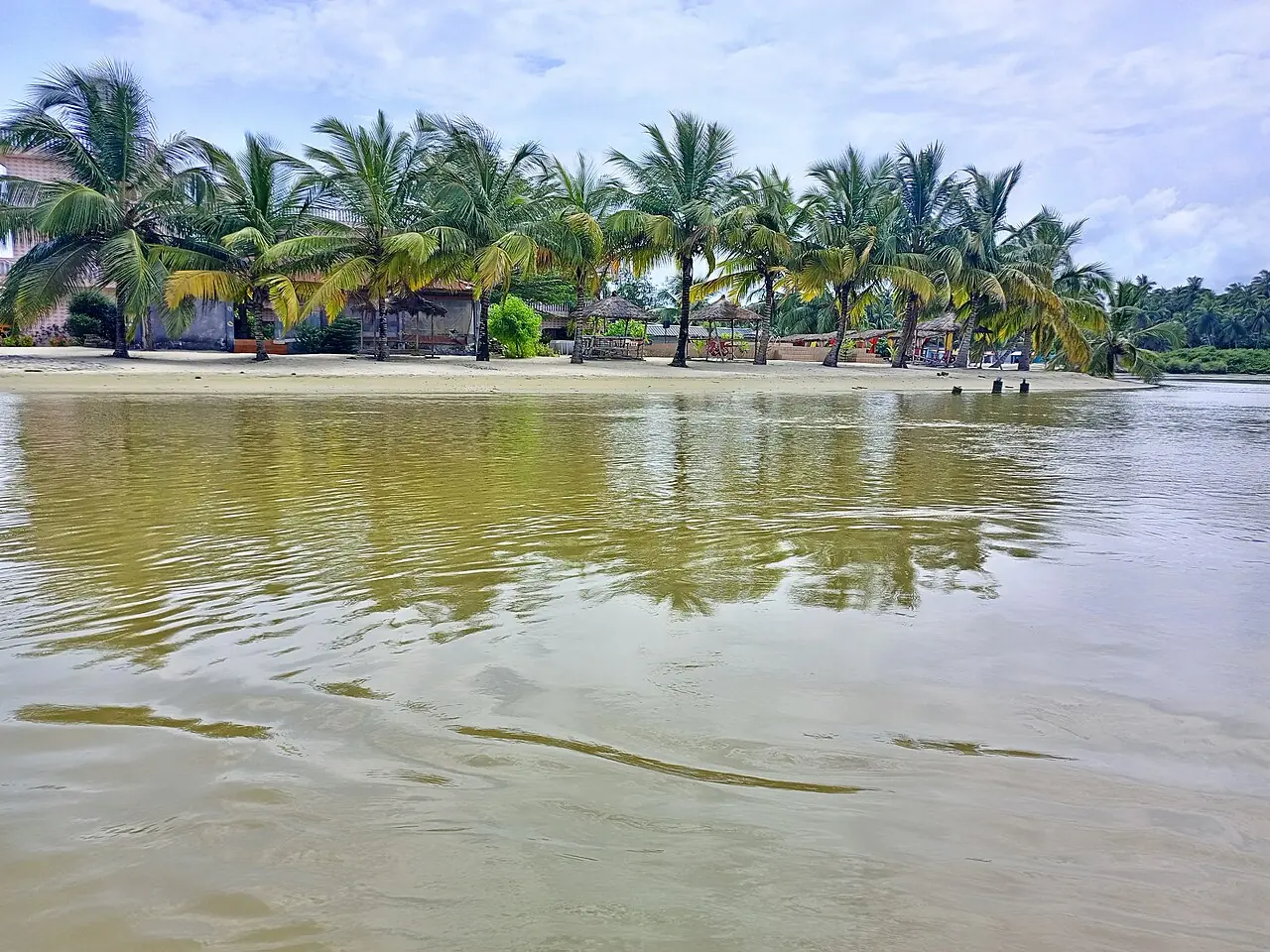 Photo: Dadrik · CC BY-SA 4.0
Published by Adama Doumbia, founder of Afrique Unie · updated 28 November 2026 · our method and sources
- Days 1-2
Abidjan, between the Plateau and the lagoon
Get a feel for Abidjan in the Plateau, its business district of glass towers on the edge of the Ébrié Lagoon, and at St Paul's Cathedral, with its daring architecture. Then cross over to Treichville and its large market, or to Adjamé for the bustle of the bus stations. The next day, walk in Banco National Park, a tropical forest preserved in the middle of the city, then visit the Museum of Civilisations of Côte d'Ivoire. In the evening, Cocody and the Riviera are full of restaurants and maquis, simple local eateries serving grilled fish with attiéké. To get around, ride-hailing apps and the orange taxis are easier than buses.
- Day 3
Grand-Bassam, the first capital
About an hour from Abidjan, depending on traffic, Grand-Bassam was the colony's first capital. Its UNESCO-listed Quartier France lines up old trading houses between lagoon and ocean, some restored, others overgrown, which is a large part of their photographic charm. Visit the National Costume Museum, housed in the former governor's palace, and the ceramics centre, then browse the craft workshops along the road. In the evening, have grilled fish facing the sea. Be careful: the currents along this coast are very dangerous, and swimming in the ocean is best avoided except on supervised beaches.
- Days 4-5
Assinie, between lagoon and ocean
An hour's drive east brings you to Assinie, a long spit of sand wedged between the Aby Lagoon and the Atlantic. It is the favourite weekend escape for Abidjan residents: come midweek to enjoy the calm. On the lagoon side, the water is flat and perfect for kayaking, paddleboarding and pirogue trips to the islands and fishing villages. On the ocean side, the rollers are superb but the currents strong: only swim where it is permitted. Spend these two days resting, over a lunch of lobster or charcoal-grilled fish, and visit Assinie-Mafia and its village. It is the ideal stop before the long road inland.
- Day 6
Yamoussoukro and its basilica
Head back towards Abidjan, then take the northern motorway: allow about four hours from Assinie to Yamoussoukro, the political capital and birthplace of President Félix Houphouët-Boigny. The Basilica of Our Lady of Peace, inspired by St Peter's in Rome, is one of the largest Christian buildings in the world: the guided tour shows off its immense stained-glass windows and, when open, takes you up to the base of the dome. Drive around the broad avenues and the lake beside the former presidential residence, home to sacred crocodiles. The town is quiet in the evening: make the most of it to rest before heading west.
- Days 7-9
Man and the mountain region
The road to Man, via Daloa or Bouaflé, takes most of the day: allow five to six hours. The landscape changes as the savannah gives way to forested hills and cocoa and coffee plantations. Over the following days, hike to the foot of the Dent de Man, a peak with a distinctive profile, with a local guide, then visit the Man waterfall and the sacred monkey forest of Gbêpleu, home to tame mona monkeys. The region is the land of the Dan and Yacouba peoples, known for their masks and dances, including those of the stilt dancers. The famous liana bridges lie further west, near the Liberian border: ask locally before going.
- Day 10
Back to Abidjan
The return to Abidjan is the main challenge of the trip: by road it takes a long day, eight to nine hours, leaving very early so as to arrive before dark. Depending on the season, the national airline also runs domestic flights between Man and Abidjan, which are far more comfortable: check the schedule when booking and leave a margin before your international flight. If your flight home leaves late, keep an hour or two for the market in Cocody or Treichville, for some wax-print fabric or a last plate of alloco, fried plantain.
Getting around
The most comfortable option is to hire a car with a driver for the whole trip: driving in Abidjan is intense and police checkpoints are frequent. The northern motorway is good as far as Yamoussoukro; beyond that, the roads to Man are paved but sometimes in poor condition. Do not drive at night. On a tight budget, coach companies link Abidjan with Yamoussoukro and Man. The whole border area with Mali and Burkina Faso, in the north, is formally advised against by France: this route stays in the south and centre-west, but check your government's official travel advice before you leave.
When to do this trip
The long dry season, from November to March, is the best time: roads are passable and the heat bearable, although the harmattan sometimes hazes the sky from December to February. The long rainy season, from April to July, brings heavy downpours to Abidjan and the coast, and a short rainy season returns in October and November. Around Man, the altitude makes nights cooler all year round.
The travel notebook
The itinerary, practical information (entry, health, money, emergencies) and the checklist in a few pages, to print or keep offline on your phone.
Variations
- In 7 days: drop Man and do the loop of Abidjan, Grand-Bassam, Assinie and Yamoussoukro, returning to Abidjan.
- In 14 days: add the west coast, from Sassandra to San-Pédro, with its beaches and fishing villages, reaching the region by air or by road.
- Beach version: spend five days between Grand-Bassam and Assinie and make a day trip to Yamoussoukro with a driver.