AfriqueUnie
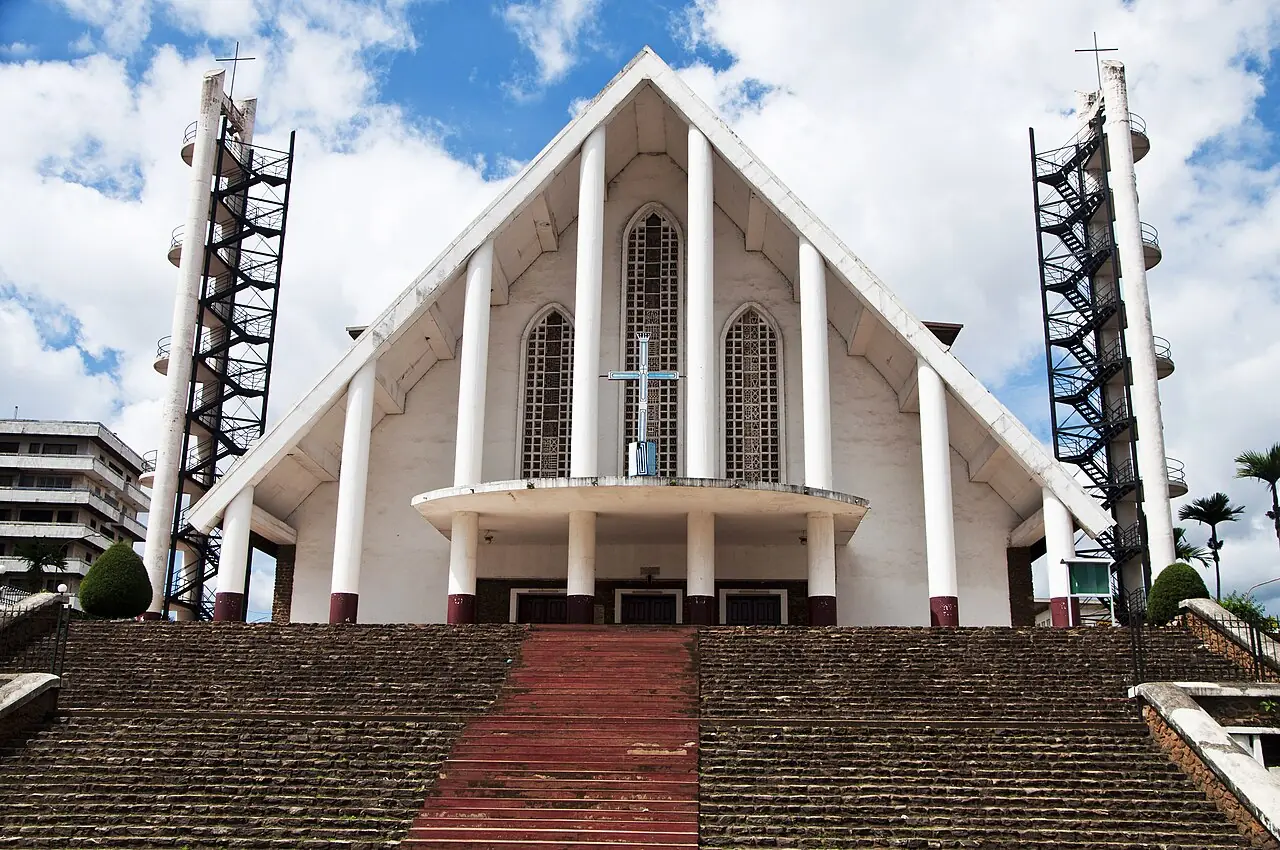 Photo: Z. NGNOGUE · CC BY-SA 3.0
Published by Adama Doumbia, founder of Afrique Unie · updated 28 November 2026 · our method and sources
Why visit Yaoundé?
Cameroon's political capital, Yaoundé spreads across a series of green hills that have earned it the nickname “city of seven hills”. Its climate is milder than Douala's, and its more administrative pace gives way to lively neighbourhood life, between ministries, universities and markets.
The city is best seen from above: Mount Fébé, to the north, offers a panoramic view and is home to the Benedictine Museum of Cameroonian art, renowned for its collections. In the centre, the National Museum, housed in the former presidential palace, traces the country's history and cultural diversity. The Reunification Monument, an imposing concrete spiral, commemorates the union of French- and English-speaking Cameroon.
Yaoundé is also the home of bikutsi, a frenzied rhythm born among the Beti, and of a joyful nightlife, particularly in the Bastos and Mvog-Mbi districts. Mfoundi market, one of the biggest in the capital, sums up the country's agricultural wealth.
Things to do in Yaoundé: 6 ideas
- 01Climb Mount FébéEnjoy the view over the city and visit the museum of Cameroonian art, rich in masks and sculptures.
- 02Visit the National MuseumExplore the collections, housed in the former presidential palace, devoted to the country's history and cultures.
- 03Dive into Mfoundi marketRoam the market's alleys to discover fruit, vegetables, spices and produce from every region.
- 04Meet the primates of Mvog-BetsiVisit the conservation centre that cares for rescued primates, including chimpanzees and gorillas.
- 05Admire the Reunification MonumentStop by this symbolic monument, which tells the country's singular story.
- 06Go out in BastosIn the evening, discover the restaurants and bars of this diplomatic district, then dance to bikutsi.
Yaoundé in one day
- 01MorningStart at the National Museum, housed in the former presidential palace, for an overview of Cameroon's history and cultures. Then take a booked taxi or a car with driver to the Reunification Monument, a concrete spiral celebrating the union of French-speaking and English-speaking Cameroon, keeping your bag and phone out of sight.
- 02LunchHave ndolé, bitter leaves stewed with peanuts and served with plantain or cassava sticks, or poulet DG at a small restaurant in the centre. Wash it down with a cold foléré, hibiscus juice, or ginger juice.
- 03AfternoonHead up Mont Fébé for the view over the seven hills, then visit the Benedictine Museum, with over four hundred masks, stools and statues. It only opens on certain afternoons, usually Thursday, Saturday and Sunday, so check the times before you go.
- 04EveningHave dinner in Bastos, the diplomatic district, then return with a booked driver: the French foreign ministry strongly advises against taxis after dark, especially alone, as attacks in taxis are common. Carry only what you need.
A second day in Yaoundé
- 01MorningVisit Mfoundi market early, one of the city's largest, with someone who knows it, as French authorities advise for popular markets. Leave handbags and jewellery at the hotel and keep just a few notes in your pocket.
- 02LunchHave okok, a speciality of the Centre region made with forest leaves, or grilled fish at a braiserie in Essos. Before the market, you may already have tried the beignets-haricots, bean fritters, and porridge sold on street corners in the morning.
- 03AfternoonVisit the rescued chimpanzees and gorillas at the Mvog-Betsi primate centre, then go to the Basilica of Mary Queen of the Apostles in Mvolyé, at the southern edge of the city, for its Henri Guérin stained glass and its 3.5-metre carved Black Madonna.
- 04EveningEnd with a bikutsi night in Mvog-Mbi or Essos, ideally with Cameroonian friends who know the venues. Arrange your ride home in advance with a trusted driver and never take a taxi alone late at night.
A little history
Yaoundé grew up in Ewondo country, home to one of the Beti peoples of the central forest. In 1889, German explorers founded a military and trading post called Jaunde on these wooded hills far from the coast. After the First World War, the eastern part of German Kamerun came under French administration, which made Yaoundé its capital in the early 1920s in place of Douala, considered too exposed and too humid.
French-administered Cameroon became independent on 1 January 1960 and Yaoundé remained the capital of the new state, led by Ahmadou Ahidjo. On 1 October 1961, the British-administered Southern Cameroons joined the country to form a federal republic: this reunification is what the spiral monument in the city centre celebrates. In 1972, the federation gave way to a unitary state, still governed from Yaoundé.
A city of civil servants, students and diplomats, Yaoundé has grown enormously since independence and is now home to several million people. Douala remains the economic capital, but Yaoundé has the presidency, the ministries, the major universities and a good share of the country's cultural life.
What to eat in Yaoundé
Cameroonian food is among the most varied in Central Africa. Try ndolé, bitter leaves slow-cooked with peanuts and served with plantain or cassava sticks, okok, a speciality of the Centre region made with forest leaves, poulet DG with plantain, and eru from the South-West. In the evening, grilled fish and soya, spicy grilled beef skewers, are sold at street grills.
To drink, foléré juice, made from hibiscus flowers, and ginger juice go with meals, while palm wine is more often found in the surrounding villages. For eating out, the small restaurants and grill bars of Essos, Mvog-Mbi or Bastos serve simple, hearty food; early in the morning, don't miss beignets with beans, served with porridge and sold on street corners. Pick busy places and well-cooked dishes.
Where to stay in Yaoundé
Bastos, a residential and diplomatic district, is the safest and most comfortable, with hotels, restaurants and cafés. The city centre, around the ministries and the municipal lake, is convenient but quiet in the evening. The Mvog-Mbi and Essos districts are more working-class and lively, with a more authentic nightlife but little accommodation suited to travellers.
Getting there and getting around
Yaoundé-Nsimalen International Airport (code NSI) lies south of the city, a good twenty-odd kilometres from the centre. The drive takes around forty-five minutes, longer at rush hour: the easiest option is to ask your hotel to arrange the transfer, especially if you land at night. From Douala, which often has more international flights, Yaoundé is a few hours away by train or bus.
In town, the yellow taxis are shared: you flag one down by the roadside, call out your destination and fare, and the driver picks up other passengers along the way. For more comfort, you can pay for the whole car, known as a “dépôt”, or hire a taxi with a driver for the day. Motorbike taxis are everywhere but riskier. Always agree on the fare before getting in and give a well-known landmark rather than an address.
The currency is the Central African CFA franc (XAF), which is not accepted in countries using the West African CFA franc. ATMs are plentiful in the centre and in Bastos, but cash is essential for everyday spending: carry small notes for taxis and markets.
Frequently asked questions
How many days do you need in Yaoundé?
Two to three days are enough for Mount Fébé and its museum, the National Museum, the Reunification Monument, Mfoundi market and the Mvog-Betsi primate centre. Yaoundé then combines easily with Douala or the beaches of Kribi.
When is the best time to visit Yaoundé?
The long dry season, from December to February, is the most pleasant time to get around. Yaoundé has two rainy seasons, in spring and autumn, separated by a shorter, drier spell in July and August. Thanks to the altitude, temperatures stay mild all year round.
Do you need a visa for Yaoundé?
Yes. You must apply for an e-visa online before you leave: visas are not issued on arrival at the airport. A yellow fever vaccination certificate is required and malaria prevention is recommended. Check the latest rules on your government's travel advice website before booking.
How do you get from Douala to Yaoundé?
The two cities are linked by a very busy road, served by many bus companies, and by a railway line. Allow several hours depending on traffic. Choose well-known bus companies and travel by day.
Is Yaoundé safe for tourists?
Yaoundé is fairly calm for a capital, but petty crime does happen: avoid walking alone at night, carry few valuables and keep away from gatherings. Some regions of the country, the North, the Far North, the North-West and the South-West, are subject to specific travel advice. Read your government's travel advice before you go.
What is there to do in Yaoundé in the evening?
Have dinner in Bastos, then listen to bikutsi or live music in Mvog-Mbi or Essos, ideally with locals. Book a driver to get around: the French foreign ministry strongly advises against taxis after dark, especially for anyone alone.
Can you explore Yaoundé on foot?
Only partly: the city spreads over hills and the sights are far apart. The centre, around the municipal lake and the ministries, is walkable by day; for Mont Fébé, Mvolyé or Mvog-Betsi, take a booked taxi or a car with driver.
 Cameroon