 AfriqueUnie
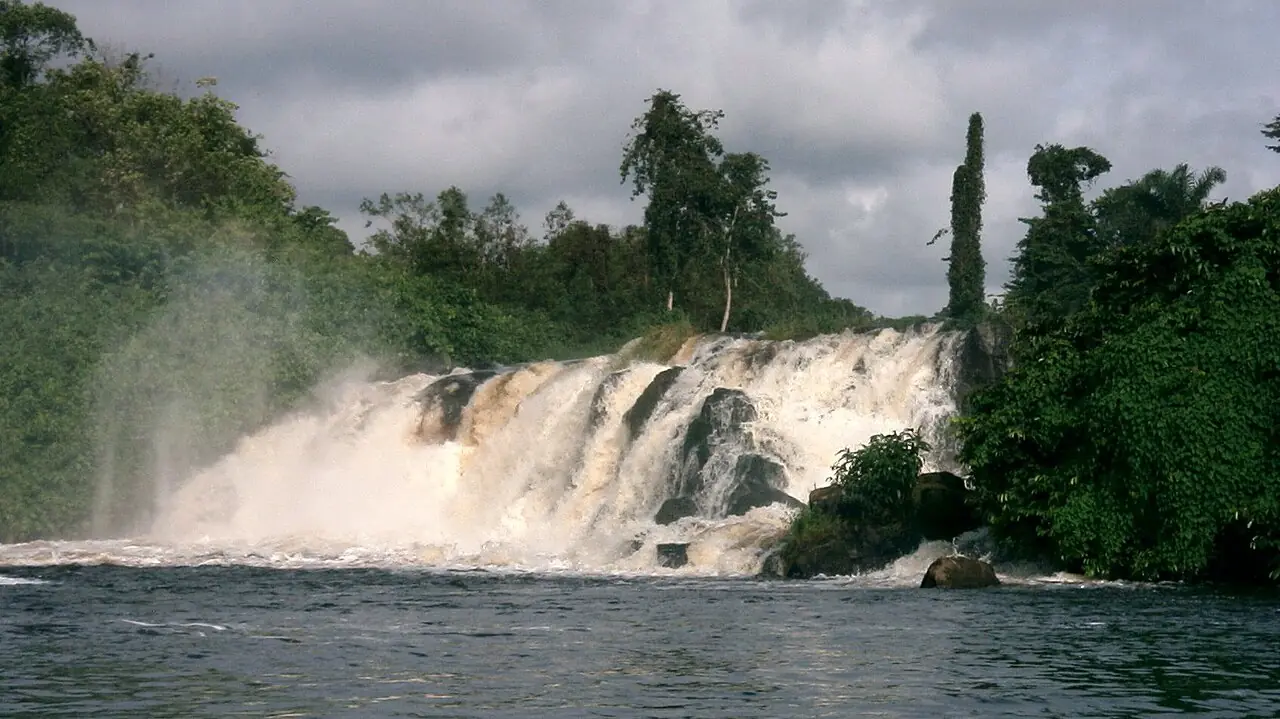 Photo: Auteur inconnu · Public domain
Published by Adama Doumbia, founder of Afrique Unie · updated 28 November 2026 · our method and sources
- Days 1-2
Douala, the gateway to the country
You land in Douala, the country's economic capital and a major port in Central Africa. On the first day, take it easy: the humid heat comes as a surprise. The next day, explore the administrative district of Bonanjo, its German colonial buildings and the Pagoda, the former residence of the Bell royal family, with its striking architecture. Stop at the Cathedral of Saints Peter and Paul in the Akwa district, then head towards the banks of the Wouri, the estuary that gave the country its name. The craft markets gather masks, carvings and fabrics from every region. Get around by car with a driver rather than by shared taxi, carry few valuables and avoid walking the streets after dark.
- Day 3
Via Edéa to the Kribi coast
Set off early for Kribi, about 180 kilometres to the south. Allow at least three hours on the road, often more because of traffic jams leaving Douala and the logging trucks, which must be overtaken with great care. The road passes through Edéa, a town on the Sanaga, the country's longest river, which you cross on a long bridge. In Kribi, settle in near the beach, walk to the fishing port to watch the pirogues come in late in the afternoon, and try the grilled fish or prawns. Plan your journeys to arrive before nightfall: official advice strongly warns against driving at night on all of the country's roads.
- Days 4-5
The Lobé Falls and the beaches
About seven kilometres south of Kribi, the Lobé River flows straight into the Atlantic Ocean over a series of cascades, a phenomenon that is very rare in the world. Come in the morning, when the light is soft, then travel up the river by pirogue with a boatman from the village, through forest and mangroves. On the second day, choose a quieter beach, towards Grand Batanga to the south or Londji to the north, known for its oysters and sheltered bay. Currents can be strong: only swim where local people do, and never alone. In the evening, go back to the Kribi fish market, where you choose your catch before it is grilled.
- Day 6
Ebodjé and the sea turtles
About thirty kilometres further south, the fishing village of Ebodjé is known for its community sea turtle protection programme, which you can discover with guides from the village. Roughly from November to February, leatherback and olive ridley turtles come ashore to nest on these beaches: sightings take place at night, with a guide, without white torches or flash photography. Outside this season, the day is still pleasant for the beach and the coastal forest. Stay overnight in simple local lodgings or return to Kribi before dark. Do not push further south towards Campo and the border: border areas always call for extra caution and up-to-date information.
- Day 7
Back inland to Yaoundé
Head back to Edéa, then take the national highway linking Douala and Yaoundé. The whole journey from Kribi takes around five hours, longer with roadworks or heavy traffic. This road is considered one of the most dangerous in the country: leave early, with an experienced driver, and take breaks. After the Sanaga, the forest gives way to the green hills of the Centre region. Yaoundé, the capital, spreads over several hills, earning it the nickname of the city of seven hills. In the evening, keep to a dinner close to where you are staying: it will have been a long day, and moving around at night is not advised.
- Days 8-10
Yaoundé, its hills and departure
Start with the National Museum, housed in the former presidential palace, for an overview of the country's history and cultures. Then go up Mount Fébé for a view over the whole city, and stop at the Reunification Monument. The next day, visit the Mary Queen of the Apostles Basilica in Mvolyé, then spend the afternoon at the craft market. If you like wildlife, half a day at the Mefou primate sanctuary, about an hour south of the city, lets you see rescued chimpanzees and gorillas. On the last day, head to Yaoundé-Nsimalen International Airport, around thirty kilometres from the centre, allowing plenty of time.
Getting around
The safest option is to hire a car with a driver for the whole trip, from Douala to Yaoundé: driving is demanding, the roads are busy with trucks and night driving is strongly advised against. Official advice recommends avoiding intercity public transport, which is often involved in accidents. In town, use a trusted driver rather than shared taxis. If your return flight leaves from Douala, allow a day on the road from Yaoundé, or take a domestic flight depending on current routes.
When to do this trip
The dry season, from November to February, is the best time: passable roads, clearer skies and pleasant beaches in Kribi. It also coincides with sea turtle nesting around Ebodjé. From March to October, rain is frequent and sometimes very heavy on the coast, especially in Douala, one of the wettest cities on the continent. The trip remains possible, but journeys take longer and the sea is rougher. If you can, avoid election periods, which can bring tensions.
The travel notebook
The itinerary, practical information (entry, health, money, emergencies) and the checklist in a few pages, to print or keep offline on your phone.
Variations
- In 7 days: drop Ebodjé and one day in Yaoundé, and do a Douala, Kribi, Yaoundé loop with a flight home from Yaoundé.
- In 12 days: add two more relaxing days on the Kribi coast, or a group excursion to the Ekom Falls, between Nkongsamba and Bafang, leaving before nightfall.
- Mount Cameroon, Bafut Palace, the Foumban Royal Palace and Waza National Park are not part of this trip: Mount Cameroon, Bafut and Waza lie in areas where travel is advised against; the Foumban palace, in the West Region, is not itself in such an area, but France advises against all but essential travel to several parts of that region. These sites may be added if official advice changes.