AfriqueUnie
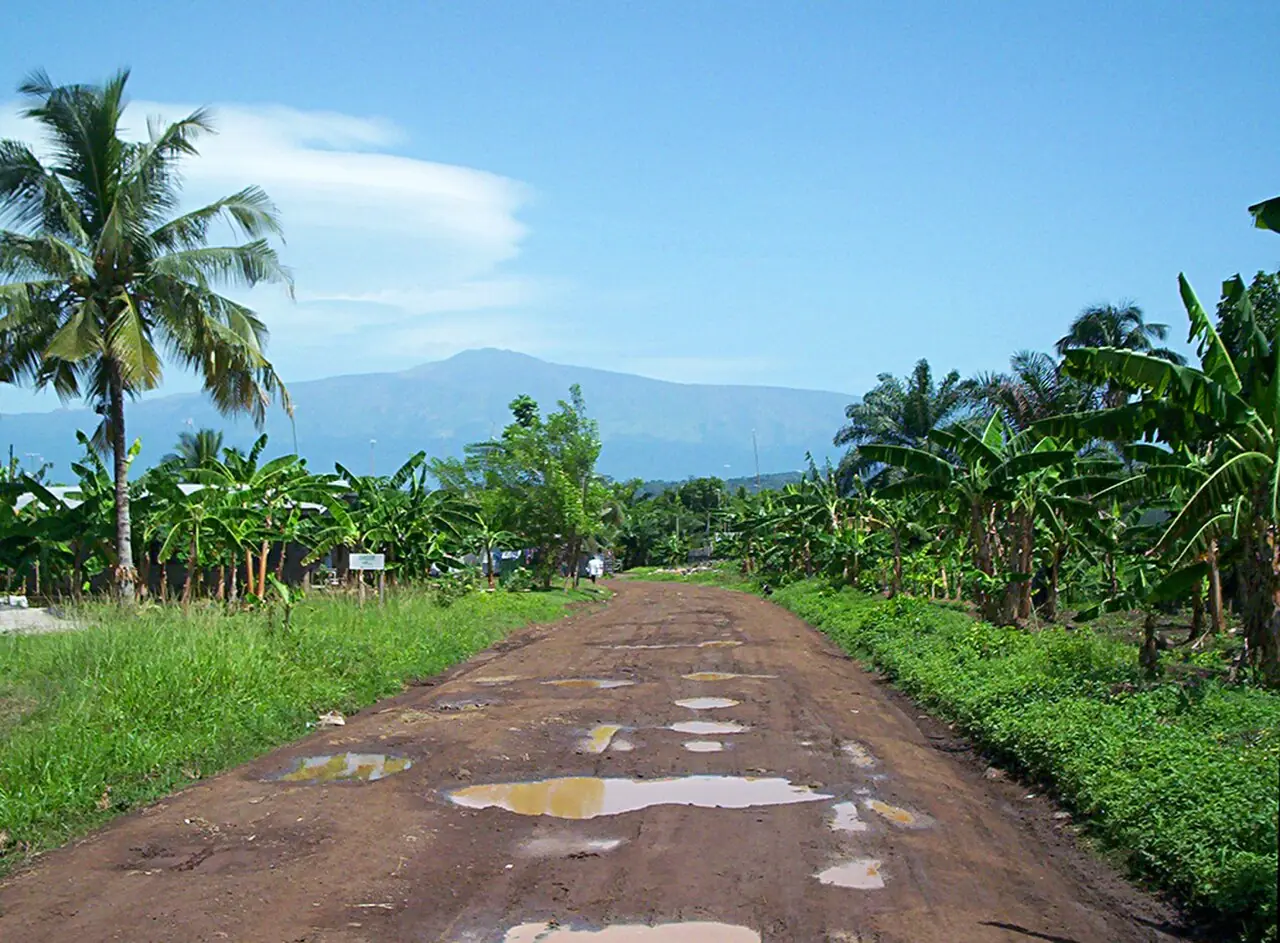 Photo: Amcaja · CC BY-SA 3.0
Published by Adama Doumbia, founder of Afrique Unie · updated 28 November 2026 · our method and sources
Daily budget
These are rough figures per person per day, excluding the international flight, visa and vaccines. They cover accommodation (two people sharing a room), meals, local transport and a few visits.
On a tight budget, allow roughly €40 to €65, staying in small hotels or hostels, eating at street stalls (tournedos) and neighbourhood restaurants and travelling by coach or shared taxi. For a comfortable trip, allow about €100 to €170, with a good hotel, restaurants and a car with driver for some journeys. At the top end, allow €250 or more, in the large hotels of Douala and Yaoundé or on a private tour with a four-wheel drive.
Douala and Yaoundé are the most expensive cities, especially for accommodation. Kribi, Limbe or the West region are gentler on the budget.
What is expensive and what costs next to nothing
- Visa: Often the first expense of the trip: the amounts quoted are well over €100.
- Accommodation: The biggest cost once you are there, particularly in Douala and Yaoundé, where hotels of international standard are expensive.
- Local meals: A plate of ndolé, grilled fish or poulet DG at a neighbourhood restaurant costs a few euros. Restaurants in the business districts charge European prices.
- Transport: Coaches between the main cities and shared taxis cost little. Distances are long: a car with driver or a domestic flight soon pushes up the bill.
- Parks and excursions: Entry fees are moderate, but a guide and a vehicle are generally needed.
Money: Central African CFA francs, cash and mobile payment
The currency is the Central African CFA franc (XAF), pegged to the euro at a fixed rate: €1 is worth 655.957 CFA francs. Note that despite the same value, it is not used in West Africa (the XOF zone), and vice versa. Euros are easy to change in the main cities.
Cash machines are plentiful in Douala and Yaoundé and present in the main towns, scarcer elsewhere. Visa cards are generally the most widely accepted. Cards are mainly used in large hotels, supermarkets and some restaurants in the two big cities. Everywhere else you pay in cash: keep small notes.
Mobile payment is very widespread, with MTN Mobile Money and Orange Money. You need a local SIM card, registered on presentation of your passport. For a short stay, cash is enough.
Tipping is not compulsory. A small amount for a guide or a driver is appreciated.
Visa and passport
Information checked in November 2026. These rules can change: read the official sources again before you travel.
A visa is compulsory for French nationals, as for other European Union citizens and for British, Swiss and Canadian nationals. According to the French foreign ministry, applications are made online, on the official platform evisacam.cm. A payment confirmation is not a visa: wait for approval before buying non-refundable tickets, and follow the portal's instructions on how the visa is issued.
Your passport must be valid for at least six months. Have a return ticket, proof of accommodation and your yellow fever vaccination certificate ready: they are asked for during the application.
The official fee is hard to confirm. The Cameroon High Commission in London gives €153 for a short-stay visa, non-refundable if the application is refused. A French agency quotes about €210 including its service fee. Check the amount on evisacam.cm, and beware of sites whose names imitate the official portal.
Health and vaccinations
The yellow fever vaccine is compulsory for entry to Cameroon. Your international vaccination certificate is required for the visa and may be checked on arrival. The vaccine must be given at least ten days before departure, at an approved yellow fever vaccination centre.
Malaria is present all year throughout the country. Prevention combines protection against mosquito bites and, in most cases, preventive medication: only a doctor can prescribe it. If you develop a fever during your stay or after you return, seek medical advice straight away.
Check your routine vaccines too. Hepatitis A, typhoid and meningitis (in the north, in the dry season) are often advised. Insurance covering treatment and repatriation is essential.
Before you go: the checklist
- Passport: Valid for at least six months.
- E-visa: Apply on evisacam.cm several weeks before you leave, with a return ticket and an accommodation booking.
- Yellow fever: International vaccination certificate, with the vaccine given at least ten days beforehand.
- Malaria: A medical appointment a few weeks before departure.
- Official sources: Read the Cameroon page on gov.uk/foreign-travel-advice and the Cameroun page of « Conseils aux voyageurs » on diplomatie.gouv.fr. The Far North, the North-West and South-West regions and several border areas are advised against: read the safety section.
- Insurance: Medical costs and repatriation, with emergency numbers noted separately.