AfriqueUnie
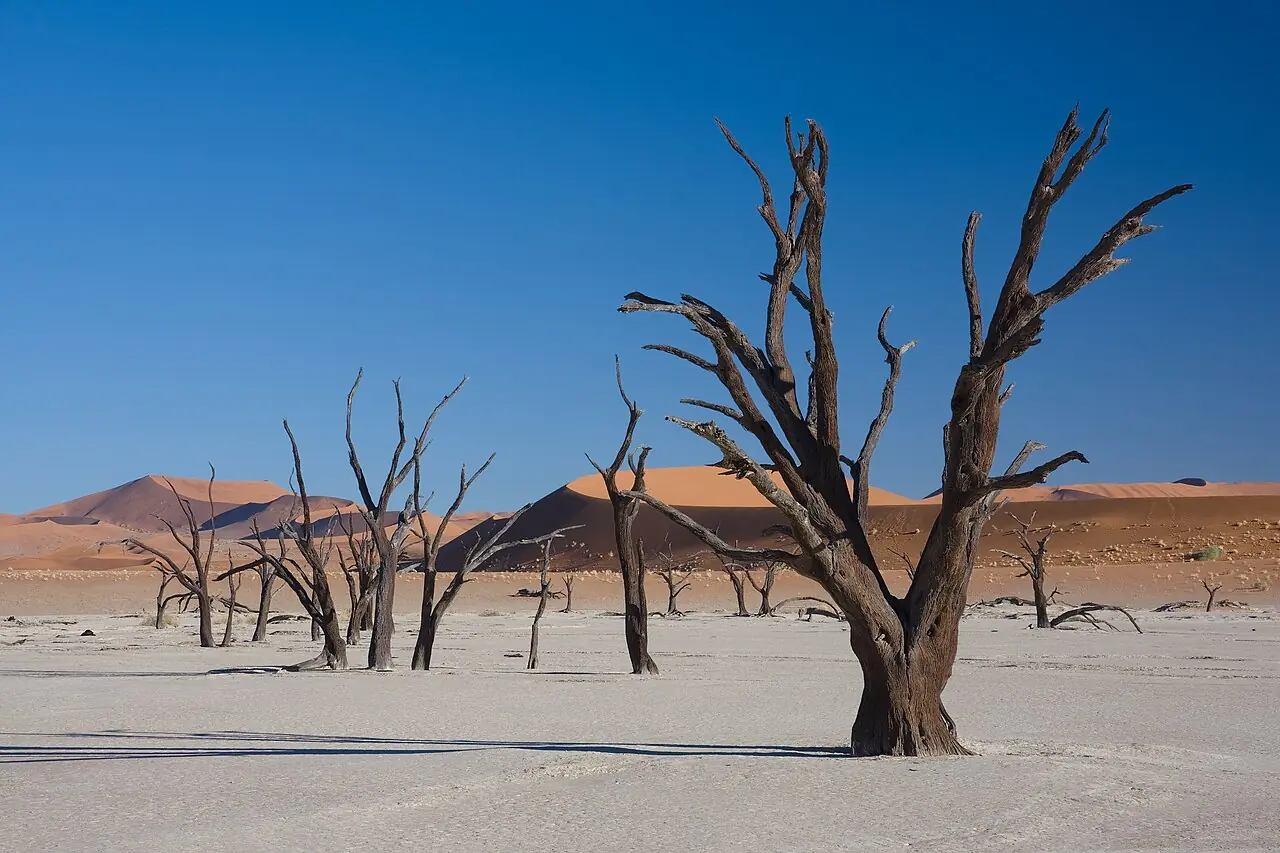 Photo: Ikiwaner · GFDL 1.2
Published by Adama Doumbia, founder of Afrique Unie · updated 28 November 2026 · our method and sources
Daily budget
These are rough figures per person per day, excluding the international flight. They cover accommodation (two people sharing a room), meals and local transport.
On a tight budget, allow roughly €50 to €90, camping or staying in hostels, cooking for yourself and sharing a hire vehicle with others. For a comfortable trip, allow about €150 to €280, in mid-range lodges or guesthouses, with a 4x4 hired between two. At the top end, allow €500 or more, and much more in luxury lodges and private concessions.
These figures include a share of car hire and fuel: travelling alone or in high season, the bill rises quickly.
What is expensive and what costs next to nothing
- Vehicle hire: The biggest cost: a 4x4, often fitted with rooftop tents, is expensive to hire, especially from July to October. Book early and check the insurance and excess.
- Fuel: Distances run to hundreds of kilometres a day: budget generously for fuel.
- Parks: Etosha, Namib-Naukluft (Sossusvlei) and the other national parks charge entry fees per person per day, plus the vehicle. Fees are set by the Ministry of Environment and Tourism.
- Accommodation: Campsites are affordable; lodges near the famous sights are expensive and often full in high season.
- Groceries: Supermarkets in Windhoek and other towns make self-catering cheap.
Money: Namibian dollar, rand and cards
The currency is the Namibian dollar (NAD), pegged one-to-one to the South African rand, which is itself accepted throughout the country. The reverse is not true: the Namibian dollar is not accepted in South Africa.
Cards are widely accepted in towns, supermarkets, lodges and most petrol stations. Cash machines are found in towns but are scarce along the long roads. Keep cash for small campsites, tips and remote petrol stations.
Tipping is customary: around 10% in restaurants, a small amount for petrol attendants and car guards, more for guides.
Visa and passport
Information checked in November 2026. These rules can change: read the official sources again before you travel.
Since 1 April 2025, on grounds of reciprocity, Namibia has required a visa from nationals of some thirty countries that were previously exempt, including the United Kingdom, France and the other European Union countries, and Canada.
There are two options: the e-visa, applied for online before you travel on the official portal, eservices.mhaiss.gov.na, or the visa on arrival, issued at Windhoek (Hosea Kutako) and Walvis Bay airports and at certain land border posts. According to the French foreign ministry, tourists should select the « Visa on Arrival » option on the portal. Applying online avoids a long wait on arrival.
Several sources give a fee of 1,600 Namibian dollars per person aged 12 and over, about €80. The length of stay granted varies between sources, from 30 days up to a maximum of 90 days per calendar year: check the stamp on arrival. Intermediary sites charge far more.
Passport: it is generally required to be valid for at least six months after your planned departure, with at least two blank pages.
If you plan a trip to Victoria Falls from the Caprivi Strip, the KAZA Univisa, at 50 dollars, covers Zambia and Zimbabwe; it does not replace the Namibian visa.
Health and vaccinations
Yellow fever: a vaccination certificate is required if you arrive from a country where the disease is present, or have transited through one. In principle it is not required for a direct flight from Europe or South Africa.
Malaria is present in the north of the country: the Zambezi (Caprivi Strip) and Kavango regions and the area along the Angolan border, with a higher risk in the rainy season, roughly November to April. The risk in Etosha is seasonal; it is very low in the centre and south, in Windhoek, Swakopmund or Sossusvlei. Bite avoidance and preventive medication should be decided with a doctor, according to your route.
Check your routine vaccines and ask about hepatitis A and typhoid. Always carry plenty of water: the roads are empty and the sun is fierce.
Before you go: the checklist
- Visa: E-visa on eservices.mhaiss.gov.na before you leave, or a visa on arrival: be ready to pay.
- Passport: Six months' validity after your planned departure and at least two blank pages.
- Vehicle: Book your hire several months ahead for high season; an international driving permit is advisable.
- Health: Malaria advice if you are going north; a yellow fever certificate if you come from a country at risk.
- Official sources: The Namibia page on gov.uk/foreign-travel-advice and the Namibie page of « Conseils aux voyageurs » on diplomatie.gouv.fr.
- Insurance: Cover for medical costs, evacuation and repatriation: hospitals are far away in remote areas.