AfriqueUnie
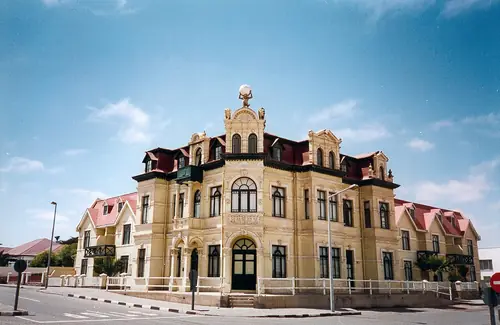
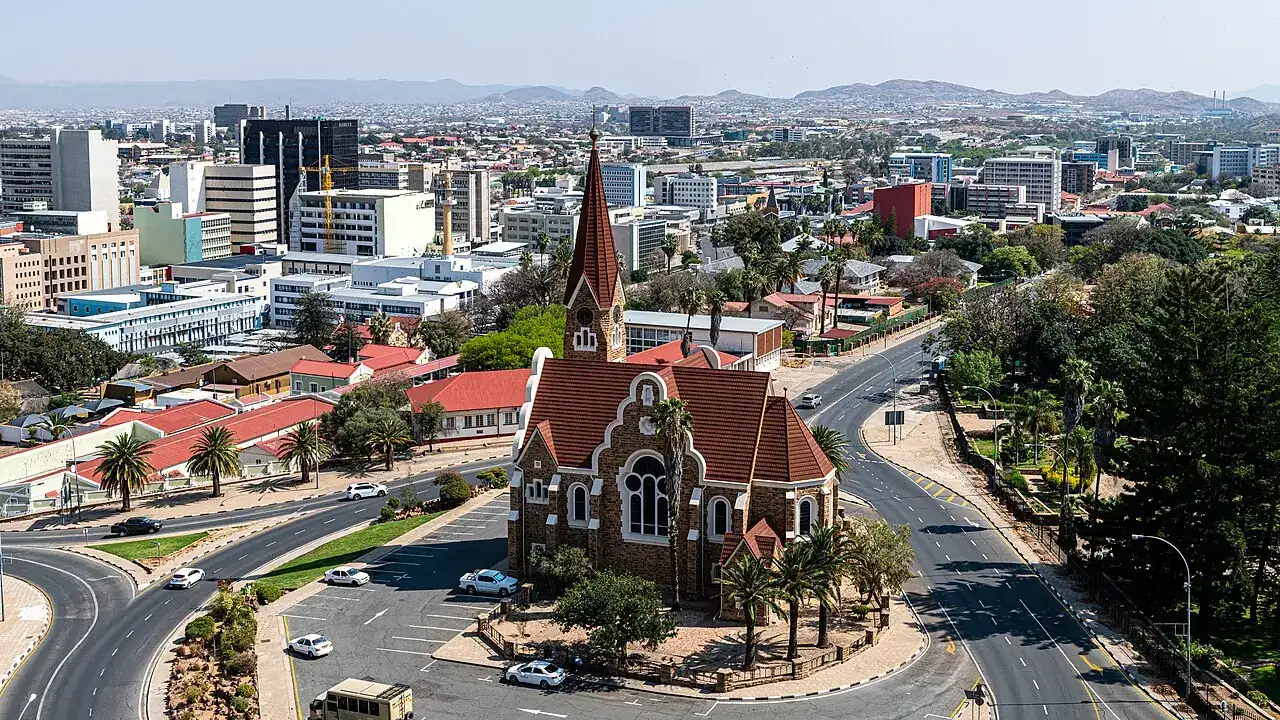 Photo: Christoph Strässler · CC BY-SA 2.0
Published by Adama Doumbia, founder of Afrique Unie · updated 28 November 2026 · our method and sources
Why visit Windhoek?
Perched at almost 1,700 metres above sea level, amid hills covered in thorn trees, Windhoek surprises with its modest size and its calm. For many travellers it is merely a stopover: you pick up your hire car, do your shopping, spend a night and head straight off for the desert. It would be a shame not to give it a day, though, as the capital tells the country's complex story better than anywhere else.
On a rise in the centre, the Lutheran Christuskirche, which looks like a neo-Gothic confection, faces the Independence Memorial Museum, a massive modern building put up by a North Korean company, whose panoramic terrace offers the best view of the city. Right next door stands the Tintenpalast, the “Ink Palace”, once the seat of the colonial administration and now the parliament. The streets bear the marks of every era: German facades, avenues named after liberation heroes, South African-style shopping centres.
The city's true popular heart beats in Katutura, the former township created under apartheid. Its Single Quarters market, where kapana sizzles on the grill among stalls of mopane worms and fabrics, is an experience not to be missed, ideally with a local guide. At weekends families gather round the braai and music spills out of the bars.
Things to do in Windhoek: 6 ideas
- 01Christuskirche hillAdmire the colonial church, then climb to the terrace of the Independence Memorial Museum at sunset.
- 02Single Quarters marketTaste grilled kapana in Katutura with a guide from the neighbourhood who introduces you to the vendors.
- 03The Parliament GardensPicnic on the well-kept lawns around the Tintenpalast, which are very popular at lunchtime.
- 04The Craft Centre in the old breweryHunt for basketry, Himba jewellery, carvings and fabrics in a historic building in the centre.
- 05An outing to a nearby reserveSeveral private reserves on the edge of the city offer a first safari drive or a hike among the kudu.
- 06A game dinnerTry oryx, kudu or zebra at one of the restaurants in the centre or in Klein Windhoek.
Windhoek in one day
- 01MorningStart on the hill in the centre at the Christuskirche, a neo-Gothic Lutheran church, then visit the Independence Memorial Museum, devoted to the liberation struggle. Right next door, the Alte Feste, a fort built in 1890, marks the founding of the colonial town. Come early, before the heat.
- 02LunchWalk down to the Parliament Gardens around the Tintenpalast and picnic on the shady lawns, as local office workers do. You can also have lunch at a café in the centre, where cakes and rye bread recall the city's German heritage.
- 03AfternoonBrowse the Craft Centre in the old brewery for basketry, Himba jewellery, carvings and textiles, then call in at the National Art Gallery of Namibia. Withdraw cash from a machine inside a bank or shopping centre, because of card fraud and theft.
- 04EveningGo back up to the Independence Museum terrace for sunset, if it is open, then have a game dinner, oryx or kudu, in Klein Windhoek. Take a taxi booked by your accommodation: the centre empties in the evening and thefts are common.
A second day in Windhoek
- 01MorningJoin a local guide for a tour of Katutura, the former township created under apartheid, to understand the history of segregation and everyday life in the city today. The French authorities report knife attacks targeting tourists in the western and northern districts, so never go alone or on foot.
- 02LunchStill with your guide, have lunch at Single Quarters market on kapana, strips of beef grilled over coals and dipped in a spice mix, eaten standing by the grills. The adventurous can try mopane worms. Keep your phone and money out of sight.
- 03AfternoonHead to Daan Viljoen Game Reserve, in the Khomas Hochland hills west of the city, for a hike among kudu, oryx and zebra. Take water and a hat, and keep to the reserve's closing time.
- 04EveningOn the way back, stop on the heights to watch the sunset, then return for dinner in Klein Windhoek or Ludwigsdorf. Do your final shopping before heading for the desert: water, supplies and a SIM card. Never leave anything visible in a parked car.
A little history
The valley's hot springs had long drawn Herero and Nama herders when the Oorlam leader Jonker Afrikaner settled here around 1840; he gave the place a name close to Windhoek. In 1890 Captain Curt von François laid the foundations of the Alte Feste, the fort around which the capital of German South West Africa grew. The colonists built the Christuskirche and the Tintenpalast, while the war of 1904–1908 against the Herero and Nama killed tens of thousands of people.
After 1915 the territory came under South African rule, which imposed apartheid. In December 1959 police opened fire on residents of the Old Location who were resisting forced removal, killing at least eleven; they were moved to Katutura, whose name means “the place where we do not want to live”. Namibia gained independence on 21 March 1990, with Windhoek as its capital. Street names, monuments and the Independence Memorial Museum, opened in 2014, reflect this rereading of the past.
What to eat in Windhoek
Meat rules in Namibia. The braai, a wood-fired barbecue, brings families and friends together at weekends, and game (oryx, kudu, springbok) is on many menus. Kapana, strips of beef grilled over embers and dipped in a spice mix, is eaten standing up in Katutura. People also snack on biltong and droëwors, dried meat that is a favourite for long drives, as well as mopane worms and oshifima, the millet porridge of the north.
The German legacy lives on in the bakeries and cafés of the centre, with their cakes and rye breads, and in the beer, brewed locally to purity rules inherited from Germany. Rooibos and coffee fill the afternoons. To eat, the local markets, kapana stalls and terraces of Klein Windhoek give a good overview; tap water is generally safe to drink in the city.
Where to stay in Windhoek
Klein Windhoek and Ludwigsdorf, east of the centre, are the most pleasant areas to stay: guesthouses with gardens and pools, restaurants within easy reach and guaranteed peace and quiet. Eros, near the regional airport, works well for a night in transit. The centre itself is easy to explore on foot by day but empties in the evening, and it is a less appealing place to sleep. Lively Katutura is best discovered on a guided visit rather than as a base. Hosea Kutako International Airport is about forty-five minutes' drive to the east, and many travellers choose a guest farm along that road for their first night.
Getting there and getting around
Hosea Kutako International Airport (code WDH) is about 45 km east of the centre: most travellers pick up their hire car there, otherwise shuttles and taxis reach town in around 45 minutes. The small Eros Airport (ERS), south of the centre, handles domestic flights.
Public transport is limited: you get around by taxi, ideally booked through your accommodation, or by car. The Namibian dollar is pegged one-to-one to the South African rand, which is accepted everywhere; cards are widely accepted, but watch out for ATM fraud and use machines inside banks or shopping centres.
Neither the French nor the UK official advice warns against any region of Namibia, but both flag high crime levels in Windhoek: bag snatching, muggings and theft from cars, by day as well as at night. The dry season, from May to October, is ideal for safaris; nights can be cold in June and July at this altitude, and thunderstorms mostly break from January to March.
See places to stay in Windhoek
Frequently asked questions
How long should you stay in Windhoek?
One full day is enough for the historic centre, the Independence Memorial Museum and a guided visit to Katutura. Most travellers add a night at the end of their trip, which is handy for returning the car and buying crafts before the flight.
Is Windhoek dangerous?
Windhoek is not one of the areas official advice warns against, but petty crime is real. In the evening, take a taxi, don't walk alone in the empty centre and leave nothing visible in a parked car. Explore Katutura with a local guide.
How far are Sossusvlei and Etosha from Windhoek?
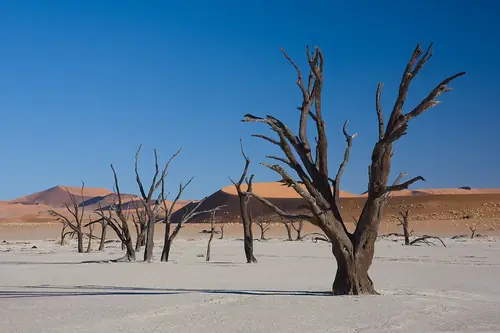
Sossusvlei, in the Namib Desert, is a full day's drive to the south-west, largely on gravel roads. Etosha National Park is four to five hours north on a tarred road. Either way, set off early and avoid driving at night because of wildlife.
When is the best time to visit Windhoek?
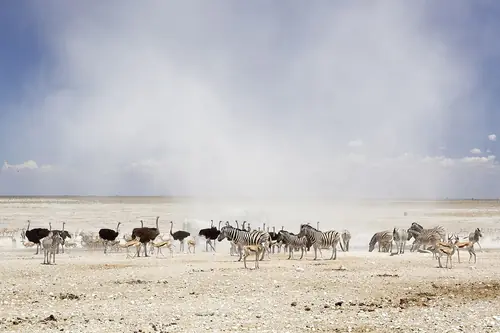
From May to October, in the dry season, skies are clear and animals gather around waterholes in the parks. Days are mild in the southern winter, but nights can drop close to freezing. The rains, from December to March, turn the landscape green and make some gravel roads harder going.
What is there to do in Windhoek in the evening?
In the evening, people dine on game or Namibian food in Klein Windhoek, sometimes catch a show at the National Theatre, or gather for a braai at weekends. The centre empties after office hours, so get around by taxi booked by your accommodation and do not walk alone.
Do I need to hire a car in Windhoek?
To explore Namibia, almost always: public transport is limited and the main sights, such as Sossusvlei and Etosha, are far apart. Driving is on the left, often on gravel roads; choose a suitable vehicle, drive carefully and never drive at night, because of animals on the road.
 Namibia