AfriqueUnie
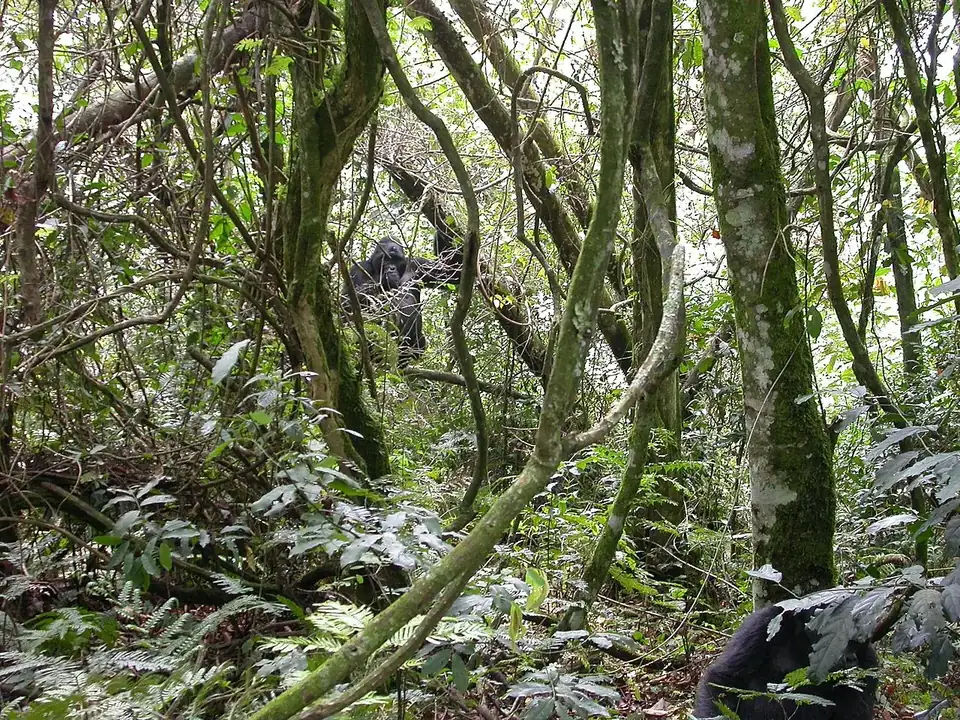 Photo: Auteur inconnu · CC BY-SA 3.0
Published by Adama Doumbia, founder of Afrique Unie · updated 28 November 2026 · our method and sources
Daily budget
These are rough figures per person per day, excluding the international flight. They cover accommodation (two people sharing a room), meals and local transport.
On a tight budget, allow roughly €35 to €60, staying in hostels or small hotels, eating local food and using buses and minibuses. For a comfortable trip, allow about €120 to €250 on a tour with a car and driver-guide, in mid-range lodges. At the top end, allow €400 or more, and much more in the luxury lodges of Bwindi or the big parks.
These figures do not include permits for gorillas or chimpanzees, which come on top.
What is expensive and what costs next to nothing
- Gorilla permit: According to the official Uganda Wildlife Authority (UWA) tariff, a permit costs 800 US dollars for a foreign non-resident, in Bwindi and Mgahinga alike. The tariff published for January 2027 to June 2028 keeps this rate. Book well ahead, through UWA or a licensed operator.
- National parks: Entry fees are charged per person per day, with a rate for foreigners. Activities (chimpanzee tracking, boat safaris, hikes) are extra. Price lists on ugandawildlife.org.
- Vehicle: The parks are far apart: hiring a 4x4 with a driver is often the second-biggest cost of the trip.
- Local meals: A rolex (an omelette rolled in a chapati) or a plate of matoke costs very little.
- Transport: Buses and minibuses are cheap but slow, and unsafe at night. Domestic flights to the parks save time at a high price.
Money: shillings, dollars and mobile payment
The currency is the Ugandan shilling (UGX). Cash machines are found in Kampala, Entebbe and other towns, rarely near the parks: withdraw before heading into the bush. Cards are accepted in lodges and large hotels, often with a surcharge.
The US dollar is widely used in tourism. Bring recent notes in good condition: old or damaged notes are often refused or exchanged at a poorer rate.
Mobile payment (MTN MoMo, Airtel Money) is everywhere. It requires a local SIM card registered with your passport.
Tipping is expected for the driver-guide, trackers and porters: ask your operator what is customary and bring the amount in cash.
Visa and passport
Information checked in November 2026. These rules can change: read the official sources again before you travel.
A visa is compulsory for British and French nationals, as for other Europeans, Swiss and Canadians. Apply online before you travel through the immigration service's official portal, visas.immigration.go.ug. Several sources quote 50 US dollars for a single-entry tourist visa, plus bank charges; check the fee on the portal. The French foreign ministry warns against fraudulent sites that charge more.
The French foreign ministry says visas on arrival have been suspended since 1 July 2021: you must arrive with a visa approval obtained online. The UK government likewise says to apply online and print the authorisation letter, which border officials use to issue your visa on arrival. Apply several weeks ahead.
East Africa Tourist Visa: it costs 100 dollars and covers Uganda, Rwanda and Kenya for 90 days, with multiple entries. Kenya has replaced its visa with an electronic travel authorisation (eTA), so check how the two schemes fit together.
Passport: it must be valid for at least six months after arrival, with blank pages.
Ebola: Uganda's Ministry of Health declared the outbreak over on 28 July 2026, and the World Health Organization confirmed it on 27 August 2026, after 42 days without a new case. The outbreak continues in the neighbouring DRC, however, and the risk of imported cases remains. According to the US embassy in Kampala (October 2026), all travellers must complete an online health declaration (passenger locator form) before arrival and undergo health screening at the border. The border with the DRC is closed to travellers. Check whether these measures still apply.
Health and vaccinations
Yellow fever: the French foreign ministry says a vaccination certificate is compulsory to enter Uganda, while other sources say it is no longer systematically checked. To be safe, get vaccinated and carry your international certificate: the disease is present in the country and vaccination is recommended in any case. It is given at a designated yellow fever centre, at least ten days before departure.
Malaria is present all year round in almost the whole country. Bite avoidance and preventive medication should be decided with a doctor. If you develop a fever during or after your trip, see a doctor straight away.
Check your routine vaccines and ask about hepatitis A, typhoid, rabies and meningitis. Avoid swimming in fresh water because of bilharzia.
Before you go: the checklist
- Visa: Apply online at visas.immigration.go.ug several weeks before you leave.
- Gorilla permit: Book through UWA or a licensed operator, several months ahead.
- Passport: Six months' validity after arrival and blank pages.
- Health: Yellow fever vaccine and international certificate, malaria advice, and the online health declaration if it is still required.
- Official sources: The Uganda page on gov.uk/foreign-travel-advice and the Ouganda page of « Conseils aux voyageurs » on diplomatie.gouv.fr: some border areas are advised against.
- Insurance: Cover for medical costs, evacuation and repatriation: hospitals are scarce near the parks.