AfriqueUnie
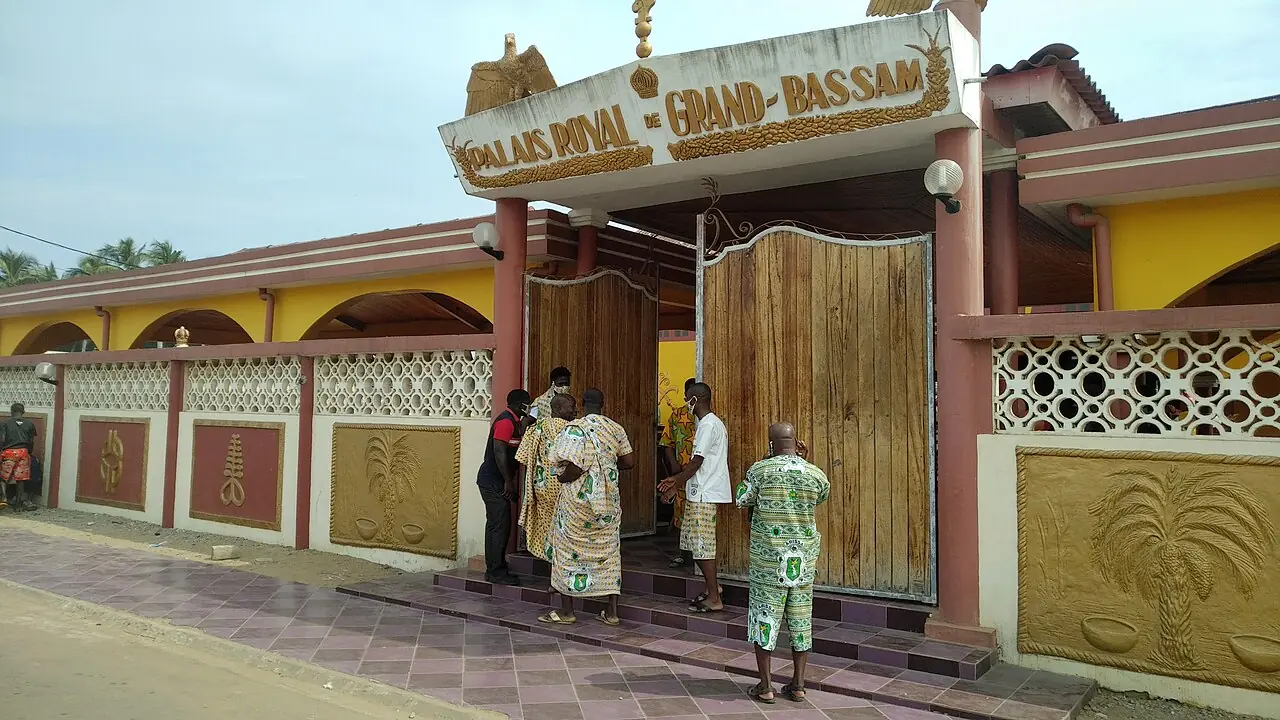 Photo: Aristidek5maya · CC BY-SA 4.0
Published by Adama Doumbia, founder of Afrique Unie · updated 28 November 2026 · our method and sources
Before you go: journey times and safety
The times given are rough estimates from the Plateau or Cocody outside rush hour. On Friday evenings and Sunday afternoons, getting out and back can take much longer, especially towards Grand-Bassam and Assinie: leave early on Saturday and be back before dark.
France Diplomatie places southern Côte d'Ivoire in its heightened vigilance category and advises against all travel to the border areas in the north of the country, far from every trip on this page. Driving at night is not recommended, and the main everyday danger is the ocean: all along the coast, the shore break and currents cause drownings. Only swim in supervised areas or in the lagoon.
Grand-Bassam: heritage and beach (about 1 hour)
Around forty kilometres east along the motorway, Grand-Bassam is the easiest escape. The colony's first capital has kept a historic quarter, a UNESCO World Heritage Site set between lagoon and ocean: buildings with galleries and verandas, the National Costume Museum, a lighthouse and a crafts centre.
On Saturday, wander the Quartier France in the morning before the heat, then have lunch by the sea. On Sunday, the beach fills up with Abidjan residents: come early, or pick a weekend outside the holiday season for more peace. A day is enough; a night lets you enjoy the evening light over the lagoon.
Assinie: lagoon and ocean (about 1½ to 2 hours)
Further east, beyond Grand-Bassam and Bonoua, Assinie stretches along a long sandbar between ocean and lagoon. Depending on the time of year, it is the place for quiet weekends or for lively ones. Some places to stay can only be reached by boat, across the lagoon.
Allow one or two nights, and book ahead for long weekends and the end-of-year holidays, which are in high demand. Swim in the lagoon rather than the ocean, which is far more dangerous. Stopping at Grand-Bassam on the way makes a full weekend without a long drive.
Bingerville: the botanical garden (about 45 minutes)
East of Abidjan, on the heights above the Ébrié Lagoon, Bingerville was the colony's capital between Grand-Bassam and Abidjan, in the early twentieth century. People come mainly for its botanical garden, created in colonial times, with its huge trees and shade, ideal for a family walk on a Sunday morning.
This is the shortest trip on this page: half a day is enough. It combines well with lunch by the lagoon or an afternoon in Grand-Bassam.
Jacqueville: beaches and villages to the west (about 1½ hours)
West of Abidjan, on the strip of sand between the Ébrié Lagoon and the ocean, Jacqueville is reached via the Dabou road and then a bridge across the lagoon. Less visited than the east, this stretch of coast has sandy beaches, coconut palms and fishing villages, with a quieter feel than Bassam or Assinie.
The ocean is as dangerous here as elsewhere on the Ivorian coast, so take great care if you swim. A day is enough, but a night lets you make the most of the calm.
Yamoussoukro: the basilica (about 3 hours)
To the north, along the motorway, Yamoussoukro deserves a whole weekend. The Basilica of Our Lady of Peace, one of the largest Christian buildings in the world, is visited with a guide; the city, the country's political capital, also has wide avenues and lakes where crocodiles live, near the former presidential residence.
Leave early on Saturday to arrive before the heat, stay the night and head back early on Sunday afternoon so you drive in daylight. Yamoussoukro is in the heightened vigilance category, like the rest of the south. Check the basilica's visiting hours, which differ on Sundays and feast days.
Without leaving Abidjan: Banco Forest
No car or little time? Banco National Park, a primary forest right inside the city, has trails beneath huge trees a few minutes from the Plateau. It makes a good Sunday-morning outing, in daylight and ideally in a group.
When to get out of Abidjan
- December to March: The long dry season: clearer skies, easy roads and the best time for the beach. It is also the busiest period, especially over the end-of-year holidays.
- April to July: The long rainy season, with very heavy downpours, particularly in June: allow extra time on the road and plan some indoor activities.
- August to November: A short drier spell in August, then more rain in October and November. In Grand-Bassam, the Abissa festival takes place in the autumn: check the dates, as the town is very lively then.
Further reading
- Abidjan: things to do, districts, safety
- Grand-Bassam: the listed historic quarter
- Assinie: beaches and lagoon
- Yamoussoukro: the political capital
- Basilica of Our Lady of Peace
- Côte d'Ivoire: our country guide
- When to go to Côte d'Ivoire: the weather month by month
- Côte d'Ivoire: budget and entry requirements: visa, health, money