 AfriqueUnie
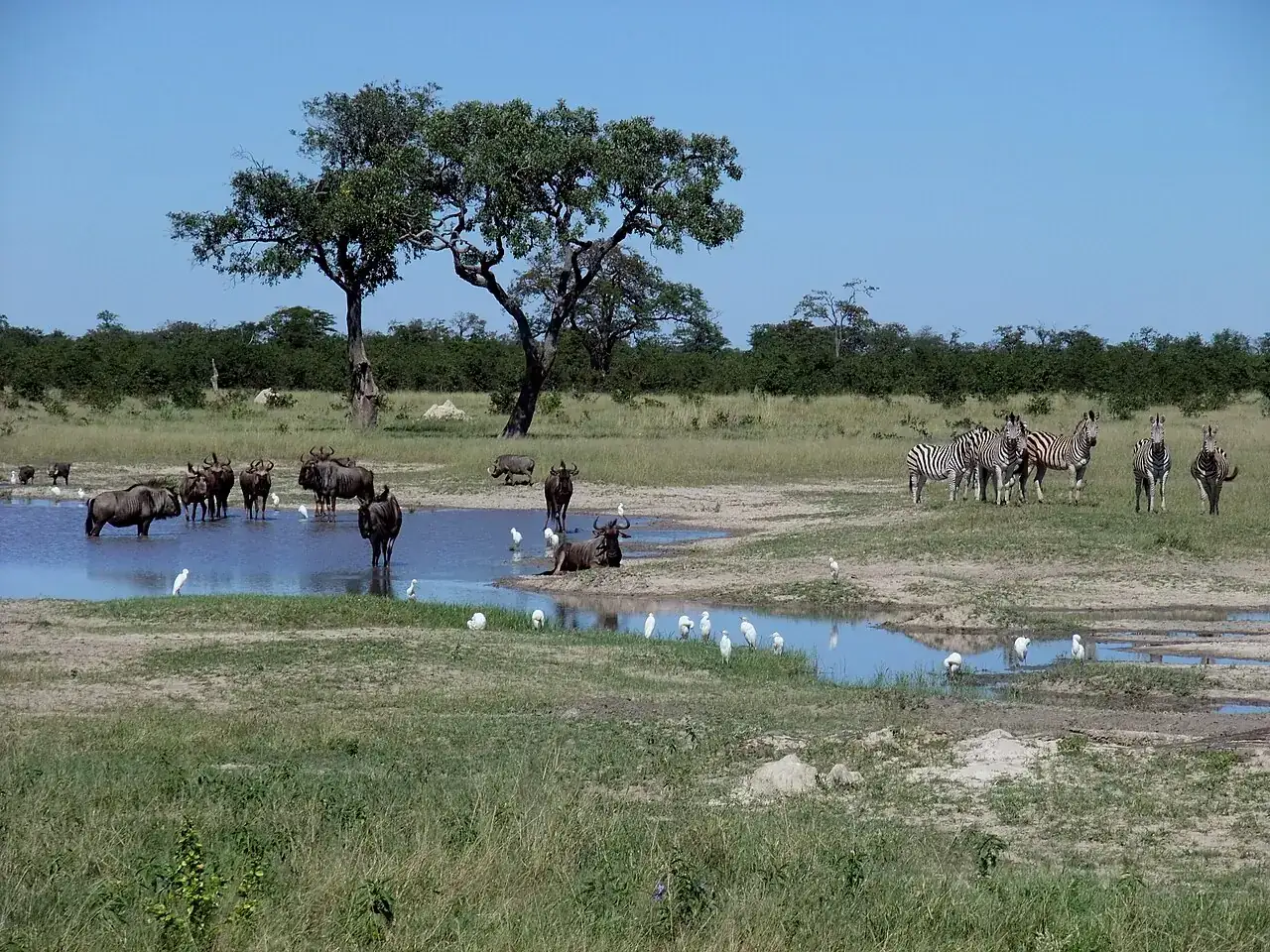 Photo: Gorgo · Public domain
Africa has two elephant species: the savannah elephant, seen in large herds on safari, and the smaller, shyer forest elephant, found in the forests of Central Africa such as Gabon. Both species are threatened, but some parks still hold impressive populations.
Botswana, with Chobe National Park and the Okavango Delta, has the largest elephant population on the continent. Amboseli, with its elephants against the backdrop of Kilimanjaro, Hwange and Mana Pools in Zimbabwe, Tarangire in Tanzania and Kruger National Park complete the list. In West Africa, Mole National Park in Ghana lets you watch elephants on foot with an armed ranger.
Where to see them
- 1
Chobe National Park ·
 Botswana
Along the Chobe River, hundreds of elephants come to drink and bathe in the late afternoon; boat cruises bring you very close.
- 2
Amboseli National Park ·
 Kenya
Elephant families studied by researchers since 1972 wander through the park's swamps, with Kilimanjaro as a backdrop.
- 3
Hwange National Park ·
 Zimbabwe
's largest park, where big herds crowd around pumped waterholes at the end of the dry season.
- 4
Tarangire National Park ·
 Tanzania
In the dry season, the Tarangire River draws large elephant herds among the baobabs.
- 5
Mana Pools National Park ·
ZimbabweOn the banks of the Zambezi, you can approach elephants on foot or by canoe with a guide; some stand on their hind legs to reach seed pods.
- 6
Okavango Delta ·
BotswanaElephants cross channels and floodplains; you watch them by 4x4, on foot or from a mokoro.
- 7
Kruger National Park ·
 South Africa
Elephants are plentiful here, especially in the centre and north of the park, along the Olifants and Letaba rivers.
- 8
Mole National Park ·
 Ghana
West Africa's best place to see elephants, which come to drink at pools near the entrance; walking safaris go with an armed ranger.
When to go
The dry season, June to October in East and Southern Africa, is by far the best: water becomes scarce and elephants gather in their hundreds, especially along the Chobe River and in Hwange in September and October. In Ghana, the dry season runs from December to April. During the rains, herds scatter into the bush and are harder to find.
Our tips
- Keep a wide distance, especially from females with calves, and always leave the vehicle a way out.
- Learn the warning signs: ears spread, head raised, mock charges; your guide will then back off calmly.
- Never block a herd heading to water, and switch off the engine as it approaches.
- Avoid elephant rides and contact with captive elephants; watch them in the wild instead.
- Never buy ivory, even if presented as antique: international trade in it is banned and it fuels poaching.
Frequently asked questions
Where can you see elephants in Africa?
The best places are Chobe National Park and the Okavango Delta (Botswana), Amboseli (Kenya), Hwange and Mana Pools (Zimbabwe), Tarangire (Tanzania) and Kruger National Park (South Africa).
How many elephants are left in Africa?
The IUCN African Elephant Status Report estimated about 415,000 elephants in 2016, both species combined. An IUCN report published in 2025 estimates about 135,700 forest elephants, a species listed as Critically Endangered; the savannah elephant is listed as Endangered.
Which country has the most elephants?
Botswana has Africa's largest elephant population, concentrated in the north of the country around Chobe, the Okavango and the Linyanti area.
Where can you see elephants with Kilimanjaro?
In Amboseli National Park, Kenya, where the snowy summit of Kilimanjaro appears on clear days, especially early in the morning.