AfriqueUnie
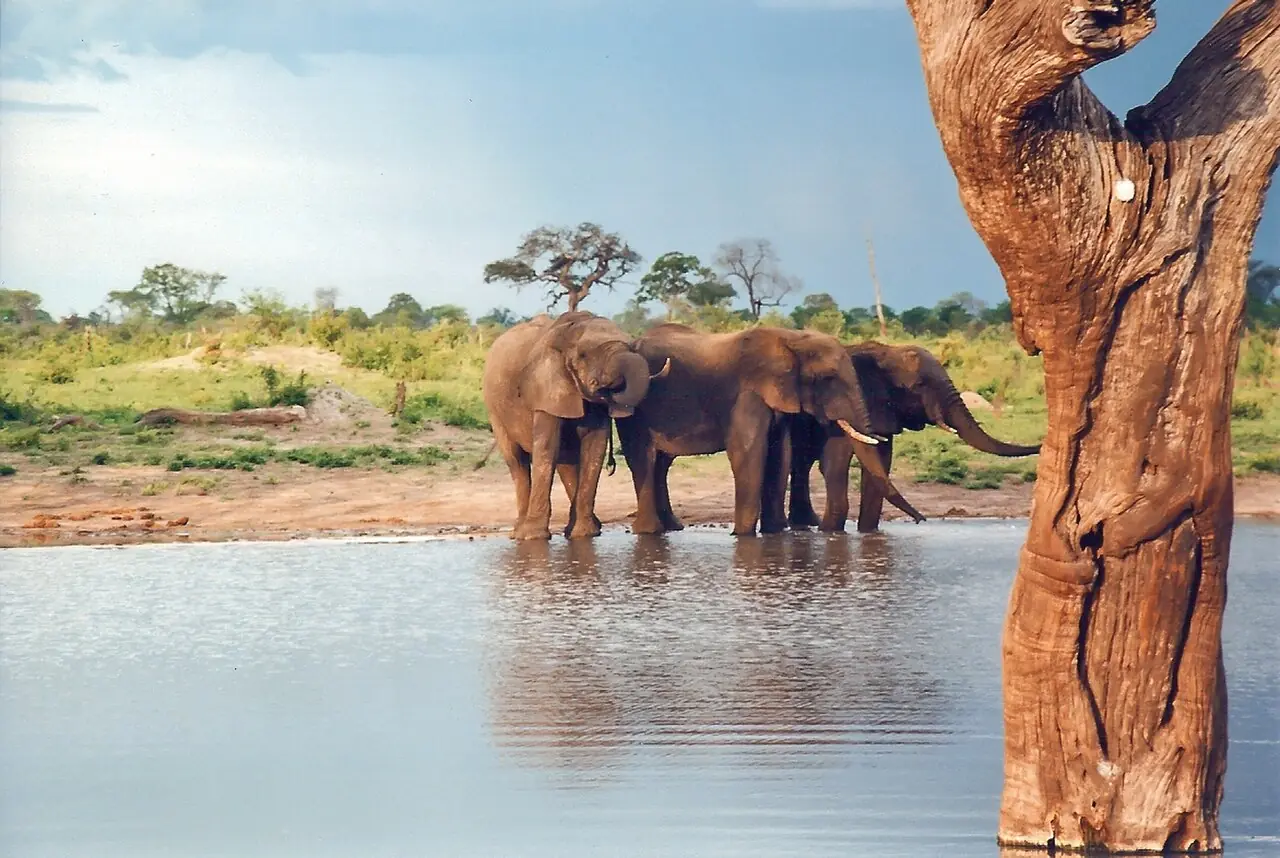 Photo: JackyR · CC BY-SA 3.0
Published by Adama Doumbia, founder of Afrique Unie · updated 28 November 2026 · our method and sources
Why go
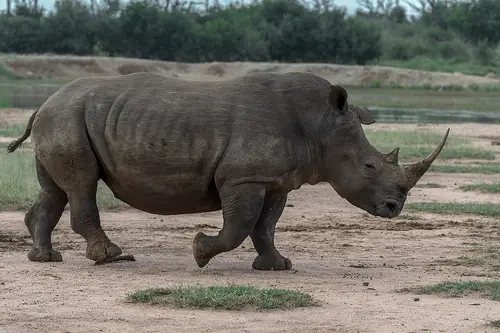
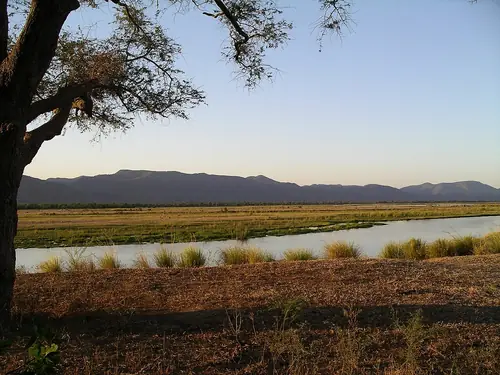
Zimbabwe's largest national park, Hwange covers a vast area of savannah, Zambezi teak forest and grassland on the edge of the Kalahari. It is famous for its elephants, present in huge numbers: in the dry season, herds several hundred strong converge on the waterholes, creating impressive scenes of jostling, bathing and trumpeting. Lions, leopards, cheetahs, wild dogs, buffalo, giraffes, sable and roan antelope complete a very rich picture.
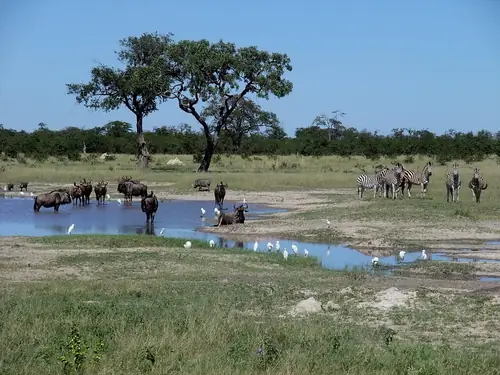
Hwange has no permanent river: most of its waterholes are fed by pumps, a form of management essential to the animals' survival during the dry months. This makes sightings very concentrated and often spectacular. The park has also been the setting for long-term research on lions, and the death of Cecil the lion in 2015 drew worldwide attention to the issue of trophy hunting.
Getting there
The park lies about two hours' drive south-east of Victoria Falls, on the road to Bulawayo. The main entrance, Main Camp, is the most accessible; Sinamatella and Robins, in the north-west, are more remote. There is an airport near the park boundary for light aircraft. Private lodges and concessions occupy its fringes, with public camps inside.
Frequently asked questions
When is the best time to visit Hwange National Park?
From July to October, in the dry season, when elephants gather in huge numbers around the waterholes. Nights are cool in June and July, while October is very hot. In the rains, wildlife spreads out across the park, but the landscape turns green and birdlife is abundant.
How do you get to Hwange National Park from Victoria Falls?
Allow about two hours' drive south-east of Victoria Falls on the Bulawayo road. The most accessible entrance leads to Main Camp, near Dete; Sinamatella and Robins, in the north-west, are more remote. An airport near the park boundary also handles light aircraft. Avoid driving at night, as roads are poorly lit and animals wander onto them.
Can you visit Hwange National Park on a self-drive?
Yes, the Main Camp area, the most developed part of the park, is well suited to self-driving, with public camps inside the park. Some private concessions, notably in the south-east of the park, are open only to guests of the camps based there. Stick to the opening hours, stay in your vehicle outside designated areas and always keep your distance from animals.
Why are Hwange's waterholes fed by pumps?
Because most of the park has no permanent river. In the dry season, the animals' survival depends on these pumped waterholes, where wildlife concentrates. That is what makes sightings so spectacular, especially from the platforms built beside the water.
How many days do you need in Hwange National Park?
Stay at least two to three nights to explore several areas and see the waterholes at different times of day. Hwange combines easily with Victoria Falls, a few hours' drive away. With more time, add a remote area such as Sinamatella for a wilder safari.
 Botswana
 Eswatini