AfriqueUnie
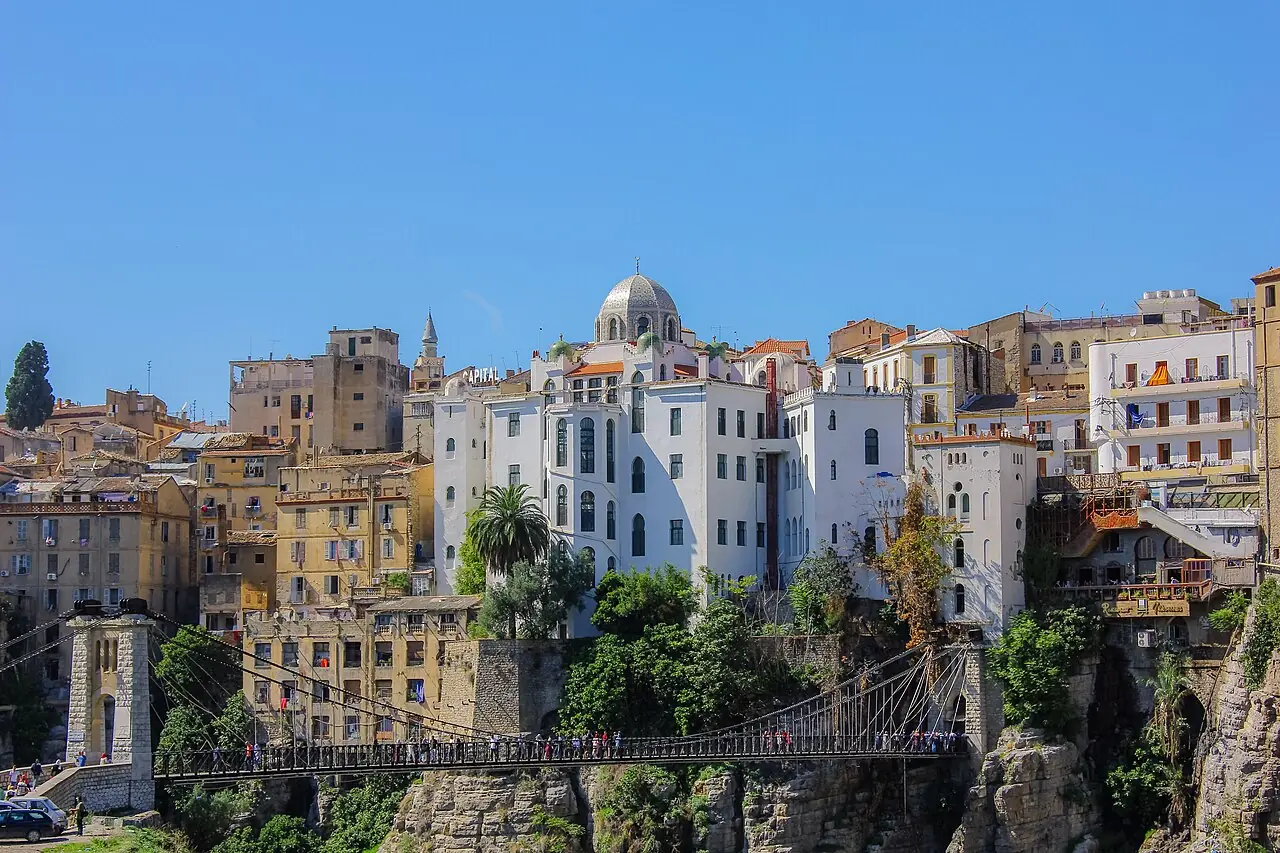 Photo: Zakiiii94 · CC BY-SA 4.0
Published by Adama Doumbia, founder of Afrique Unie · updated 28 November 2026 · our method and sources
Why visit Constantine?
Few cities in the world have a setting as spectacular as Constantine. The old town sits on a limestone rock almost entirely encircled by the Rhumel gorge, which carves a canyon more than a hundred metres deep in places. To link the rock with the rest of the city, a series of dizzying bridges has been thrown across over the centuries, earning Constantine its nickname, the City of Bridges.
Its history runs as deep as the gorge. Under the name of Cirta it was the capital of the Numidian kings, including Massinissa, before being renamed in honour of the emperor Constantine. It later became a great centre of learning and the seat of an Ottoman beylik, whose Palace of Ahmed Bey, with its patios, gardens and frescoes, is one of the finest monuments of the period in Algeria.
Constantine is also the capital of malouf, a refined Arab-Andalusian music inherited from the exiles of Spain, which you hear at weddings and festivals. The old town, with its coppersmiths' souks, overhanging houses and mosques, has to be earned: steep alleys and stairways lead from one surprise to the next. A conservative, scholarly city, it was Capital of Arab Culture in 2015, an occasion that saw several monuments restored.
Things to do in Constantine: 6 ideas
- 01The Sidi M'Cid BridgeThis early 20th-century suspension bridge spans the gorge high above the Rhumel: crossing it on foot is an unforgettable experience.
- 02The Chemin des TouristesWhen it is open, this path built into the gorge lets you see the bridges from below.
- 03The Palace of Ahmed BeyOrange-tree gardens, tiles and galleries painted with travel scenes: the Ottoman heart of the city.
- 04The Monument aux MortsOn the heights, this triumphal arch offers one of the best viewpoints over the gorge and its bridges.
- 05The old town soukCopperware, embroidered textiles and traditional pastries in the alleys of the medina.
- 06The site of TiddisSome thirty kilometres away, these ancient remains clinging to a red hillside make a fine excursion.
Where to stay in Constantine
Hotels are split between the centre, around Place du 1er-Novembre, which is convenient for walking to the bridges and the old town, and the newer districts served by the tram, where you will find modern establishments. The new town of Ali Mendjeli, to the south, is further out. Choose a room with a view over the gorge if you can.
See places to stay in Constantine
Frequently asked questions
How long do you need to visit Constantine?
One to two full days let you see the bridges, the Ahmed Bey Palace, the old town and the viewpoint at the war memorial. Allow an extra half-day for the ancient site of Tiddis, about thirty kilometres away.
How do you get from the airport to central Constantine?
Mohamed Boudiaf Airport is about ten kilometres south of the centre, and a taxi is the most practical option. Agree the fare before leaving or ask your hotel to arrange a pick-up.
How do you get around Constantine?
The old town and the bridges are best explored on foot, with plenty of steps. The tram serves the newer districts and an urban cable car crosses the gorge, saving long detours. Taxis fill the gaps for uphill journeys.
Is Constantine safe for travellers?
Constantine is not among the areas France's foreign ministry advises against, and the usual precautions are enough in the city. However, the provinces of Batna and Sétif, further south and west, and the Aurès mountains are advised against except for essential travel: check official advice before any trip south or west.
When should you visit Constantine?
Spring and autumn are the best seasons for walking across the bridges and through the lanes. Summer is hot and dry, and winter is much colder than on the coast, sometimes with snow. During Ramadan the city is known for its pastries and lively evenings.
 Algeria