Some of the best-preserved Roman ruins in the Mediterranean, the Casbah of Algiers, the oases of the M'zab and the lunar landscapes of the Tassili: Algeria is a vast destination that remains largely undiscovered.
Capital
Algiers
Best time to go
March to May, October to November (Sahara: October to April) · month by month
Algeria is the largest country in Africa, and yet one of the least visited in the Mediterranean basin. That is precisely what makes it such a special trip: here you are not following a crowd of tourists but discovering a country that still greets its visitors with curiosity and an often disarming hospitality. People will invite you for a coffee, walk you all the way to the end of the street to show you the way, and want to know where you are from and what you think of their country.
The coastline, more than a thousand kilometres long, alternates between the coves of Kabylie, the corniches of Oran and sheltered bays around Béjaïa and Jijel. Behind it, the high plateaux and the Aurès and Djurdjura mountains shelter hilltop villages and thriving Amazigh traditions. Then comes the Sahara, which covers most of the country: the dunes of the Grand Erg Oriental, the oases of the M'zab and Timimoun, the volcanic massifs of the Hoggar and the sandstone plateaux of the Tassili n'Ajjer, where thousands of rock paintings tell the story of a once-green Sahara.
Alongside this natural heritage lies a historical legacy of rare richness. The Roman cities of Timgad, Djémila and Tipasa are among the best preserved of the ancient world; the Casbah of Algiers, the Ottoman palaces of Constantine and the ksour of the south bear witness to more recent eras. Travelling in Algeria takes a little more preparation than elsewhere, particularly for the visa and for tours in the Deep South, but the effort is richly rewarded: there are few countries left where you can have an ancient site almost to yourself, or hear the silence of the desert hundreds of kilometres from any road.
History and culture
Algeria has been inhabited since prehistoric times, as the frescoes of the Tassili show. In antiquity, Numidian kingdoms such as that of Massinissa dealt with Carthage and then Rome, which turned the region into a granary and built great cities there. Saint Augustine was born in Thagaste, today's Souk Ahras. After the Vandals and the Byzantines, Islam took root from the 7th century onwards, and several dynasties followed one another, including the Zirids and the Hammadids.
In the 16th century Algiers became a prosperous Ottoman regency, until the French conquest began in 1830. Colonisation, which lasted 132 years, left a deep mark on the country. The War of Independence, from 1954 to 1962, led to independence being proclaimed on 5 July 1962. The country then went through a period of nation-building, followed by the Black Decade of the 1990s and, more recently, the Hirak popular movement from 2019. This history explains the national pride you can feel everywhere.
8 experiences not to miss in Algeria
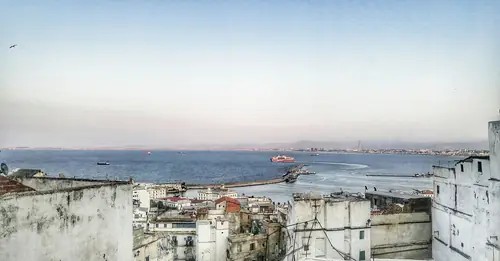
Photo : MohAdm · CC BY-SA 4.001Climbing up and down the Casbah of AlgiersBetween stairways, Ottoman palaces and small mosques, the old town reveals an intimate side of Algiers, ideally in the company of someone who lives there.
Photo : IssamBarhoumi · CC BY-SA 4.002Camping out in the TassiliSeveral days on foot or by 4x4 among sandstone arches, red dunes and shelters decorated with prehistoric paintings, with Tuareg guides.
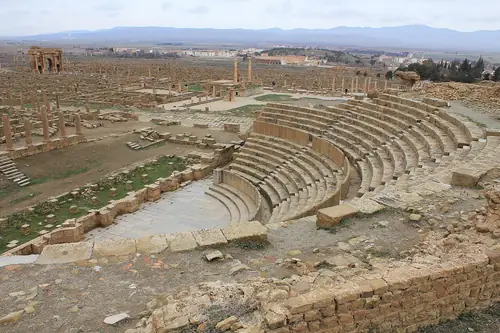
Photo : Xiaotong Gao · CC BY-SA 3.003Walking the streets of TimgadStroll the flagstones of this grid-planned Roman city, its columns and Arch of Trajan standing tall against the Aurès mountains.
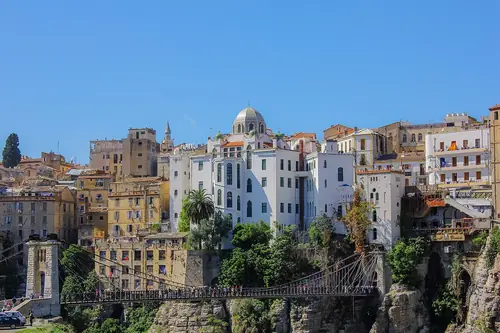
Photo : Zakiiii94 · CC BY-SA 4.004Crossing the bridges of ConstantineWalk across the footbridge and suspension bridges above the Rhumel gorge, preferably late in the day.
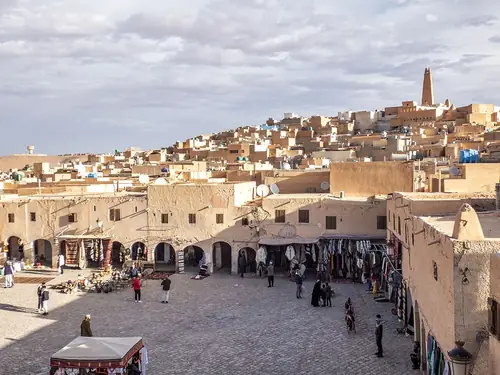
Photo : Camille Gillet · CC BY-SA 4.005Visiting the towns of the M'zabDiscover the Ibadi town planning of Ghardaïa and Beni Isguen with a local guide, respecting the strict rules of these communities.
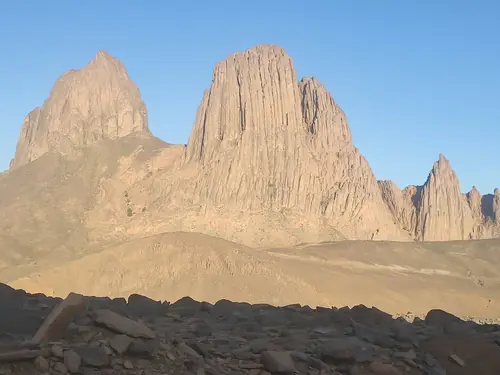
Photo : Rachid Hamatou · CC BY-SA 4.006Sunset at AssekremSleep at the refuge near Father de Foucauld's hermitage to watch the sun disappear behind the volcanic peaks of the Hoggar.
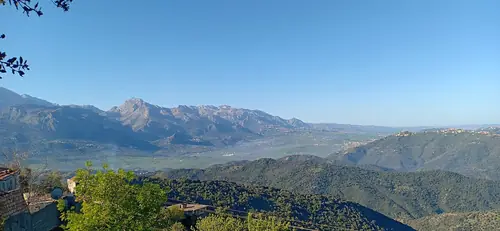
Photo : Rcasanova68 · CC BY-SA 4.007The villages of KabylieExplore the Djurdjura massif, with its ridge-top villages, olive groves and pottery, just a few hours from Algiers.
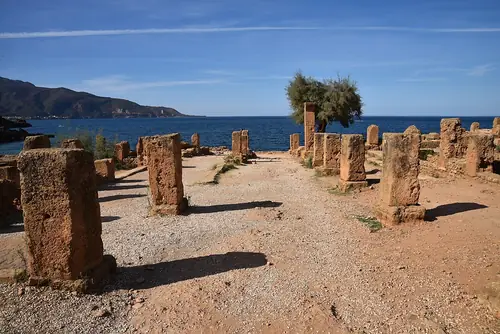
Photo : Carole Raddato · CC BY-SA 2.008The ruins of Tipasa by the seaThese Roman remains among the pines and rocks, celebrated by Albert Camus, are an easy trip from Algiers.
When to go to Algeria
In the north, spring, from March to May, is the loveliest time: green countryside, pleasant temperatures and flowers among the ancient ruins. Autumn, in October and November, is also mild. Summer is hot and humid on the coast and very popular with Algerians themselves for beach holidays. The Sahara is best visited from October to April: the days are warm and bright, the nights cool or even cold in December and January, particularly in the Hoggar. In summer the heat is extreme and most tours stop. Ramadan also changes the rhythm of daily life.
Getting around
Given the distances, flying is often essential: the national airline, Air Algérie, links Algiers with the main cities of the north as well as Ghardaïa, Djanet and Tamanrasset. In the north, SNTF trains serve several main routes, and Algiers, Oran and Constantine have tramways; Algiers also has a metro and cable cars. Buses and shared taxis cover the whole country cheaply. For the Deep South, tours in practice go through an approved local agency, which arranges guides, vehicles and permits: check the current rules before you plan.
Etiquette and customs
Algeria is a warm but modest country. Dress modestly, especially outside the big cities, and enter mosques only if invited, with your shoes off. Hospitality is a duty: turning down a coffee or a meal can cause offence, so accepting at least a sip is appreciated. Avoid politics and the colonial period unless the person you are talking to raises them, and listen rather than speak. Always ask before photographing people, and refrain from photographing official, military or police buildings. In the M'zab the local rules are stricter still: follow your guide's instructions.
Food and drink in Algeria
Algerian cooking varies a great deal from one region to another. Couscous, served on Fridays, comes with lamb, chicken, vegetables or, along the coast, fish. Chorba frik, a soup of cracked green wheat with tomato and coriander, is a fixture of Ramadan evenings. Mhadjeb, flaky pancakes stuffed with a spiced onion and tomato compote, are sold in the street. In Constantine, try chakhchoukha and jari; in Oran, karantika, a chickpea flan sold from little stalls. For something sweet, date-filled makrouts, zlabia and almond cakes go with a mint tea or a strong coffee.
The best time to visit Algeria: March to May, October to November (Sahara: October to April).
What should I see first in Algeria?
The must-sees: Tassili n'Ajjer, Timgad, M'zab Valley (Ghardaïa), Hoggar Mountains (Tamanrasset).
Which cities should I visit in Algeria?
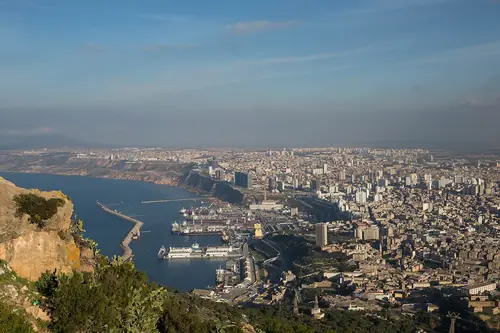
Algiers, Oran, Constantine. The capital is Algiers.
How much should I budget for a trip to Algeria?
Mid-range: around €60–120 per person per day, excluding flights. This is only a guide and depends above all on the accommodation and activities you choose.
What currency and languages are used in Algeria?
Currency: Algerian dinar (DZD). Languages: Arabic, Tamazight, French.
How do I get to Algeria?
The main international airport has the code ALG. Compare flights with the ‘Flights’ button on this page.
Do I need a visa to visit Algeria?
Entry requirements depend on your nationality and change regularly. Check them on the country's official website or with your foreign ministry before booking, and make sure your passport is valid.
What should I eat in Algeria?
Dishes to try while you're there: Couscous, chorba, mhadjeb.
Map
Algeria on the map
Cities Places to see · Approximate positions
On the ground
Getting around and staying healthy
Getting around
Given the distances, flying is the way to reach the deep south: Air Algérie links Algiers with Ghardaïa, Tamanrasset, Djanet and Béchar. SNTF runs trains between Algiers and Oran or Constantine, and a Béchar–Tindouf passenger line has operated since February 2026; timetables change often, so check at the station. Coaches and shared taxis serve every province, and in Algiers the metro, the tram and the Algerian app Yassir make getting around easier. Driving is on the right; in some Saharan areas (Djanet, Tamanrasset), tours are generally run through an approved agency.
Health and safety
Yellow fever
Certificate required only if you arrive from, or transited through, a country with a risk of yellow fever (from 9 months, incl. airport transits over 12 h); vaccine generally not recommended.
Malaria
No transmission reported.
Water and food
Unless your accommodation says otherwise, drink sealed bottled or filtered water, and wash your hands often.
Source: US CDC, November 2026. Rules change: see a travel health clinic before you leave, and the UK Foreign Office travel advice for safety.
Useful numbers
Local emergency numbers
Police: 17 or 1548 Ambulance: 1021 or 16 Fire: 14 Viaggiare Sicuri: 17 from a landline, 1548 from a mobile; emergencies 14 or 112; gendarmerie 1055 (landline) or 1023 (mobile)
Affiliate cookiesWe would like to load a script from our partner Travelpayouts. It may set cookies so that we receive a commission when you book through our links, at no extra cost to you. If you decline, the site works in exactly the same way. Find out more
 AfriqueUnie
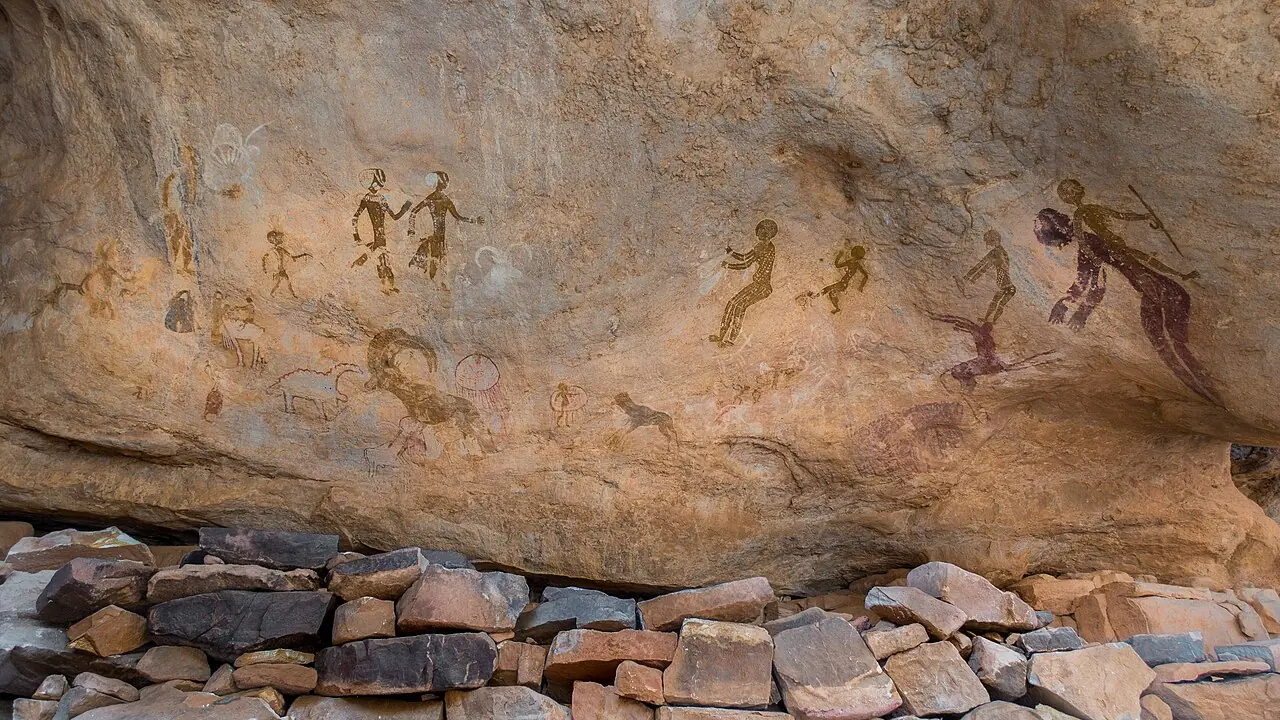 Photo: IssamBarhoumi · CC BY-SA 4.0
 Algeria
 Egypt
 Libya
 Morocco
 Sudan