 AfriqueUnie
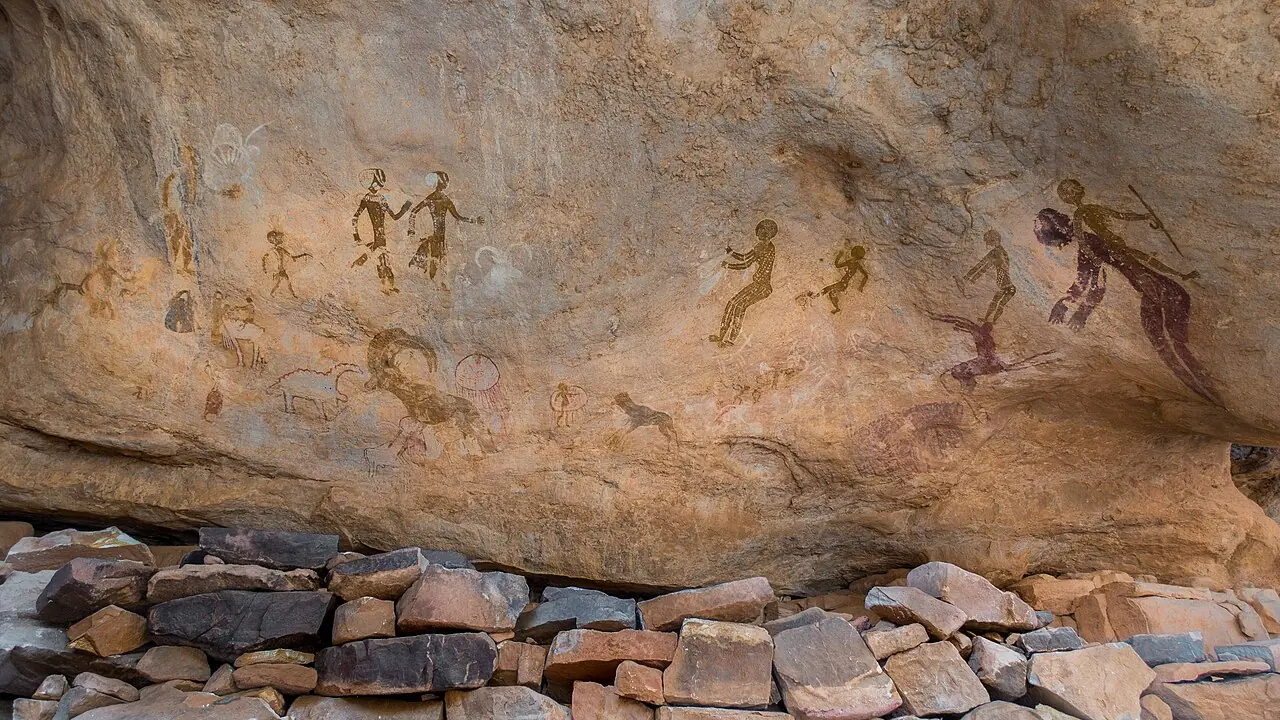 Photo: IssamBarhoumi · CC BY-SA 4.0
Published by Adama Doumbia, founder of Afrique Unie · updated 28 November 2026 · our method and sources
Why go
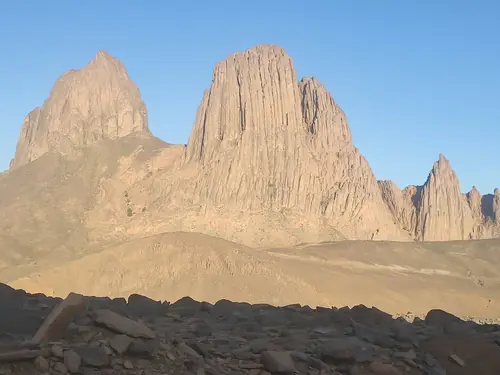
In south-eastern Algeria, near the Libyan border, the Tassili n'Ajjer plateau forms an immense maze of sandstone sculpted by erosion: arches, needles, stone mushrooms and canyons, sometimes nicknamed stone forests. Between these rocks stretch ergs of orange sand and rare gueltas, permanent pools where a few relict species survive, including the thousand-year-old Saharan cypresses of the Tassili.
Listed as a UNESCO World Heritage Site in 1982 for both its natural and cultural value, the site holds one of the largest concentrations of rock art in the world: thousands of paintings and engravings, made over several millennia, show giraffes, elephants, herds of cattle, hunters and scenes of daily life. They tell the story of a humid, populated Sahara and then of its gradual drying out. Places such as Sefar, Jabbaren and the Tadrart Rouge valley are famous for their groups of paintings.
Getting there
The gateway is the oasis of Djanet, linked to Algiers by domestic flights. From there, tours set off by 4x4 towards the Tadrart or on foot, with donkeys and camel drivers, up onto the plateaux. The climb to the Tamrit plateau and Sefar takes several hours of steep walking. In practice, every visit goes through an approved local agency, with Tuareg guides, and access arrangements can change: check well in advance.
 Egypt

 Morocco
 Tunisia
 Botswana