AfriqueUnie
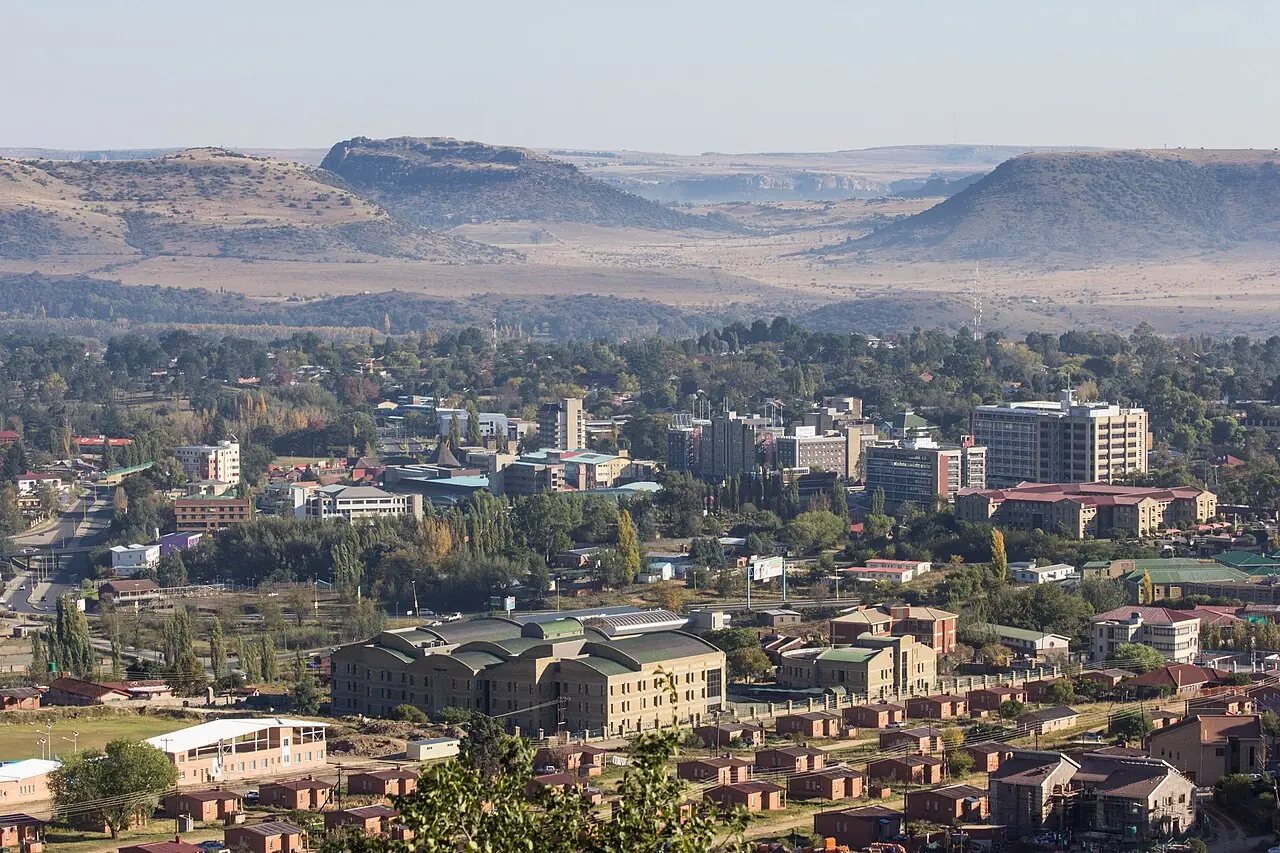 Photo: OER Africa · CC BY 2.0
Published by Adama Doumbia, founder of Afrique Unie · updated 28 November 2026 · our method and sources
Why visit Maseru?
Maseru stretches along the bank of the Caledon River, which marks the border with South Africa. The capital has the air of a quiet administrative town, with avenues lined with ministries, shopping centres and residential districts climbing the hillsides. You don't come here for monuments, but it offers a first taste of Basotho life and a useful base for exploring the surrounding area.
The city's emblem is the craft shop shaped like a mokorotlo, the national conical hat, right in the heart of the centre. Inside you will find blankets, woven hats, mohair tapestries and pottery. The weaving workshops in the surrounding area, especially at Teyateyaneng to the north, keep alive a remarkable expertise with wool and mohair, two of the country's great resources.
In the evening the city quickly goes quiet, but by day the street markets overflow with fruit, clothes and blankets. Maseru is also the ideal starting point for Thaba Bosiu, half an hour away, and for Morija, with its museum and dinosaur footprints, about an hour to the south.
Things to do in Maseru: 6 ideas
- 01Basotho Hat craft shopA building shaped like a mokorotlo that brings together the nation's crafts: blankets, basketry and mohair goods.
- 02Thaba BosiuSome thirty kilometres away, the historic plateau of Moshoeshoe I and its cultural centre.
- 03TeyateyanengThe crafts capital, to the north, renowned for its workshops of hand-woven tapestries.
- 04MorijaThe museum and archives of the country's oldest mission, with dinosaur footprints nearby.
- 05Central marketsThe place to buy a genuine Basotho blanket and watch the daily bustle.
- 06Sunset over the CaledonThe hills above the city offer a fine view over the river and the plains of the Free State.
Where to stay in Maseru
Central Maseru, around Kingsway, is where you'll find the government offices, banks and shops, but it empties in the evening. The most pleasant places to stay are in the quieter residential districts, in guesthouses and small hotels, or on the outskirts, where a few establishments have gardens and views of the hills. For a more authentic stay, many travellers spend just one night in the city before moving on to Thaba Bosiu, Morija or Malealea.
Frequently asked questions
How many days should you spend in Maseru?
One night is usually enough: you can see the city in a day, from the shop shaped like a Basotho hat to the markets. Add a day for Thaba Bosiu and Morija before heading into the mountains.
How do you get to Maseru?
Most travellers arrive by road from South Africa through the Maseru Bridge border post, about two hours from Bloemfontein. Moshoeshoe I International Airport, about 18 km south of the city, mainly has flights from Johannesburg. Arrive in daylight: the French government advises against travelling at night.
How do you get around Maseru?
By hire car or with a driver arranged by your accommodation: the French government advises against local buses and taxis, and the UK government recommends avoiding minibus taxis, which are often poorly maintained and uninsured. Keep doors locked, stay alert at traffic lights and stop signs, and do not park in poorly lit places.
Is Maseru safe?
Heightened vigilance is needed: according to the French government, bag snatching and vehicle theft are common, sometimes violent, and foreigners are sometimes targeted, particularly between the business district and the hotels. Do not walk at night, keep valuables out of sight and stay away from gatherings. If you are attacked, do not resist.
Which currency is used in Lesotho?
The loti (plural maloti), pegged at par to the South African rand, which is itself accepted everywhere in Lesotho. Maloti are generally not accepted in South Africa, so spend them before you leave. Maseru has most of the country's banks and cash machines.
 Lesotho