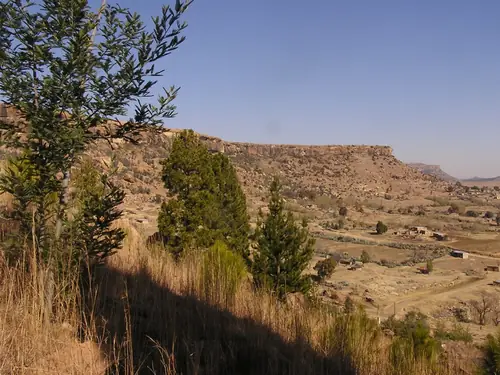
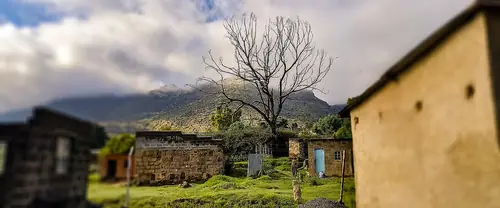
Lesotho is a country you climb. Completely surrounded by South Africa, it has no land below 1,400 metres, and most of its territory rises far higher, across the plateaus and ridges of the Maloti Mountains. Here the horizon is made of grassy slopes, basalt cliffs, gorges thundering with waterfalls and villages of thatched round huts perched on the shoulders of the hills. The air is crisp, the light rarely so sharp, and the silence is broken only by a herder's whistle or the bells of a flock.
What strikes you first is the human presence in these landscapes. The Basotho live in the mountains and cross them on horseback, wrapped in their famous woollen blankets with geometric patterns, sometimes wearing the mokorotlo, the conical straw hat that has become a national emblem. Coming across a rider at dawn, draped in his blanket and walking his horse along a frost-covered ridge, is one of those images that stay with you. The country lends itself to slow travel: pony treks from village to village, nights in traditional huts, long conversations around the fire.
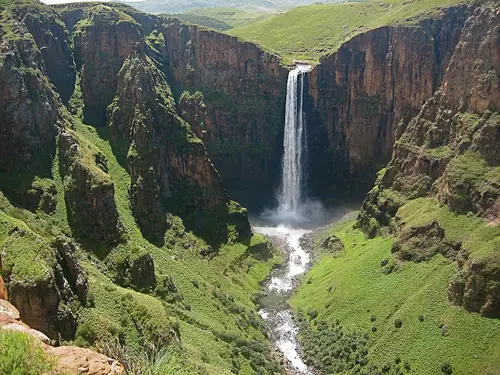
Lesotho also draws those who love a challenge and extreme roads. Sani Pass, the track that zigzags up from KwaZulu-Natal, is one of the most spectacular routes on the continent. Maletsunyane Falls, near Semonkong, plunge into a dizzying gorge that you can abseil down. There is even skiing in the Maloti in winter. And because tourism remains low-key, you will share these places with herders rather than with coachloads of visitors.
History and culture
The Basotho nation was forged in the turmoil of the early 19th century, when the wars and migrations known as the Difaqane upended southern Africa. Chief Moshoeshoe I gathered refugees from various clans on the impregnable plateau of Thaba Bosiu, from where he held out against attacks by his neighbours and later by the Boers of the Orange Free State. A shrewd diplomat, he welcomed French Protestant missionaries, who founded among other places the mission at Morija.
To avoid annexation by the Boers, Moshoeshoe sought the protection of the British Crown: Basutoland became a protectorate in 1868, at the cost of losing its fertile western lands. Independence was declared in 1966 under the name Lesotho. A constitutional monarchy, the country has been through political crises and a regional military intervention in 1998. King Letsie III, a descendant of Moshoeshoe, reigns today.
8 experiences not to miss in Lesotho
Photo : Ymblanter · CC BY-SA 4.001Go pony trekkingFrom Semonkong or Malealea, treks lasting from one day to several link villages and waterfalls on sturdy Basotho ponies, accompanied by a local guide.
Photo : Vaiz Ha · CC BY 2.002Drive up Sani PassThe hairpin track is climbed by 4x4 from South Africa, up to the plateau where you can raise a glass in the highest pub on the continent.
Photo : BagelBelt · Public domain03Abseil at MaletsunyaneAn abseil of around two hundred metres down the rock face beside the falls, for thrill-seekers.
Photo : Marduk · CC004Climb Thaba BosiuThe fortified plateau of Moshoeshoe I, with its ruins and the grave of the nation's founder, tells the story of the kingdom's birth.
05Stay in a villageSeveral communities welcome travellers in round huts, with a shared meal and an evening of singing.
07Follow in the footsteps of dinosaursNear Morija and in several valleys, fossilised footprints can be seen in the sandstone.
08Ski in AfricaIn winter, a resort in the Maloti offers a handful of snowy runs, a curiosity at over 3,000 metres.
When to go to Lesotho
Lesotho can be visited all year round, but each season has its own logic. From October to April the southern summer brings mild days, green meadows and waterfalls swollen by the rains; storms often break in the afternoon, so set off early on hikes. From May to September the winter is dry and sunny, with superb light, but the nights turn freezing and snow can temporarily close the passes. This is also the ski season, from June to August. Whenever you go, always pack warm and waterproof clothing: the weather changes very quickly at altitude.
Getting around
Moshoeshoe I International Airport, near Maseru, is linked mainly to Johannesburg; most travellers arrive by road from South Africa, via the Maseru Bridge or other border posts. The main tarred roads connect Maseru to the larger towns, but many mountain roads are demanding tracks: a 4x4 is strongly recommended off the main routes, and compulsory for Sani Pass on the South African side. Shared minibuses serve the small towns cheaply but slowly. In the highlands, the pony remains the most reliable means of transport.
Etiquette and customs
The Basotho attach great importance to greetings. Say “Lumela” for hello, adding “ntate” for a man or “'m'e” for a woman, and you will often hear “Khotso”, peace, part of the national motto along with rain and prosperity. Always ask permission before photographing anyone, especially herders, and before crossing a village or pitching a tent: introduce yourself to the village chief, as custom requires. Children sometimes ask for sweets; it is better to support schools or community initiatives. Respect sacred places and cemeteries, and dress modestly.
Food and drink in Lesotho
Lesotho's food is mountain food: simple, warming and tied to the seasons. At the heart of every meal is papa, a thick maize porridge eaten by hand in little balls dipped into sauces. It comes with moroho, sautéed greens, often cabbage or wild spinach, and on feast days with a slow-simmered mutton or beef stew. In the morning people drink motoho, a lightly fermented sorghum porridge. Joala, the traditional sorghum beer, is shared at gatherings. In the towns, braai and pot-baked bread are everywhere.
The best time to visit Lesotho: October to April (skiing: June to August).
What should I see first in Lesotho?
The must-sees: Sani Pass, Maletsunyane Falls, Thaba Bosiu.
Which cities should I visit in Lesotho?
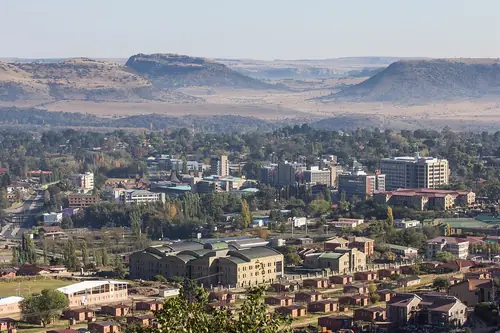
Maseru, Semonkong, Morija. The capital is Maseru.
How much should I budget for a trip to Lesotho?
Budget: around €30–60 per person per day, excluding flights. This is only a guide and depends above all on the accommodation and activities you choose.
The main international airport has the code MSU. Compare flights with the ‘Flights’ button on this page.
Do I need a visa to visit Lesotho?
Entry requirements depend on your nationality and change regularly. Check them on the country's official website or with your foreign ministry before booking, and make sure your passport is valid.
What should I eat in Lesotho?
Dishes to try while you're there: Papa, moroho, mutton stew.
Map
Lesotho on the map
Cities Places to see · Approximate positions
On the ground
Getting around and staying healthy
Getting around
There are no scheduled domestic flights or passenger trains: you travel by road through very mountainous terrain. Minibus taxis and some buses link Maseru with lowland towns and some valleys. For the highlands, Sani Pass or Semonkong, a 4x4 is strongly advised, as mountain roads are steep and sometimes snowy in winter. Ponies, with a local guide, are another way to reach remote villages. Traffic drives on the left.
Health and safety
Yellow fever
No certificate required on entry; vaccine generally not recommended.
Malaria
No transmission reported.
Water and food
Unless your accommodation says otherwise, drink sealed bottled or filtered water, and wash your hands often.
Affiliate cookiesWe would like to load a script from our partner Travelpayouts. It may set cookies so that we receive a commission when you book through our links, at no extra cost to you. If you decline, the site works in exactly the same way. Find out more
 AfriqueUnie
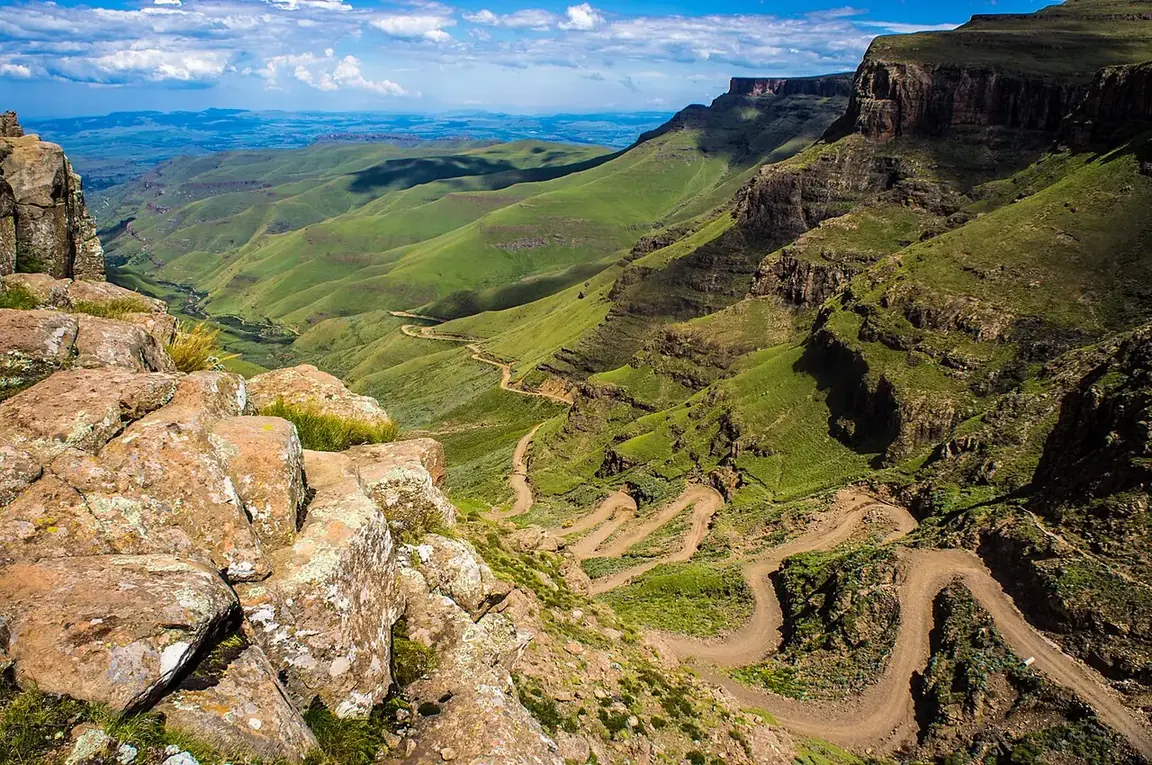 Photo: Vaiz Ha · CC BY 2.0
 Lesotho
 Botswana
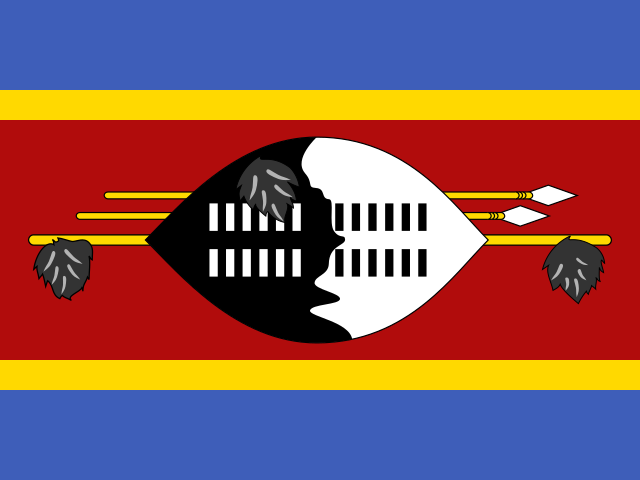 Eswatini
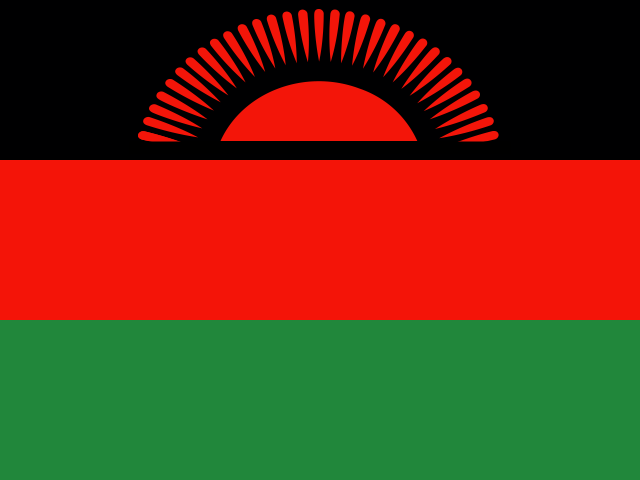 Malawi
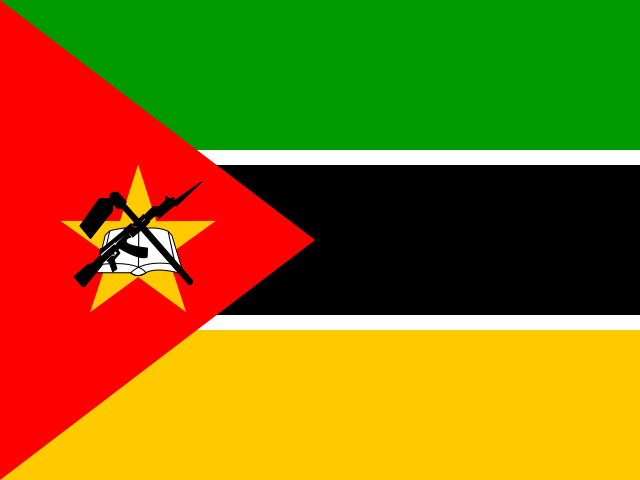 Mozambique
 Namibia
 South Africa
 Zambia
 Zimbabwe