AfriqueUnie
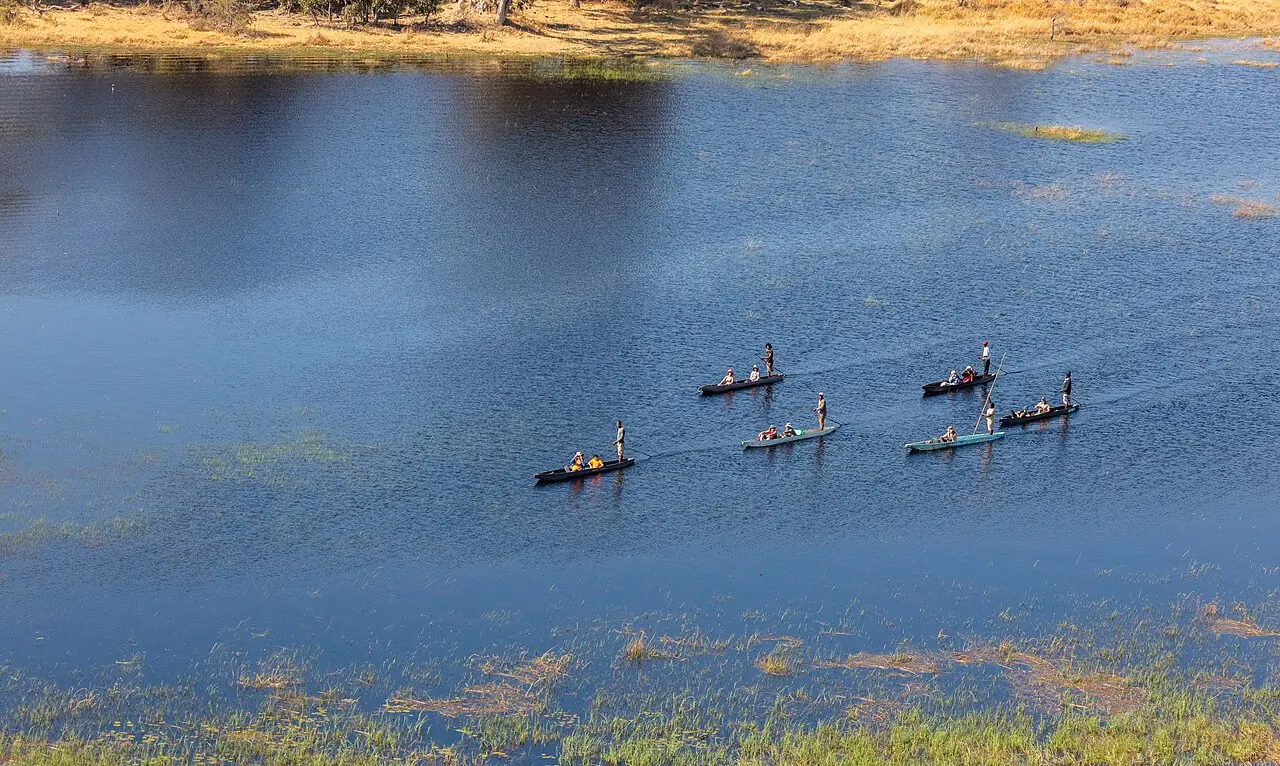 Photo: Diego Delso · CC BY-SA 4.0
Published by Adama Doumbia, founder of Afrique Unie · updated 28 November 2026 · our method and sources
Daily budget
These are rough figures per person per day, excluding the international flight. They cover accommodation (two people sharing a room), meals and local transport.
On a tight budget, allow roughly €60 to €100, camping with a 4x4 hired between several people or on a group camping safari, cooking for yourself. For a comfortable trip, allow about €300 to €600 while on safari in a mid-range camp or lodge, with activities and park fees included. At the top end, allow €1,000 or more, and often far beyond in the private camps of the delta, reached by light aircraft.
Away from the parks, in Gaborone or Maun, everyday costs are much lower.
What is expensive and what costs next to nothing
- Okavango camps: The biggest cost: accommodation, meals, activities and guiding are usually included in a very high nightly rate, especially from July to October.
- Light-aircraft flights: Delta camps are often reachable only by air, from Maun or Kasane: a significant extra cost.
- Parks and reserves: Chobe, Moremi, the Central Kalahari and the other protected areas charge entry fees per person per day, plus the vehicle and camping. Fees are set by the Department of Wildlife and National Parks (DWNP).
- 4x4 hire: Essential for independent travel, expensive, and to be booked well ahead. Some park campsites must also be booked.
- Groceries: Supermarkets in Maun, Kasane and Gaborone make self-catering reasonably priced.
Money: pula, cards and dollars
The currency is the pula (BWP). Cash machines are found in towns, Maun and Kasane; there are none in the bush. Cards are accepted in hotels, lodges, supermarkets and most petrol stations in towns.
Camps and operators often quote prices in US dollars. The South African rand is sometimes accepted near the border, but do not count on it. According to the French foreign ministry, a customs declaration is required for cash above 10,000 pula.
Tipping is expected on safari, for guides, trackers and camp staff: ask your operator what is customary and bring the amount in cash.
Visa and passport
Information checked in November 2026. These rules can change: read the official sources again before you travel.
British and French nationals do not need a visa, nor do other European Union citizens or the Swiss. According to the French foreign ministry, a free permit to stay for up to three months is issued at the border; its length is at the immigration officer's discretion, so check your stamp.
Passport: the French foreign ministry says it must be valid for at least six months after entry. Other sources count from your departure date and ask for several blank pages: allow a margin, especially if you are crossing several borders.
KAZA Univisa: for a trip to Victoria Falls, this 50-dollar visa covers Zambia and Zimbabwe, as well as day trips to Chobe National Park via the Kazungula border. British and French travellers do not need it to enter Botswana itself.
Children travel on their own passport. A birth certificate and parental consent may be requested for a minor not travelling with both parents: ask the embassy.
Health and vaccinations
Yellow fever: a vaccination certificate is required if you arrive from a country where the disease is present. In principle it is not required for a direct flight from Europe or South Africa. If you are travelling via Zambia or another country at risk, take advice from a travel clinic.
Malaria is present in the north of the country: the Okavango Delta, Moremi, Chobe and the Maun and Kasane area, with a higher risk in the rainy season, roughly November to June. The risk is low in the south, in Gaborone. Bite avoidance and preventive medication should be decided with a doctor.
Check your routine vaccines and ask about hepatitis A, typhoid and rabies. Hospitals are far from the safari areas: evacuation cover is essential.
Before you go: the checklist
- Passport: Six months' validity after entry, with a margin and several blank pages.
- Bookings: Camps, light-aircraft flights, 4x4 hire and park campsites: several months ahead for high season.
- Health: Malaria advice if you are going north; a yellow fever certificate if you come from a country at risk.
- KAZA Univisa: Only useful if you plan a trip into Zambia or Zimbabwe.
- Official sources: The Botswana page on gov.uk/foreign-travel-advice and the Botswana page of « Conseils aux voyageurs » on diplomatie.gouv.fr.
- Insurance: Cover for medical costs, air evacuation and repatriation.