AfriqueUnie
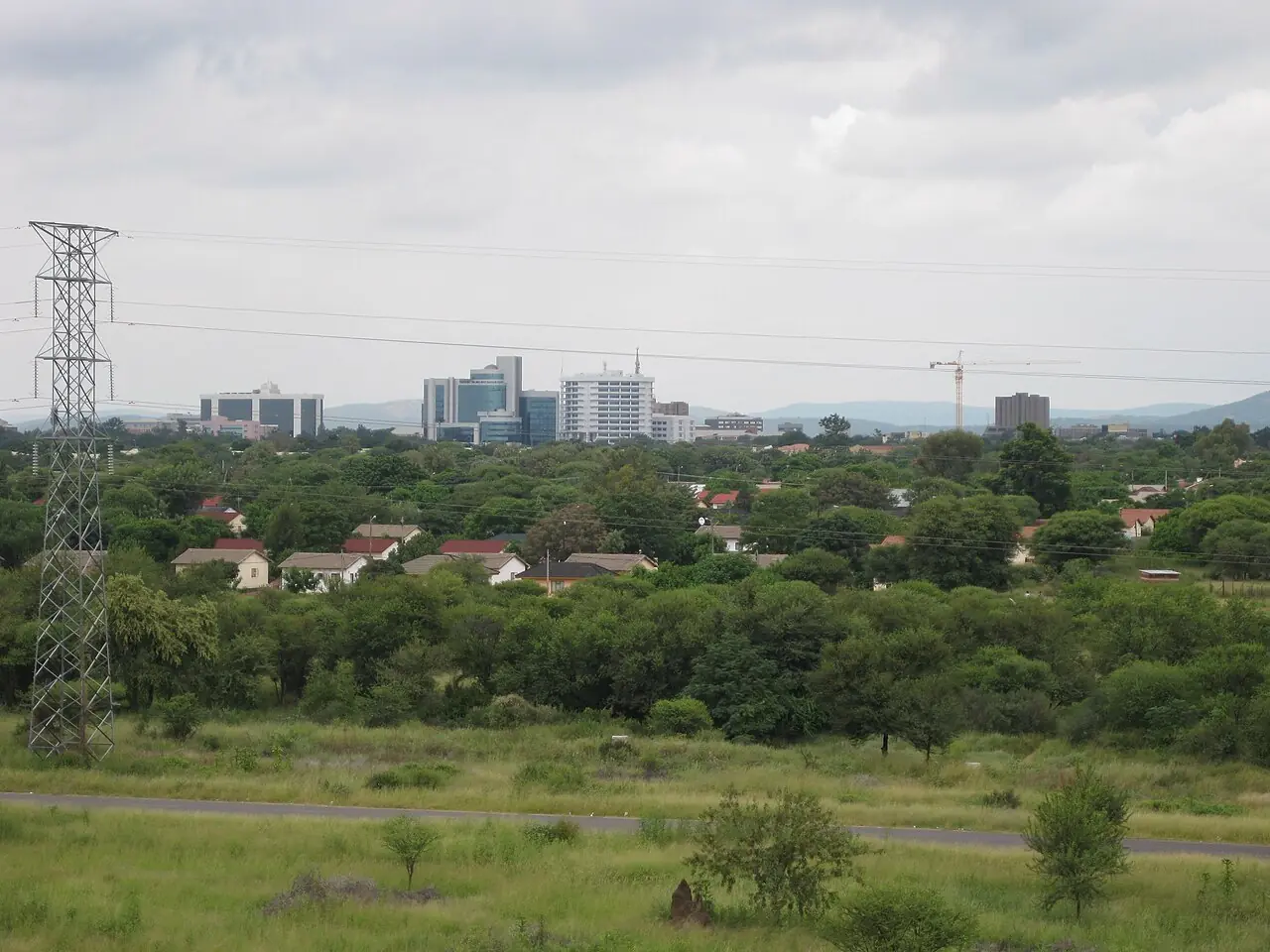 Photo: Iulus Ascanius at English Wikipedia · Public domain
Published by Adama Doumbia, founder of Afrique Unie · updated 28 November 2026 · our method and sources
Why visit Gaborone?
Few travellers linger in Gaborone, and Botswana's capital takes no offence. Built almost from scratch at independence to replace Mafikeng, which lay in South Africa at the time, it is a young, orderly and peaceful city surrounded by rocky hills and savannah. It neatly reflects the country's modern face: government offices, shopping centres, universities, leafy residential suburbs and a social life that revolves around weekend braais.
Yet a few days here offer a valuable insight into Botswana beyond the safari. The National Museum presents the country's history and art; the Three Dikgosi Monument, in the government district, honours the three chiefs who sought British protection to escape Rhodes's grip. The informal markets, craft workshops and little street restaurants serving seswaa let you meet the Batswana in their everyday lives.
Nature is never far away: a game reserve on the city's doorstep, Mokolodi Nature Reserve for an outing on foot or by vehicle, Kgale Hill to climb for the view, and the Gaborone Dam, where people stroll in the evening.
Things to do in Gaborone: 6 ideas
- 01The Three Dikgosi MonumentLearn the country's founding story in front of the three bronze statues of the chiefs.
- 02The National MuseumExplore the history and ethnography collections and contemporary Botswanan art.
- 03Kgale HillClimb at sunrise for the view over the city and the monkeys that live among the rocks.
- 04Mokolodi Nature ReserveGo on a game drive or guided walk a few kilometres from the centre.
- 05The Main MallStroll along the pedestrian walkway in the centre, among street vendors and shops.
- 06The craft villagesVisit the pottery and weaving workshops in the surrounding area, such as at Thamaga or Odi.
Gaborone in one day
- 01MorningClimb Kgale Hill at sunrise, before the heat: one of its three trails reaches the summit in about an hour, with views over the city and the dam. Baboons are common, so do not feed them. Go in a group and leave valuables at your hotel.
- 02LunchHead down to the Main Mall, the pedestrian heart of the city, for lunch on seswaa, slow-cooked shredded meat, with bogobe and morogo from one of the lunchtime stalls. Walk past the Pula Arch at the eastern end, which commemorates the country's independence.
- 03AfternoonVisit the National Museum and Art Gallery, opened in 1968 just north-west of the Main Mall, then take a taxi to the Three Dikgosi Monument in the new Central Business District. Its three bronze statues honour the chiefs who secured British protection against Rhodes's ambitions.
- 04EveningFinish at the Gaborone Game Reserve, east of the city, to spot impala, kudu and warthog as the animals come out, checking the closing time first. Then have dinner at Riverwalk or Phakalane, going by taxi, as the French authorities advise against walking alone at night.
A second day in Gaborone
- 01MorningHead to Mokolodi Nature Reserve, about ten kilometres south of the city, for a guided game drive or walk. You can see giraffe, zebra, kudu and the white rhino herd, which is part of the national breeding programme. Book the day before.
- 02LunchHave lunch in the reserve, in the shade, or back in the south of the city. Use the break to fill up with fuel and buy water before the afternoon outing: since driving at night is not advised, it is best to plan everything in advance.
- 03AfternoonTake the road to Thamaga, a large village about 40 kilometres west, overlooked by rocky hills and known for its pottery workshops. Take time to watch the potters at work and buy directly from the makers. Return to Gaborone before dark.
- 04EveningWatch the sunset over Gaborone Dam, south of the city, a favourite late-afternoon outing for locals. Stay in busy areas and keep away from the water's edge. At weekends, try a braai, the local barbecue, before heading back by taxi.
A little history
Before independence, the British Bechuanaland Protectorate was run from Mafeking, a town outside its own territory, in South Africa. As independence approached in the early 1960s, a capital had to be built. The site chosen, near a small Batlokwa village on the Notwane River, took the name of their chief, Kgosi Gaborone. Building began in the mid-1960s and the town, then called Gaberones, became the capital of independent Botswana on 30 September 1966, with Seretse Khama as its first president.
Planned as a small administrative town, Gaborone was transformed by the discovery of diamonds shortly after independence. Mining revenue paid for roads, schools and public buildings, and the capital, renamed Gaborone in the late 1960s, became one of the fastest-growing cities in southern Africa.
Today it is home to the headquarters of the Southern African Development Community (SADC), the government ministries and the country's main university. The Three Dikgosi Monument is a reminder that the country also owes its history to chiefs Khama III, Sebele I and Bathoen I, who travelled to London in 1895 to defend their land.
What to eat in Gaborone
Botswana's cooking is simple and centred on meat, especially beef. The national dish is seswaa, meat slow-cooked then shredded, served with bogobe, a thick maize or sorghum porridge, and morogo, a kind of wild spinach. Also try dikgobe, a mix of beans and samp, magwinya, fried dough balls sold in the morning, and, for the curious, dried mopane worms.
To drink, traditional sorghum beer is shared in local bars, alongside local lagers and ginger beer. At weekends, social life revolves around the braai, the barbecue with friends. For eating out, the stalls of the Main Mall and the markets serve seswaa at lunchtime, and shopping centres such as Riverwalk or Game City have plenty of restaurants.
Where to stay in Gaborone
The northern residential suburbs, around Phakalane, and the area near the Riverwalk and Airport Junction shopping centres have the highest concentration of modern hotels and guesthouses. The government district and the Main Mall are busy by day but empty in the evening. For more nature, there are lodges and chalets near Mokolodi, to the south, or on the outskirts facing the hills. Gaborone is a sprawling city: people get around by car or taxi, rarely on foot.
Getting there and getting around
Sir Seretse Khama International Airport (code GBE) lies north of the city, about fifteen kilometres from the centre, or around twenty minutes by road. Taxis and hotel shuttles meet flights; the easiest option is to book your transfer in advance. From Johannesburg, you can also arrive by road, crossing the border at Tlokweng.
In town, combis, minibuses on fixed routes, serve the main neighbourhoods and shopping centres, and public transport vehicles have blue number plates. Taxis do not always have meters: agree on the fare before setting off or ask your accommodation to call one. As Gaborone is so spread out, hiring a car is often convenient; traffic drives on the left and the roads are in good condition.
The currency is the pula, whose name means “rain” in Setswana, as water is so precious in this semi-arid country. ATMs are plentiful and cards are widely accepted in hotels, supermarkets and shopping centres; keep a little cash for combis and small stalls.
See places to stay in Gaborone
Frequently asked questions
How many days do you need in Gaborone?
One to two days are enough for the Three Dikgosi Monument, the National Museum, Kgale Hill and an outing to Mokolodi Nature Reserve. Add a day for the craft villages nearby, such as Thamaga or Odi.
When is the best time to visit Gaborone?
The dry season, from May to October, is the most pleasant: sunny days, few mosquitoes and good wildlife viewing across the country. Nights can be chilly in June and July. From November to March it is hot and thunderstorms are frequent.
Do you need a visa for Gaborone?
British, EU, US and many other nationals do not need a visa for visits of up to 90 days. A yellow fever vaccination certificate is only required if you are arriving from a country with a risk of the disease. Check the latest rules on your government's travel advice website before booking.
Is Gaborone a good gateway for a safari in Botswana?
For the Central Kalahari, Khutse Game Reserve or Mokolodi, yes. The Okavango Delta and Chobe National Park, however, are in the far north, a long day's drive away: it is easier to take a domestic flight or fly straight into Maun or Kasane. Note that malaria is present in the north of the country, but not in Gaborone.
Is Gaborone safe for tourists?
Gaborone is one of the most peaceful capitals on the continent, but the usual precautions apply: avoid walking alone at night, leave nothing visible in your car and keep your valuables out of sight. Read your government's travel advice before you go.
What is there to do in Gaborone in the evening?
Evening life centres on the Riverwalk, Game City and Airport Junction shopping centres, where restaurants and cinemas stay open, and on weekend braais. Get around by taxi called by your accommodation, as the French Foreign Ministry urges vigilance in Gaborone, where bag-snatching has been reported.
Can you see wildlife without leaving Gaborone?
Yes. The Gaborone Game Reserve, east of the city, is home to impala, kudu, warthog and vervet monkeys, while Mokolodi Nature Reserve, about ten kilometres south, offers guided outings to see giraffe, zebra and white rhino. For the big safaris, head to the north of the country.
 Botswana