AfriqueUnie
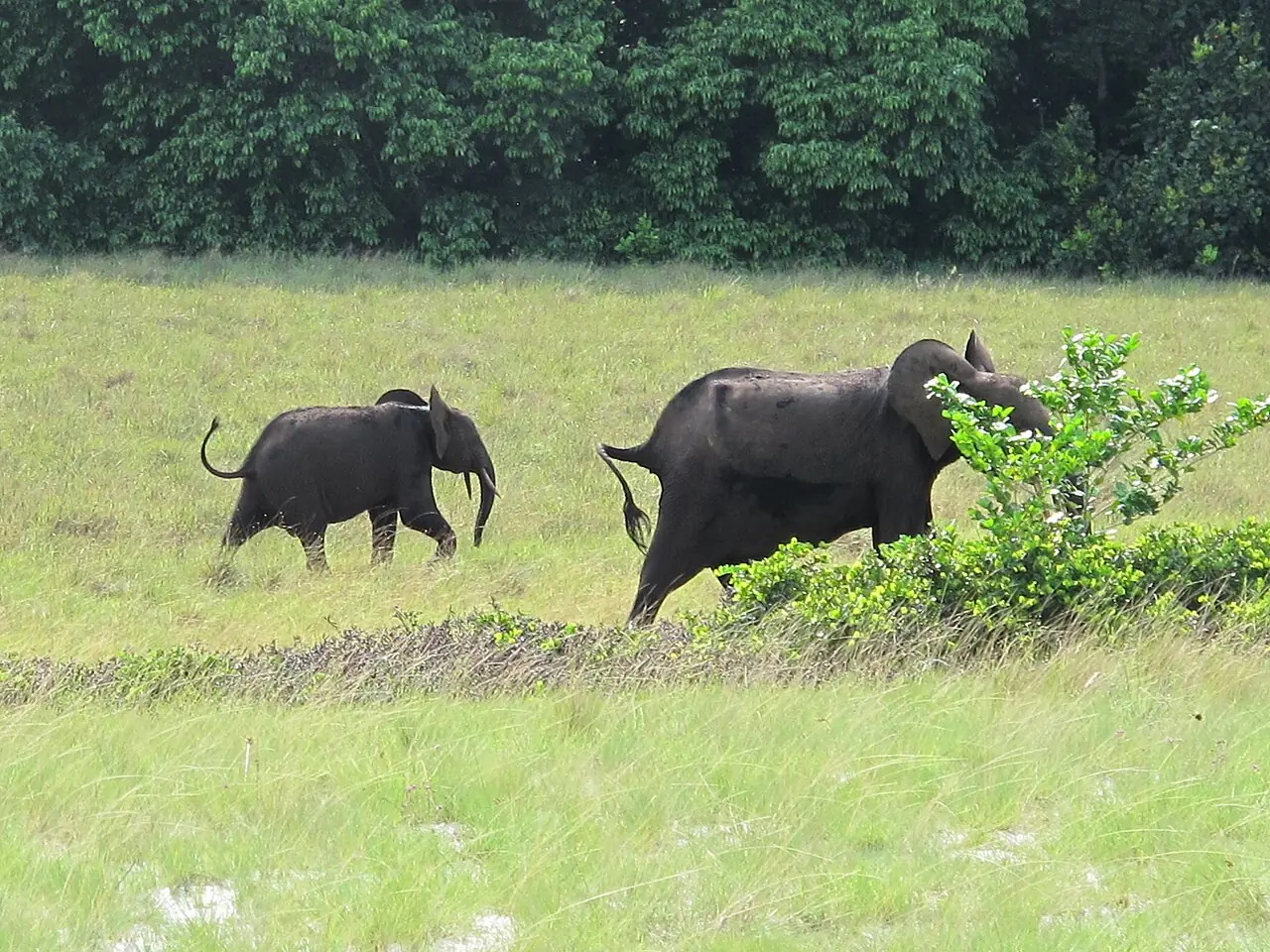 Photo: Kurt Dundy at English Wikipedia · CC BY 3.0
Published by Adama Doumbia, founder of Afrique Unie · updated 28 November 2026 · our method and sources
Daily budget
These are rough figures per person per day, excluding the international flight, visa and vaccines. They cover accommodation (two people sharing a room), meals, local transport and a few visits.
On a tight budget, allow roughly €60 to €100, staying in simple small hotels, eating at maquis and neighbourhood restaurants and travelling by shared taxi, coach or train. For a comfortable trip, allow about €150 to €250, with a good hotel, restaurants and a car with driver for some journeys. At the top end, allow €350 or more; lodge stays in parks such as Loango or Lopé are often sold as packages including transfers, and cost considerably more.
Libreville and Port-Gentil are expensive, especially for accommodation and restaurants. A tight budget is hard to keep once you head for the parks, which almost always require a guide and a vehicle.
What is expensive and what costs next to nothing
- National parks: The biggest cost of the trip: entry fees, a guide, transport by four-wheel drive or boat and accommodation all add up. Compare what packages include.
- Accommodation: Expensive in Libreville, where hotels of international standard charge European prices. Outside the capital the choice is smaller and simpler.
- Local meals: Chicken nyembwe or grilled fish at a maquis cost a few euros. Seafront and hotel restaurants are far more expensive.
- Transport: Shared taxis and coaches cost little; the Transgabonais railway links Libreville (Owendo) with Franceville via Lopé. Domestic flights, a four-wheel drive with driver and boats to the lagoons are costly.
- Visa: A cost to plan before you even leave; we could not confirm the official fee.
Money: Central African CFA francs, cash and cards
The currency is the Central African CFA franc (XAF), pegged to the euro at a fixed rate: €1 is worth 655.957 CFA francs. Despite the same value, it is not used in West Africa (the XOF zone), and vice versa. The French foreign ministry advises bringing euros and changing them locally, at hotels or banks.
You can withdraw cash in Libreville, notably in large hotels and at the head offices of the main banks; cash machines are scarce outside the towns. Some hotels and large shops in the capital accept Visa, Mastercard and American Express. The UK government warns that card fraud is common outside the major hotel chains: be careful when paying and withdrawing.
Gabonese people use mobile payment widely (Airtel Money, Moov Money), which requires a local SIM card registered with your passport. For a short stay, rely mainly on cash, in small notes, for the provinces and the parks.
Tipping is not compulsory. A small amount for a guide, tracker or driver is appreciated.
Visa and passport
Information checked in November 2026. These rules can change: read the official sources again before you travel.
A visa is compulsory for French nationals and, according to the French foreign ministry, for all travellers. You can apply online on the site of the Directorate General of Documentation and Immigration (DGDI), edgdi.dgdi.ga, or at the Gabonese embassy. The UK government says British nationals must get it before travelling, considers the High Commission in London the most reliable route and requires, for tourism, a hotel booking or a letter from your hotel.
We could not confirm the official fee, and payment arrangements are changing: unofficial sources mention paying on arrival at Libreville airport after an authorisation obtained online. Follow the portal's instructions, keep some euros in cash just in case, and beware of sites imitating the official portal.
Passport: it must be valid for more than six months (the UK government says at least six months after the date you arrive). For stays of more than three months, a specific entry authorisation is required. The authorities systematically check vaccination certificates on entry (see below).
Safety: neither the French foreign ministry nor the UK government advises against any region of Gabon. The French ministry recommends extra vigilance on isolated beaches around Libreville and in Ogooué-Maritime province, in several districts of the capital (including Mont-Bouët, Petit Louis, the bus station and the PK areas), at the Poto-Poto market in Franceville, and particular care at night throughout the country.
Health and vaccinations
The yellow fever vaccine is compulsory for entry to Gabon from the age of 9 months. Your international vaccination certificate is checked on arrival. The vaccine must be given at least ten days before departure, at an approved yellow fever vaccination centre.
Malaria is present all year throughout the country. The French foreign ministry reports that French nationals regularly die of malaria in Gabon, and that cases, like those of chikungunya, rise sharply in the rainy seasons (September to December, February to June). Prevention combines protection against mosquito bites and preventive medication prescribed by a doctor. Any fever needs prompt medical attention, including after you return.
Check your routine vaccines and ask about hepatitis A, typhoid and rabies. Outside Libreville, healthcare is limited: insurance covering treatment and medical evacuation is essential.
Before you go: the checklist
- Passport: Valid for more than six months.
- Visa: Apply on edgdi.dgdi.ga or through the Gabonese embassy several weeks before you leave, with a hotel booking.
- Yellow fever: International vaccination certificate, with the vaccine given at least ten days beforehand: it is checked on arrival.
- Malaria: A medical appointment a few weeks before departure.
- Official sources: Read the Gabon page on gov.uk/foreign-travel-advice and the Gabon page of « Conseils aux voyageurs » on diplomatie.gouv.fr, including the districts and beaches where extra vigilance is advised.
- Insurance: Medical costs and repatriation, with emergency numbers noted separately.