AfriqueUnie
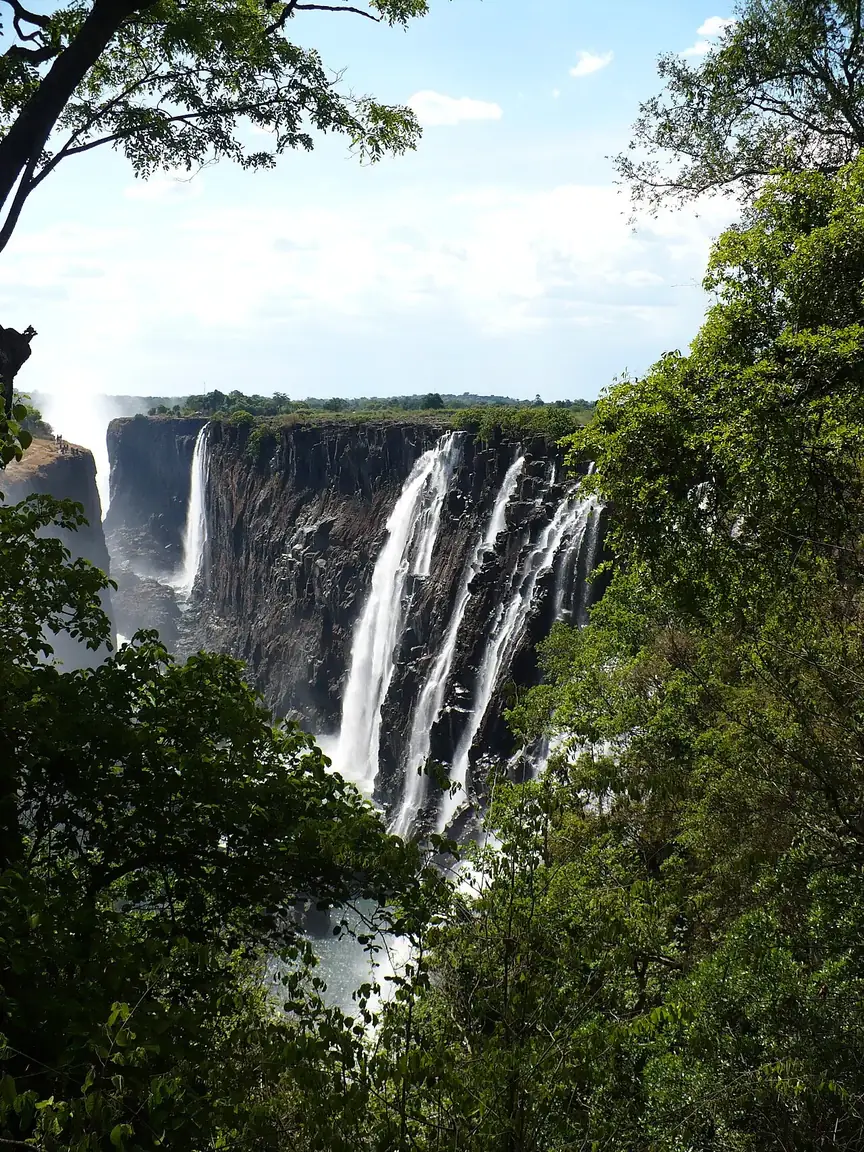 Photo: Florence Devouard · CC BY-SA 4.0
Published by Adama Doumbia, founder of Afrique Unie · updated 28 November 2026 · our method and sources
Daily budget
These are rough figures per person per day, excluding the international flight. They cover accommodation (two people sharing a room), meals and local transport.
On a tight budget, allow roughly €50 to €80, staying in hostels or campsites, eating simply and travelling by bus or by the overnight train between Bulawayo and Victoria Falls. For a comfortable trip, allow about €150 to €300, with a mid-range lodge or hotel, a few activities and day safaris. At the top end, allow €500 or more, and much more in private camps in Hwange or Mana Pools, often reached by light aircraft.
Prices are set in US dollars, so the euro or pound exchange rate can change the bill noticeably. The Victoria Falls area is much more expensive than the rest of the country.
What is expensive and what costs next to nothing
- Victoria Falls activities: Helicopter flights, rafting, bungee jumping, sunset cruises: each is paid separately, in dollars, and the total climbs fast.
- National parks: Entry to the Falls and to parks such as Hwange, Mana Pools and Matobo is charged per person, sometimes per day. Fees are set by the parks authority (ZimParks) and change: check them before you go.
- Safari camps: The biggest top-end cost: a night usually includes meals, activities and a guide, at a high price, especially in the dry season.
- Transport: Buses and trains are cheap but slow. Car hire, private transfers and domestic flights cost far more. Budget for fuel too, which can be hard to find.
- Everyday spending: Groceries, simple meals and local transport stay affordable, as long as you have small dollar notes.
Money: US dollars, ZiG and cash
Zimbabwe runs a multi-currency system. The US dollar is legal tender and is used for most payments. The local currency, the ZiG (Zimbabwe Gold), replaced the Zimbabwean dollar in April 2024. The UK government warns that monetary policy can change at short notice.
Cash machines do not always pay out dollars on a foreign card, so arrive with enough US dollar cash in small notes, as change is rarely available. According to the French foreign ministry, older notes, especially old 100-dollar bills, may be refused: check their dates before you leave, and do not accept torn notes. Cards work in some hotels and restaurants, mainly in Harare and Victoria Falls, but not everywhere: ask in advance how to pay for hotels and excursions.
Mobile money (EcoCash in particular) is widely used by Zimbabweans, but it needs a local line. Exchanging money is only legal at banks and licensed bureaux. You must declare cash worth 10,000 dollars or more, and it is illegal to leave with more than 2,000 dollars in cash. Tipping is expected on safari: bring it in dollars.
Visa and passport
Information checked in November 2026. These rules can change: read the official sources again before you travel.
British and French nationals need a visa. You can apply before you travel on the official portal, evisa.gov.zw, or get one on arrival, where it is usually granted for 30 days. Take enough US dollars in small notes to pay. The French foreign ministry strongly recommends registering online before departure and gives, as a guide, 30 dollars for a single entry and 45 dollars for a double entry for French citizens; fees vary by nationality and can change at any time, so check the Zimbabwean embassy's list.
KAZA Univisa: this 50-dollar visa, valid for 30 days, covers Zimbabwe and Zambia, plus day trips into Botswana via Kazungula. It is available at Harare, Bulawayo and Victoria Falls airports and at the Victoria Falls and Kazungula land borders. Zambia lets British and French visitors in without a visa, so compare it with a double-entry Zimbabwean visa before choosing.
Passport: the UK government says it must be valid for at least six months after you arrive, with three blank pages. Other EU, Swiss and Canadian nationals should check the rule that applies to them. The Zimbabwean Embassy in London no longer issues visas: use the official portal and avoid intermediary websites.
Health and vaccinations
Yellow fever: a vaccination certificate is required from the age of 9 months if you arrive from a country where the disease is present, including after an airport transit of more than 12 hours. In principle it is not required for a direct flight from Europe, and the vaccine is not recommended for Zimbabwe alone.
The US CDC lists malaria throughout the country. The risk varies by area and season: it is higher in the rainy season, roughly November to April, and in low-lying areas such as the Zambezi valley. Bite avoidance and preventive medication should be decided with a doctor.
The French foreign ministry notes that cholera is endemic: drink sealed bottled water. Check your routine vaccines and ask about hepatitis A, typhoid and rabies. Hospitals are far from the parks: evacuation cover is essential.
Before you go: the checklist
- Visa: Apply at evisa.gov.zw, or get a visa on arrival: bring the exact amount in US dollar cash.
- Passport: Six months' validity after arrival and at least three blank pages.
- Dollars: A cash reserve in small, recent notes in good condition: withdrawals are not guaranteed.
- Health: See a doctor about malaria; a yellow fever certificate if you are coming from a country at risk.
- Official sources: The Zimbabwe page on gov.uk/foreign-travel-advice and the Zimbabwe page of « Conseils aux voyageurs » on diplomatie.gouv.fr: France advises against the Marange diamond fields and the northern border with Mozambique.
- Caution: Stay away from gatherings and from anything political, including online, and do not photograph government buildings.