 AfriqueUnie
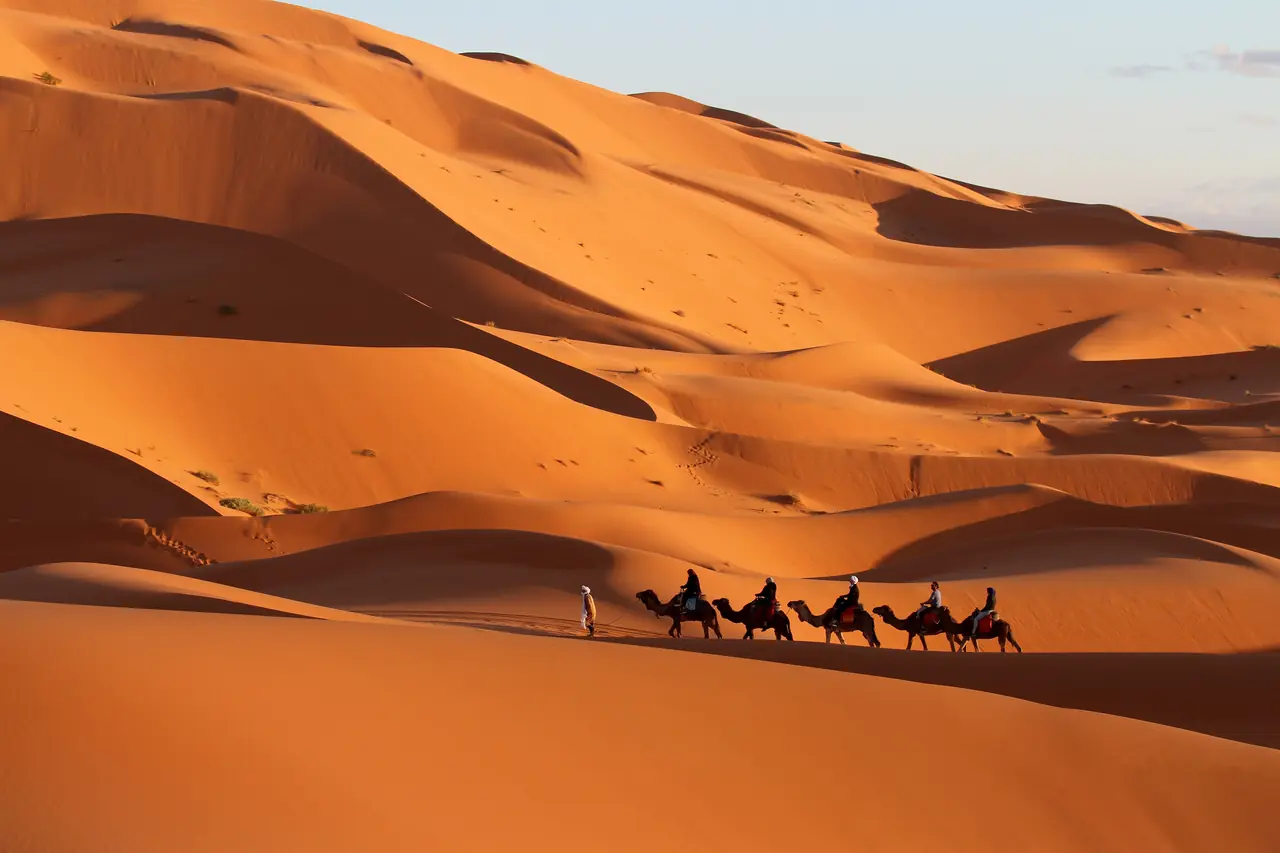 Photo: Merzougaloisirs · CC BY-SA 4.0
- Our verdict
- Possible
- Afternoon in Rabat
- 27 °C
- Night
- 18 °C
- Rain
- almost none
- The country's best time
- March to May, September to November
What to expect in Morocco in July
In July Morocco has two faces. On the Atlantic coast the ocean tempers the air: about 27°C in Rabat, often less in Essaouira, where the wind blows hard, and practically no rain. Inland the heat is harsh: Marrakech and Fès frequently exceed 36 to 38°C, more during spells of chergui, the scorching wind from the Sahara. The desert at Merzouga regularly passes 40°C and is hard to enjoy at this time of year.
It is high season on the coast, where Moroccan families and Moroccans living abroad gather: lively beaches, busy roads and ferries. The imperial cities, on the other hand, are quieter than in spring. July is a good choice for the ocean, surfing, kitesurfing and high-altitude hiking; it is much less so for a tour of the south, which is best left to travellers who cope very well with heat.
What to do in Morocco in July
Essaouira, the windy city
When Marrakech swelters, Essaouira stays at around 22 to 24°C thanks to the trade winds. This steady wind makes it a top spot for kitesurfing and windsurfing, but leaves the beach rather uncomfortable for sunbathing. The ramparts, fishing harbour and medina can be visited without breaking a sweat.
Toubkal in summer
July is peak hiking season in the High Atlas: the trails are clear of snow and nights are cool at altitude. The ascent of Toubkal, at 4,167 metres, is done with a licensed guide, which local authorities generally require. The lower Ourika Valley draws Marrakech residents in search of cooler air.
Chefchaouen and the Rif
Perched at about 600 metres, Chefchaouen is hot by day but comfortable in the evening. Explore the blue lanes early in the morning, then cool off by the waterfalls and rivers of the Rif. The Mediterranean beaches, where the water is warmer than in the Atlantic, are within driving distance.
Evenings in the medinas
In Marrakech and Fès, life shifts: sightseeing at opening time, a siesta or the pool in the afternoon, then out at dusk, when the squares and souks fill up. On 30 July, Throne Day, a public holiday, is marked by celebrations across the country.
Our tips for this month
On the coast, bring a windproof jacket and a jumper for the evening; inland, loose cotton or linen clothes, a hat and plenty of water. Choose air-conditioned accommodation with a pool in Marrakech and Fès, and avoid any activity between noon and 5pm. Book the coast early, as it is in great demand. The Atlantic stays cool and currents can be strong: swim at beaches with lifeguards.
Frequently asked questions
Is it too hot in Marrakech in July?
It is very hot: 36 to 38°C on average in the afternoon, sometimes over 45°C during heatwaves. The city can still be visited early in the morning and in the evening, with air-conditioned accommodation and a pool.
Can you swim in Morocco in July?
Yes. The Atlantic reaches about 20 to 22°C, which is still cool, while the Mediterranean is warmer, at around 23 to 24°C. Choose beaches with lifeguards, as the ocean's waves and currents are powerful.
Can you visit the Moroccan desert in July?
It is not recommended for comfort: it is often over 40°C in Merzouga and nights stay hot. If you are set on it, limit yourself to one night, with outings at sunrise and sunset.
Temperatures and rainfall: averages measured in Rabat (climate table of the Wikipedia article “Rabat”). The climate varies by region, and any given year can differ from the averages.
Calendar
Events in July
- Marrakech National Festival of Popular Arts · early July; 2027 dates not yet announced
Plan
Go further
Guides