AfriqueUnie
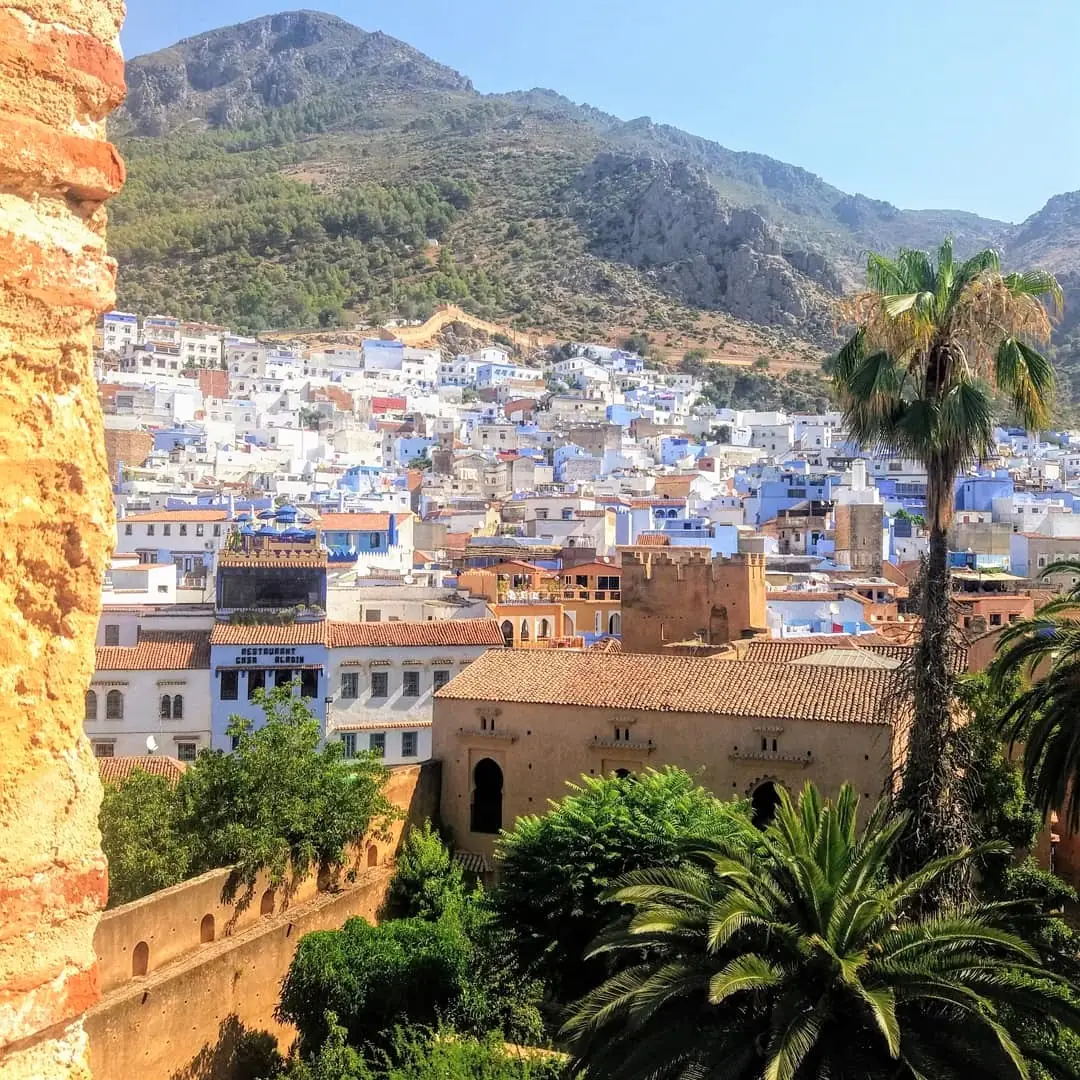 Photo: ZLAIJI ABDELLATIF · CC BY-SA 4.0
Published by Adama Doumbia, founder of Afrique Unie · updated 28 November 2026 · our method and sources
Why visit Chefchaouen?
Tucked at the foot of two Rif peaks, Chefchaouen was founded in 1471 as a fortress against Portuguese incursions, then became a refuge for Muslims and Jews driven out of Andalusia. Long cut off from the outside world, it has kept a compact medina with tiled roofs and whitewashed houses whose walls, doors and stairways are painted in every shade of blue, from pastel to indigo.
There are several explanations for the blue, from Jewish tradition to its supposed power to keep mosquitoes away; no one really knows, and keeping the colour fresh is now partly about attracting visitors too. What is certain is the effect it produces: at any hour the alleys feel cool and luminous, and every street corner invites you to sit down on a step.
Beyond the photos, Chefchaouen charms with its slow pace. Place Outa el-Hammam, at the foot of the kasbah, gathers the shady cafés; at the Ras el-Ma spring, just outside the medina, women do their washing; and footpaths climb towards the Spanish Mosque and, further on, to Talassemtane National Park, with its firs and mountain villages. The town is also known for its fresh goat's cheese and its woven blankets.
Things to do in Chefchaouen: 6 ideas
- 01The kasbah and its gardenAn ochre fortress in the heart of the medina, with a small ethnographic museum and a tower from which you can see the whole blue town.
- 02Climbing to the Spanish MosqueA climb of about twenty minutes from Ras el-Ma, rewarded by a magnificent view at sunset.
- 03Wandering the alleys at dawnBefore the day-trippers arrive, the upper quarters such as Souika are silent and the light is soft.
- 04Hiking to God's BridgeIn Talassemtane National Park, this natural arch above a river makes a day hike from Akchour.
- 05Tasting the local goat's cheeseSold fresh in grocery shops and served in cafés, often with bread and olive oil.
- 06The Akchour waterfallsLess than an hour's drive away, these waterfalls and pools are a very popular walk, especially in spring.
Where to stay in Chefchaouen
The medina is full of small guesthouses and riads, often with terraces looking out over the mountains. Houses near Place Outa el-Hammam are central but livelier; those higher up, towards Ras el-Ma, are quieter but involve climbing stairs. A few more modern hotels outside the walls suit you if you are travelling by car.
See places to stay in Chefchaouen
Frequently asked questions
How do I get to Chefchaouen?
There is no airport or railway station, so you arrive by coach or car, from Tetouan (about an hour), Tangier (about two and a half hours) or Fez (about four hours). Travel by day: France advises against taking secondary roads in the Rif at night, while the Tetouan–Chefchaouen road is less of a problem.
How many nights should I spend in Chefchaouen?
Two nights are ideal: one day for the medina, the kasbah and the climb to the Spanish mosque, another for a hike to Akchour and God's Bridge. Staying overnight lets you enjoy the lanes when they are quiet, early in the morning and in the evening.
How do I get to the Akchour waterfalls and God's Bridge?
Akchour is about 45 minutes' drive from Chefchaouen, by taxi or car. From there, trails lead to the waterfalls and God's Bridge, a natural arch, in roughly one to two hours' walk each way. Set off early with good shoes and water, and avoid the gorges after heavy rain.
Is Chefchaouen safe?
France does not advise against travel to any part of it, but calls for particular caution in the Rif, a cannabis-growing and trafficking region. You will often be offered cannabis: refuse firmly, as recreational use and possession remain illegal in Morocco. Avoid hiking alone in isolated places.
When is the best time to visit Chefchaouen?
Spring and autumn are the best seasons for hiking and wandering. Summer is hot and very busy, especially at Akchour; winter is cold and wet, with occasional snow on the peaks. Come on a weekday to avoid the crowds.

 Morocco