 AfriqueUnie
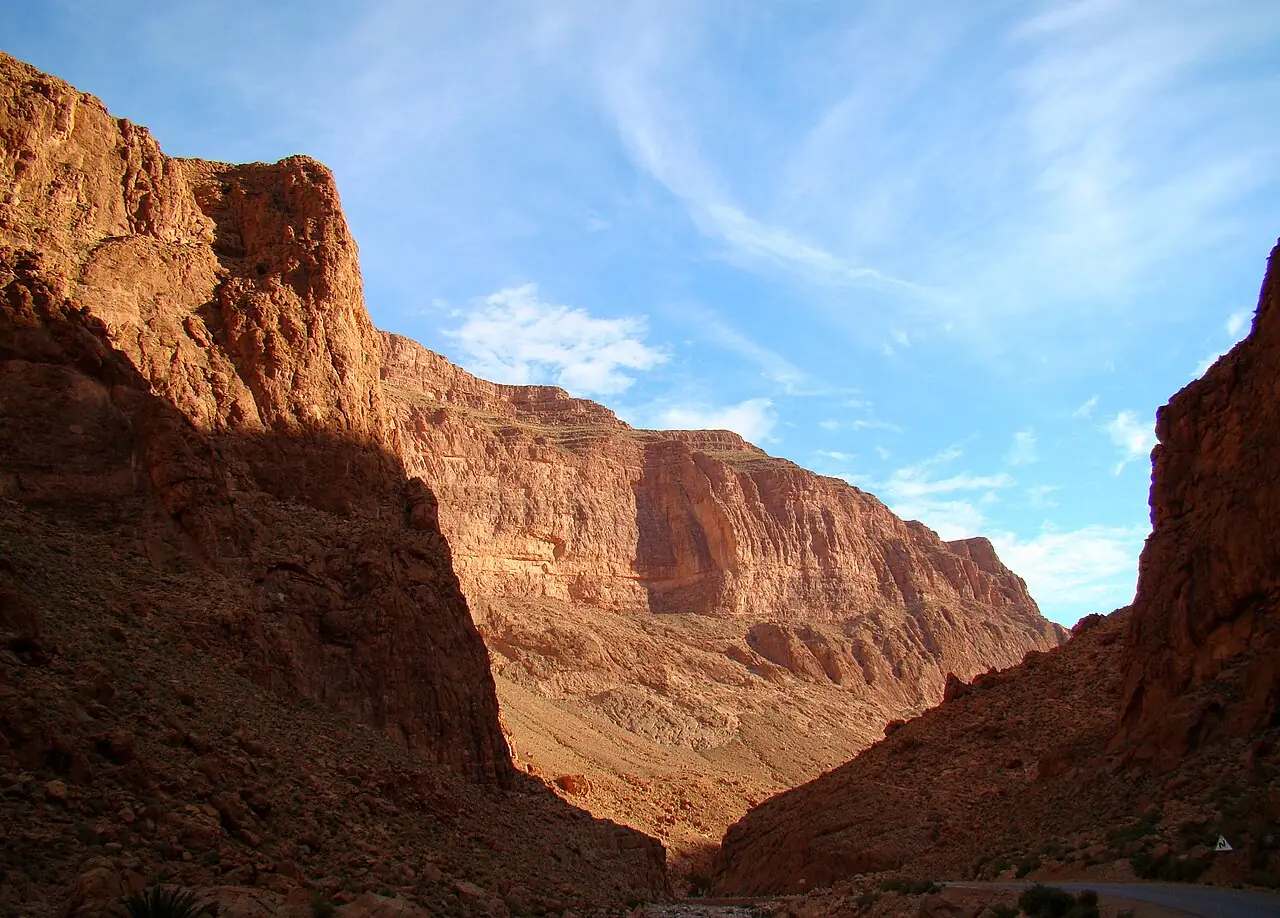 Photo: Bjørn Christian Tørrissen · CC BY-SA 3.0
Published by Adama Doumbia, founder of Afrique Unie · updated 28 November 2026 · our method and sources
Why go
North of the town of Tinghir, the Todra river has cut through the south-eastern edge of the High Atlas to form one of Morocco's most spectacular canyons. After a long, lush palm grove dotted with earthen ksours and kasbahs, the valley narrows abruptly: for a few hundred metres, cliffs of pink and ochre limestone rise sheer to around 300 metres, leaving a gap of only about ten metres between them for the river and the road.
The site is best explored on foot, walking up the riverbed at the bottom of the gorge, then following the paths that climb to the plateaus and the Berber villages above, where families of semi-nomadic herders still live. The walls also draw climbers from all over the world, with many bolted routes. Further upstream, the road continues to the high valleys of the Atlas, and the neighbouring Dades Gorge offers another landscape of sculpted rock.
Getting there
The gorge lies about fifteen kilometres north of Tinghir, along a paved road that follows the palm grove. Tinghir is on the main road linking Ouarzazate with Errachidia and Merzouga: allow about three hours from Ouarzazate and a little more to reach Erg Chebbi. The gorge is therefore a natural stop on the way to the desert. Buses serve Tinghir, from where taxis go up to the gorge.
Frequently asked questions
Can you walk through the Todra Gorge?
Yes, the narrowest part of the gorge is easy to explore on foot, following the road and the riverbed for a few hundred metres. To go further, trails climb to the plateaus and highland villages, ideally with a local guide. Wear shoes that can get wet, as you sometimes cross the stream.
Can you go rock climbing in the Todra Gorge?
Yes, the limestone cliffs have many bolted routes at all levels and attract climbers from around the world. Spring and autumn are the best seasons, as summer is hot and winter cold in the gorge. Beginners should climb with a qualified instructor and check the equipment.
What is the best time to visit the Todra Gorge?
Spring and autumn offer the most pleasant temperatures for hiking. In summer the valley is hot, although the bottom of the gorge stays shaded for part of the day. In winter, days are often sunny but nights are cold, and snow can fall on the heights.
Can you travel between the Todra and Dades gorges?
Yes, either by the main road via Tinghir and Boumalne Dades, or by a mountain road that crosses the High Atlas between the two valleys. The second option is more spectacular but includes difficult stretches, so check its condition and prefer a suitable vehicle with a driver who knows it. Avoid it in bad weather.
Is the Todra Gorge dangerous?
The main risk is natural: during storms, a flash flood can swell the stream in the gorge very quickly. Rockfall is also possible at the foot of the cliffs. For hikes in isolated parts of the Atlas, official advice calls for vigilance: go with a local guide and tell your accommodation your route.


 Angola
 Burundi
 Cameroon