AfriqueUnie
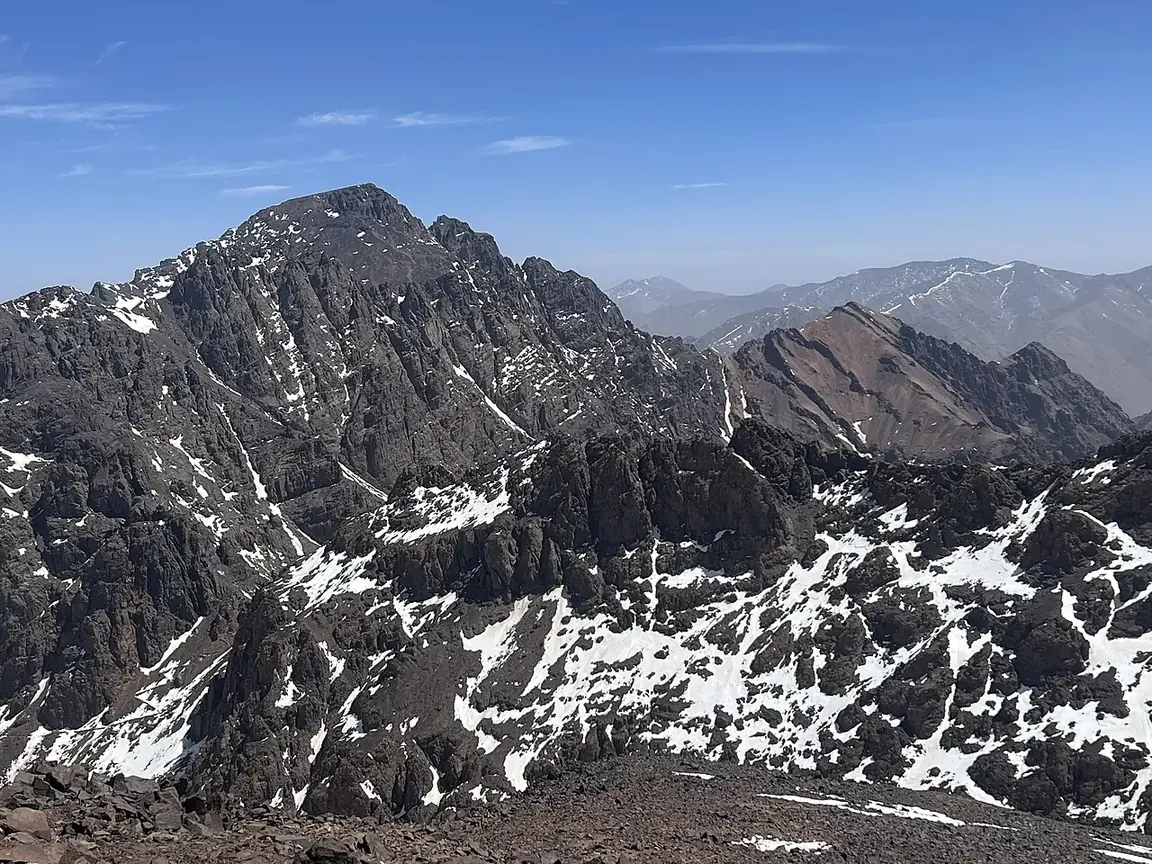 Photo: SimonKing74 · CC0
Published by Adama Doumbia, founder of Afrique Unie · updated 28 November 2026 · our method and sources
Why go
South of Marrakech, the High Atlas raises a barrier of peaks that stay snow-capped for part of the year. Travellers have two gateways to choose from. The lush Ourika Valley follows a mountain stream lined with walnut trees and little restaurants with tables set in the water; at the end of the road, the village of Setti Fatma is the starting point for a walk to a series of waterfalls. It is the people of Marrakech's favourite weekend escape.
Further west, the village of Imlil, in the neighbouring valley, is the base camp for Jebel Toubkal, which rises to 4,167 metres, the highest point in North Africa. The ascent, with no technical difficulty in summer, demands stamina and acclimatisation: you usually climb to the refuge on the first day, then to the summit at dawn the next morning. But even without aiming for the top, the paths between Amazigh villages, terraced fields and communal granaries make for superb hiking.
Getting there
The Ourika Valley is about an hour's drive from Marrakech; grands taxis leave from the city, and day trips are plentiful. Imlil is about an hour and a half from Marrakech via Asni. From there, allow a day's walk to the Toubkal refuge, then a few hours to reach the summit and come back down. Muleteers can carry your luggage.
Frequently asked questions
Is a guide compulsory to climb Toubkal?
Since late 2018, the Moroccan authorities have in practice required climbers starting from Imlil to be accompanied by a licensed mountain guide. Gendarmerie checkpoints on the trail and at the refuge check hikers' passports and guides' credentials. The rules can change, so check with the guides' office in Imlil before setting off.
How many days does it take to climb Toubkal?
The classic itinerary takes two days: Imlil to the refuge on the first day, then the summit early the next morning and back down to Imlil. A third day gives more time to adjust to the altitude, as the summit is over 4,100 metres. Headaches and breathlessness are common, so climb at your own pace and descend if symptoms get worse.
Is Toubkal suitable for beginner hikers?
In summer and early autumn the ascent needs no climbing skills, but it does require good fitness and experience of long days walking in the mountains. The final section, on scree, is steep and tiring. In winter and spring, snow and ice turn it into a proper alpine climb needing crampons, an ice axe and a helmet. The French government strongly recommends using only qualified high-mountain guides, as accidents happen regularly.
How do you get to the Setti Fatma waterfalls from Marrakech?
Shared grand taxis leave Marrakech for the Ourika Valley, and many day trips go there; allow roughly an hour to an hour and a half to Setti Fatma. From the village, a rocky path leads to the first waterfalls in about half an hour, with a few sections where you need your hands. Wear good shoes, as the ground is slippery.
What are the risks of storms and flash floods in the Ourika Valley?
Summer and spring storms, as well as heavy winter rain, can cause sudden, violent floods in the valley, which has already suffered deadly flooding. Check the forecast before you go and do not linger by the river if the sky clouds over. If there is a warning, follow the instructions of the local authorities.
 Algeria
 Egypt
 Angola