AfriqueUnie
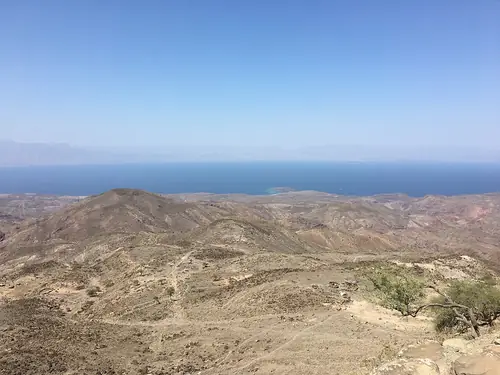
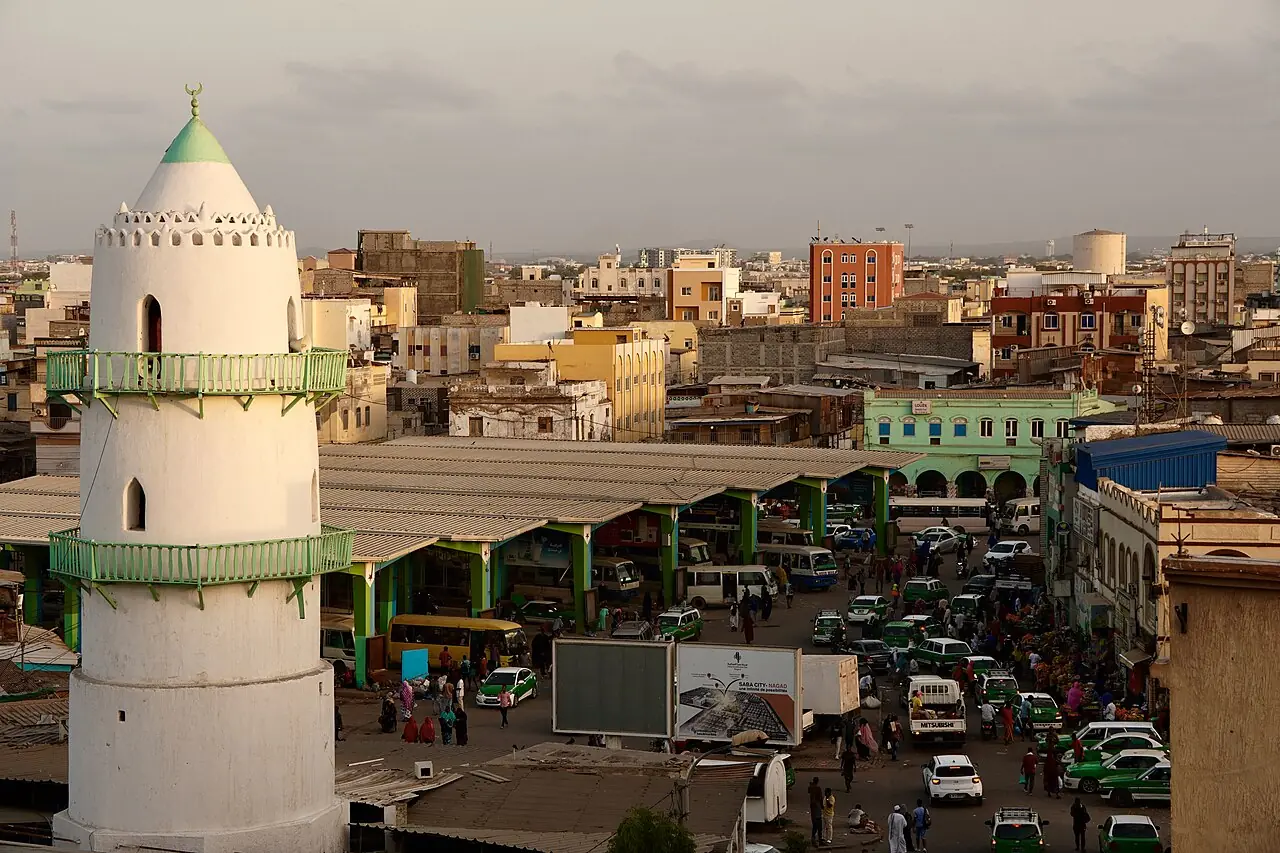 Photo: Ch1pabeck · CC BY-SA 4.0
Published by Adama Doumbia, founder of Afrique Unie · updated 28 November 2026 · our method and sources
Why visit Djibouti?
The capital is home to more than half the country's population and sets the tone the moment you arrive: sticky heat, harsh light, container ships coming and going offshore and the din of painted minibuses tearing along the avenues. This is no museum city but a trading port that lives to the rhythm of lorries heading for Ethiopia and dhows arriving from neighbouring Yemen.
The historic heart is laid out around Place Ménélik, lined with white arcades and Moorish-style buildings from the colonial era. This is the European Quarter, with its cafés, its shops and its sometimes crumbling façades that keep an old-fashioned charm. A few streets further on, the African Quarter has a completely different feel: low houses, fabric stalls, khat sellers and the central market, piled high with spices, incense, fruit from Ethiopia and woven baskets.
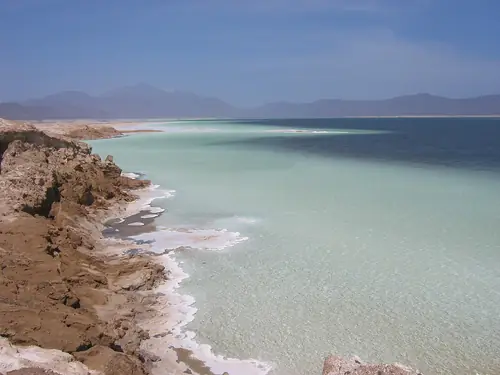
Above all, Djibouti serves as a base camp for exploring the rest of the country. Every excursion to Lake Assal, Lake Abbe or the islands of the gulf starts here, as do the trips out to meet the whale sharks. So plan to spend several nights here, broken up by expeditions, and make the most of the gentler evenings to discover the city when it really comes alive.
Things to do in Djibouti: 6 ideas
- 01Place MénélikStroll beneath the white arcades at sunset, when the café terraces fill up and the heat finally relents.
- 02Central marketDive into the alleys of the African Quarter for incense, spices, colourful fabrics and the late-morning bustle.
- 03Moucha and Maskali islandsSet sail for a day of swimming and diving on the reefs of these coral islets just off the coast.
- 04Oven-baked fishDine in a no-frills Yemeni restaurant and watch the cook slap the fish against the walls of the clay oven.
- 05La Siesta beachEnjoy this city beach at the end of the day, when families come down to cool off facing the gulf.
- 06Trip to ArtaIn season, head to the Arta area for a boat trip out to meet the whale sharks.
Where to stay in Djibouti
Plateau du Serpent and the Héron district, close to the sea, are home to the international hotels, residences and the most comfortable guesthouses, in a calm, airy setting. The European Quarter, around Place Ménélik, is handy for going out in the evening and getting about on foot, with more modest accommodation and a few furnished flats. The African Quarter, livelier and more working-class, is fascinating to explore by day but less suited to staying in. Haramous, to the east, has newer villas and residences in peaceful surroundings, but you will need a taxi to go anywhere.
See places to stay in Djibouti
Frequently asked questions
When can you see whale sharks in Djibouti?
They gather in the Gulf of Tadjoura, near Arta, mainly from November to February, sometimes from late October or into March. Boat trips should be booked ahead, as places are limited. Follow the approach rules: no touching and a minimum distance from the animals.
When is the best time to visit Djibouti?
From October to April, when temperatures remain bearable. From June to September the heat is extreme, often above 40°C, with a hot, dry wind called the khamsin. Whatever the season, enjoy the city early in the morning and in the evening.
Is Djibouti City safe?
France describes Djibouti as an island of stability and places the country under heightened vigilance, apart from its advised-against border areas. Caution is still advised in places frequented by foreigners, such as the historic centre, restaurants and bars, and the UK advises against walking alone late at night. Photographing ports, public buildings, airports, military sites and bridges is prohibited.
How do I organise a trip to Lake Assal or Lake Abbé?
By 4x4 with a driver and an approved guide: France recommends travelling in a convoy of at least two 4x4s, carrying eight litres of water per person per day, and not leaving the tracks. Travelling at night is advised against throughout the country. Leave early to avoid the hottest hours.
How do I get from the airport to central Djibouti?
Djibouti–Ambouli airport is about 5 km from the centre, around ten minutes by taxi. Agree the fare before getting in, or ask your accommodation for a transfer. The currency is the Djiboutian franc, pegged to the US dollar.
 Djibouti