 AfriqueUnie
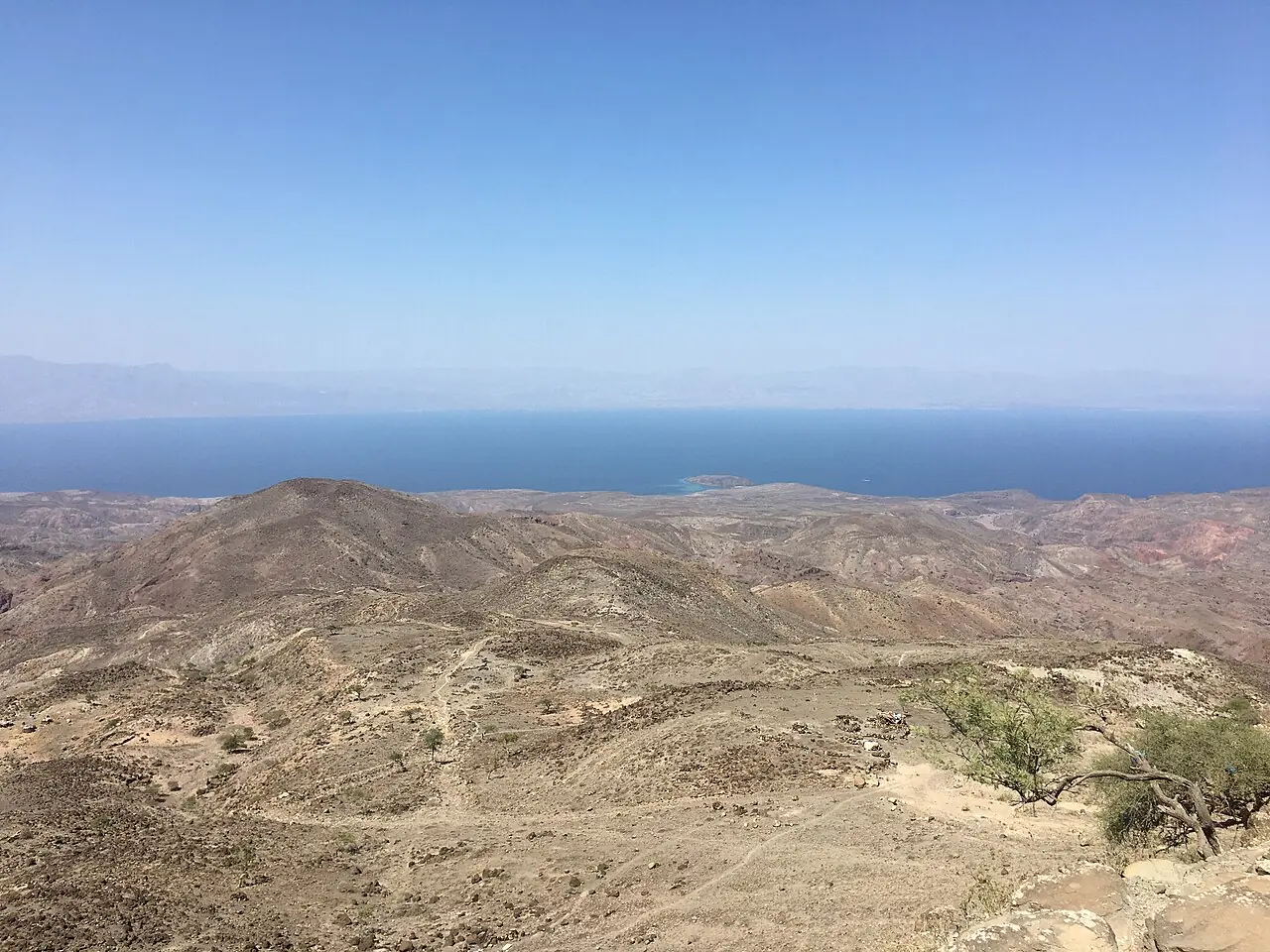 Photo: Brianwikington3eb · CC BY-SA 4.0
Published by Adama Doumbia, founder of Afrique Unie · updated 28 November 2026 · our method and sources
- Day 1
Djibouti City, the capital on the gulf
On arrival in Djibouti, start with Menelik Square and the European quarter, with its white arcades and Moorish-style facades. Then walk towards the central market and the African quarter, where stalls of fruit, spices and fabrics mingle, and the Hamoudi Mosque. Late in the day, head to the seafront for the evening light over the gulf. If you have time, the Decan Refuge, south of the city, takes in rescued wild animals; do not continue beyond it towards Loyada, a road where all travel is advised against. It is hot even in winter: drink plenty and protect yourself from the sun.
- Day 2
Whale sharks and islands of the Gulf of Tadjoura
The Gulf of Tadjoura is famous for the whale sharks that gather there during the winter, roughly from November to February, west of Arta and at the entrance to the Ghoubbet. A half-day boat trip lets you snorkel alongside them; choose an operator that keeps its distance and limits the number of swimmers. Out of season, or in the afternoon, take a trip to Moucha and Maskali islands, under an hour by boat from the capital, for their beaches and coral reefs. Avoid, however, the Seven Brothers archipelago to the north, which is restricted to supervised trips authorised by the authorities.
- Day 3
Lake Assal, then Tadjoura
Head west to Lake Assal, about two hours from the capital. On the way, the road overlooks the Ghoubbet, an almost enclosed bay where Devil's Island rises amid fields of black lava. At 155 metres below sea level, Lake Assal is the lowest point in Africa: its dazzling white salt crust contrasts with the turquoise water and the surrounding volcanoes. Walk on the salt in closed shoes, as the crystals are sharp, and avoid the hottest hours. Then continue along the northern shore of the gulf to Tadjoura, the country's oldest town, with its white houses and many mosques.
- Day 4
The Day Forest in the Goda Mountains
In the morning, wander around Tadjoura, along the harbour and among its white mosques, then climb into the Goda Mountains on a winding road: allow about an hour and a half by four-wheel drive. At around 1,500 metres, the Day Forest, a national park since 1939, is one of the few wooded areas in the country, with junipers, wild olive trees and boxwood. Hike with a local guide in search of the Djibouti spurfowl, a bird found nowhere else. Spend the night in a camp of traditional huts: it is much cooler than down below. Respect the military checkpoints in the area further north.
- Day 5
Back to Djibouti City
Drive back down to Tadjoura, then return to the capital along the Ghoubbet road in about three hours, travelling only by day. If you would rather skip part of the drive, ask about boat services between Tadjoura and Djibouti, whose frequency varies. In the afternoon, rest or enjoy a beach near the capital. In the evening, try Yemeni-style grilled fish, a local speciality cooked in a clay oven. This is also the time to prepare the next day's expedition to Lake Abbe: book a driver and a guide who know the track, and take plenty of water.
- Day 6
The chimneys of Lake Abbe
Leave early heading south-west: the paved road leads to Dikhil, then a track reaches the shores of Lake Abbe, four to five hours in all. The lake lies on the border with Ethiopia: stay on the Djiboutian shore with a local guide and do not approach the border. The landscape is unreal: dozens of limestone chimneys, some several tens of metres high, rise from a plain where fumaroles steam, while flamingos feed along the shore. Sleep at the camp facing the chimneys for the sunset and, above all, for dawn, when the steam rises in the low light.
- Days 7-8
Back to Djibouti and departure
After sunrise over the chimneys, walk among the hot springs with your guide and watch Afar herders bringing their animals to the lakeshore. Then take the track and the Dikhil road back to Djibouti, arriving in the early afternoon. On the last day, enjoy a free morning for some final shopping at the market or a swim, before heading to the airport, very close to the city centre. If your flight leaves at night, which is common, you can keep your room or plan a boat trip that same morning.
Getting around
Public transport serves the natural sites poorly: hire a four-wheel drive with a driver, essential for the Day Forest and Lake Abbe, and travel with a local guide. The main roads are paved, but do not drive after dark, and military checkpoints control some roads, especially in the north. Boat trips are booked from the capital. Check the official travel advice before you leave and follow the instructions of the Djiboutian armed forces.
When to do this trip
The best time is from November to February: temperatures are hot but bearable, the sea is pleasant, and it is whale shark season in the Gulf of Tadjoura. March and October are already hot. From May to September, the heat becomes extreme, often above 40 °C, with a dusty wind, and trips to Lake Assal or Lake Abbe become gruelling.
The travel notebook
The itinerary, practical information (entry, health, money, emergencies) and the checklist in a few pages, to print or keep offline on your phone.
Variations
- In 5 days: keep the capital, the Gulf of Tadjoura, Lake Assal and Lake Abbe, and skip the Day Forest.
- In 10 days: add two days of diving or hiking on the northern shore of the gulf, and a night in a camp by the Ghoubbet.
- Sea version: spend more time on Moucha and Maskali islands and with the whale sharks, cutting back on inland drives.