Djibouti is like nowhere else on the continent. On a territory barely larger than Wales, the Earth quite literally lays bare its insides: this is where three tectonic plates meet, the Arabian, Somali and Nubian, and the ground pulls apart by a few millimetres every year. You can see the result with your own eyes. You walk across basalt flows that are still black, follow faults gaping open like wounds, then, round a bend in the track, come upon a lake saltier than the Dead Sea, fringed with a white crust that crunches underfoot. Geologists come from all over the world to study this open-air laboratory; travellers, for their part, find landscapes that seem lifted straight from a science-fiction novel.
Yet there is far more to the country than rock. The Gulf of Tadjoura, which cuts deep into the coast, hosts a gathering of whale sharks every winter as they come to feed on plankton, and you can swim just a few metres from these placid giants. The little-visited coral reefs of the Moucha and Maskali islands offer superb diving for anyone keen to escape the crowds of the Red Sea resorts. Inland, Afar nomads still lead their camels along the old salt routes, and the Day Forest, perched high in the Goda Mountains, is a reminder that it can be cool and green even in these latitudes.
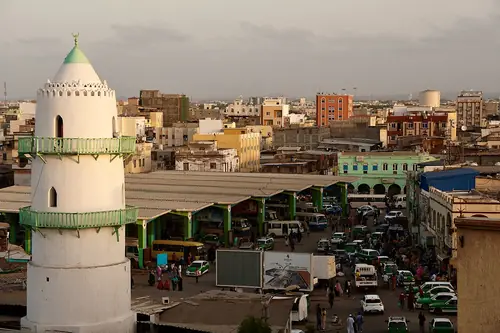
Finally, Djibouti is a singular human crossroads. A strategic port at the mouth of the Red Sea, the capital brings together Yemeni traders, Somali Issa families, Afars, Ethiopians passing through and expatriates. French is spoken in government offices, Somali and Afar in the streets, Arabic in the mosques. Travel here is demanding, the heat fierce for much of the year and prices higher than elsewhere in the region, but the reward is rare: the feeling of being among the first to gaze on certain landscapes, in a country that remains well off the mass-tourism map.
History and culture
Since antiquity, the shores of present-day Djibouti have played their part in trade between Africa, Arabia and India; some historians place part of the mysterious Land of Punt, visited by the ancient Egyptians, here. In the Middle Ages Islam arrived early by sea, and Afar sultanates, among them the Sultanate of Tadjoura, controlled the caravan routes linking the coast with the Ethiopian highlands, notably for the trade in salt mined around Lake Assal.
France established itself at Obock in the 1860s, then founded the town of Djibouti at the end of the 19th century, soon linked to Addis Ababa by a railway that made its fortune. French Somaliland became the French Territory of the Afars and the Issas in 1967, before gaining independence in 1977. Since then the country has made the most of its strategic position: its port serves landlocked Ethiopia, a new electric railway links the two capitals, and several foreign powers maintain military bases here.
8 experiences not to miss in Djibouti
01Swim with whale sharksBetween November and January, head out by boat from the capital to the Arta area and snorkel alongside these giant fish as they filter plankton at the surface.
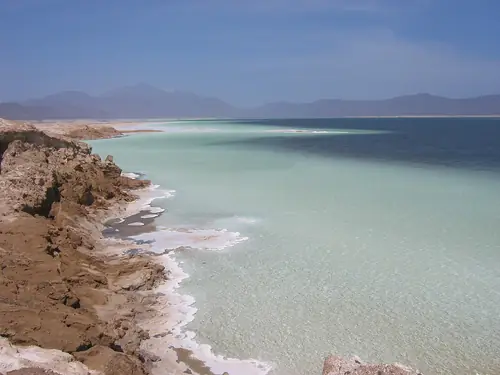
Photo : Tyke · CC BY 3.002Float on Lake AssalDescend to the lowest point in Africa and let the salt-saturated water hold you up, before walking across the white salt pack that rings the lake.
Photo : Cjulien21 · CC BY-SA 3.003Dawn at Lake AbbeSleep in an Afar camp at the foot of the limestone chimneys and get up before the sun to watch the steam vents rise into the pink light.
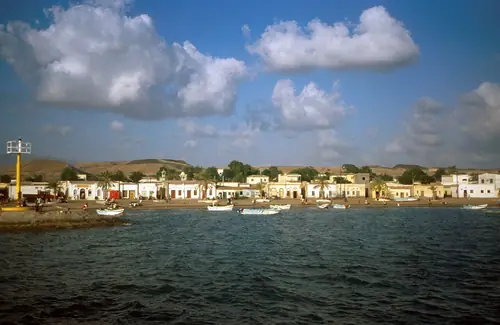
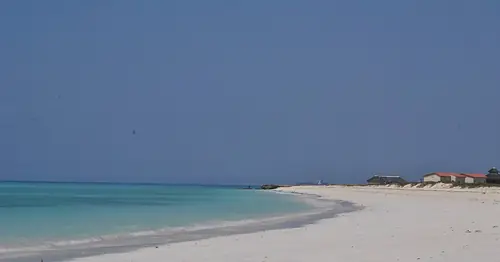
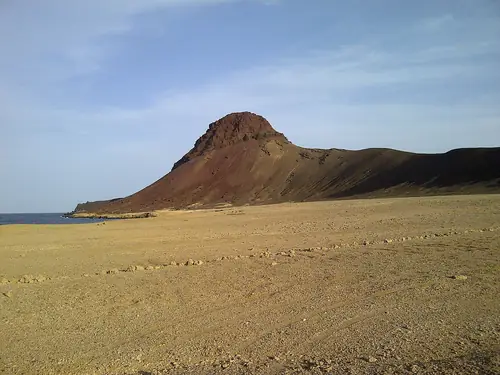
Photo : Anai171 · CC BY-SA 4.005Dive the Moucha IslandsA short boat ride from the capital, the reefs of Moucha and Maskali offer coral, turtles and reef fish in crystal-clear water.
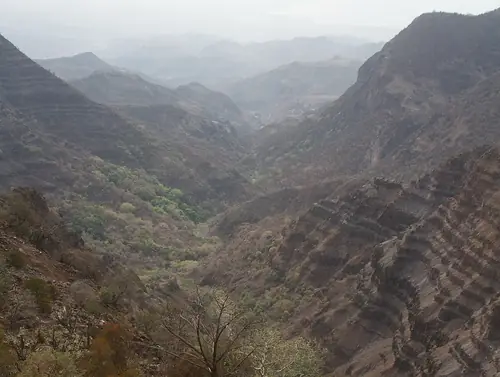
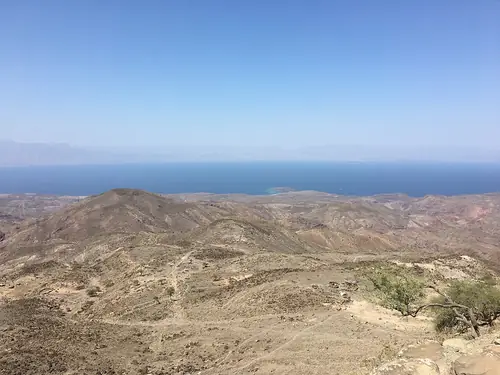
Photo : Singlab · CC BY-SA 3.006Hike in the Day ForestIn the Goda Mountains, walk beneath the junipers and acacias of a relict forest where the nights turn surprisingly cool.
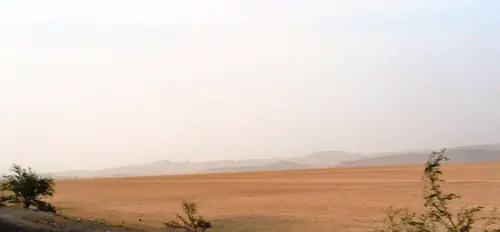
Photo : Skilla1st · CC BY-SA 3.007Cross the Grand BaraDrive across the vast white clay plain of the Grand Bara, where mirages set the horizon dancing at midday.
08Feast on Yemeni fishIn the evening, in the capital's working-class district, try fish split in two and baked against the wall of a clay oven, served with a piping-hot flatbread.
When to go to Djibouti
The only real travel window runs from November to February, sometimes into mid-March. Temperatures stay warm, around 25 to 30°C during the day, but the air is bearable, the sea pleasant, and this is precisely whale shark season in the Gulf of Tadjoura. From April the heat builds fast, and from June to September it becomes crushing: over 40°C in the shade on the coast, often more in the inland depressions, with the khamsin, a scorching, dust-laden wind, blowing in from the interior. Excursions to the lakes then become gruelling, even dangerous. Even in winter, plan to set off very early in the morning for outdoor trips and rest during the hottest hours.
Getting around
Distances are short, but the tracks to the great natural sites call for a four-wheel drive and, ideally, a driver who knows the terrain: Lake Abbe in particular is reached by poorly marked tracks where it is easy to get lost. Most travellers use a local agency to organise these trips, with water, supplies and a night in a camp. In town, agree taxi fares before getting in; shared minibuses serve the neighbourhoods and nearby towns for a few coins. Boats link the capital with Tadjoura and Obock, alongside the road that skirts the Ghoubbet. To reach Ethiopia, the Djibouti-Addis Ababa electric railway is an option worth checking locally.
Etiquette and customs
Djibouti is a Muslim country where modesty matters: cover your shoulders and knees away from the beaches, and even more so in Tadjoura or in the villages. Greetings take as long as they take, and you shake with your right hand. Always ask permission before photographing anyone, especially women and Afar nomads, and steer well clear of military, port and government installations, of which there are many. In the afternoon much of the city grinds to a halt to chew khat, a stimulant leaf imported from Ethiopia: it is a social moment, usually male, to be observed without judgement. During Ramadan, do not eat or drink in public during the day.
Food and drink in Djibouti
Djiboutian cooking draws on Yemen, Somalia, Ethiopia and India. The festive dish is skoudehkaris, rice fragrant with cardamom, cloves and cinnamon, cooked with lamb or mutton and tomatoes. In the evening, no-frills restaurants serve the famous Yemeni fish, split open, brushed with spices and slapped against the searing walls of a clay oven, served with flatbreads and a chilli sauce. At breakfast you will find lahoh, a spongy pancake akin to injera, with sautéed liver or honey. Sambusas, fried pastries stuffed with meat, are nibbled at any hour, and everything ends with a very sweet, spiced tea.
The best time to visit Djibouti: November to February.
What should I see first in Djibouti?
The must-sees: Lake Assal, Lake Abbe, Gulf of Tadjoura.
Which cities should I visit in Djibouti?
Djibouti, Tadjoura, Obock. The capital is Djibouti.
How much should I budget for a trip to Djibouti?
High-end: often more than €120 per person per day, excluding flights. This is only a guide and depends above all on the accommodation and activities you choose.
What currency and languages are used in Djibouti?
Currency: Djiboutian franc (DJF). Languages: French, Arabic, Somali, Afar.
How do I get to Djibouti?
The main international airport has the code JIB. Compare flights with the ‘Flights’ button on this page.
Do I need a visa to visit Djibouti?
Entry requirements depend on your nationality and change regularly. Check them on the country's official website or with your foreign ministry before booking, and make sure your passport is valid.
What should I eat in Djibouti?
Dishes to try while you're there: Skoudehkaris, Yemeni-style fish.
Map
Djibouti on the map
Cities Places to see · Approximate positions
On the ground
Getting around and staying healthy
Getting around
The country is small and mostly explored by car: for Lake Assal, Lake Abbé or the Day forest, hire a 4x4 with driver, as tracks are demanding and poorly signposted. Boats link Djibouti City with Tadjourah and Obock across the gulf, but schedules are irregular, so ask at the port. The electric Djibouti–Addis Ababa train leaves from Nagad station near the capital and serves Dire Dawa in Ethiopia, among other stops. In town, taxis and minibuses are plentiful; traffic drives on the right.
Health and safety
Yellow fever
Certificate required only if you arrive from, or transited through, a country with a risk of yellow fever (from 1 year, incl. airport transits over 12 h); vaccine generally not recommended.
Malaria
Present throughout the country: ask a doctor about preventive medication and protect yourself from mosquitoes.
Water and food
Unless your accommodation says otherwise, drink sealed bottled or filtered water, and wash your hands often.
Affiliate cookiesWe would like to load a script from our partner Travelpayouts. It may set cookies so that we receive a commission when you book through our links, at no extra cost to you. If you decline, the site works in exactly the same way. Find out more
 AfriqueUnie
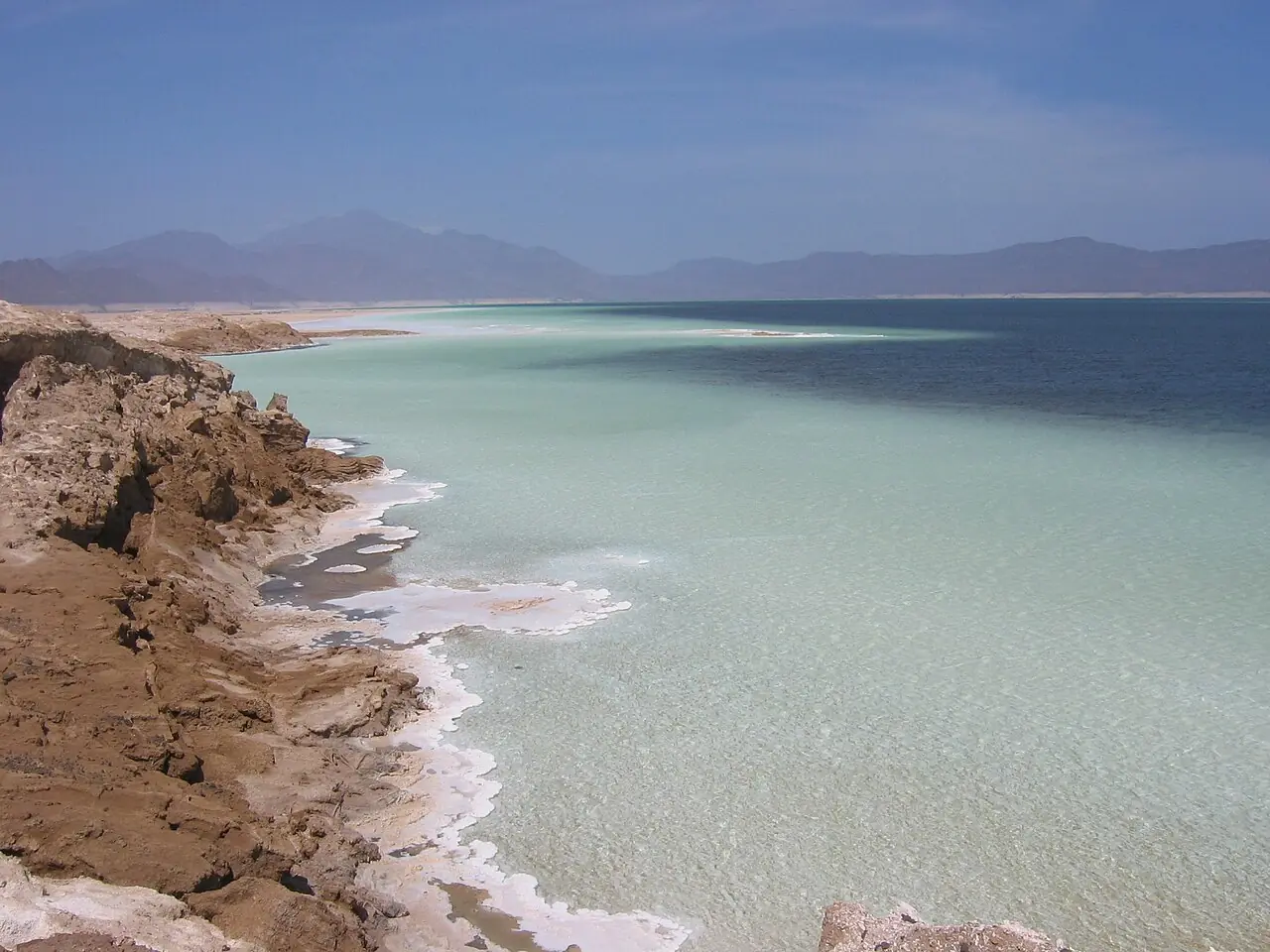 Photo: Tyke · CC BY 3.0
 Djibouti
 Burundi
 Eritrea
 Ethiopia
 Kenya
 Rwanda
 Somalia
 South Sudan
 Tanzania
 Uganda