AfriqueUnie
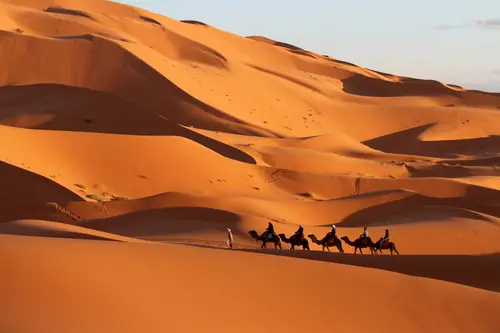
 Photo: Merzougaloisirs · CC BY-SA 4.0
Published by Adama Doumbia, founder of Afrique Unie · updated 28 November 2026 · our method and sources
Choosing a spot for your level
In surfing as in diving, your level matters more than the destination. A beginner will progress far faster on a beach with gentle waves, with a surf school, than on a famous point break where the locals string barrels together.
In surfing, there are three types of wave to know. Beach breaks, over sand, suit beginners, as at Busua in Ghana or in Durban. Point breaks, which peel along a headland, offer long rides that intermediates can handle on a small swell, such as the bay at Imsouane in Morocco. Very powerful waves, such as Skeleton Bay in Namibia or Ponta Preta in Cape Verde, are for experts only.
In diving, your certification sets your limits: an entry-level diver (Open Water or Level 1) is generally limited to 18 or 20 metres depending on the training organisation, and an advanced diver to around 30 metres. For a first time, nothing beats a try-dive in the calm water of the Red Sea or an Indian Ocean lagoon; snorkelling requires no certification at all.
The best surf spots in Africa
- Taghazout (Morocco): A fishing village about 20 kilometres north of Agadir that has become Morocco's surf capital. Anchor Point is a long right-hander for experienced surfers, while the nearby beaches welcome all levels. Best period: roughly September to April, in water that rarely gets above 21 °C.
- Imsouane (Morocco): A small port tucked into a sheltered bay, known for "the Bay", a very long point wave ideal for beginners and longboarders, especially at low to mid tide. La Cathédrale, more exposed, suits intermediate and advanced surfers. Season: mainly autumn to spring.
- Dakar and Ngor (Senegal): The Cap-Vert peninsula, on which Dakar stands, picks up swell from several angles, so there is almost always a wave somewhere. The right-hander off Ngor Island became legendary in the 1960s through the film The Endless Summer. Reefs for intermediate and advanced surfers, schools on the beaches. Best period: roughly October to April.
- Sal and Ponta Preta (Cape Verde): The archipelago is best known for wave windsurfing and kitesurfing, but the island of Sal also has good surf. Ponta Preta, near Santa Maria, is a powerful wave for experienced surfers. Swells are most consistent from roughly November to March.
- Jeffreys Bay (South Africa): Its Supertubes right-hander, long, fast and hollow, is regarded as one of the best point breaks in the world. It hosts a World Surf League event each year around July. Advanced level when the swell is up. Best period: the southern winter, roughly May to September.
- Durban (South Africa): You can surf here all year round, in warmer water than in Cape Town. The city beaches of KwaZulu-Natal's big metropolis suit beginners and intermediates; stay within lifeguarded areas.
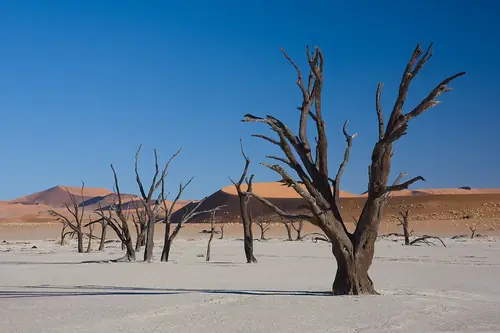
- Skeleton Bay (Namibia): On the ocean side of the sand spit at Walvis Bay, this left-hander is one of the longest and hollowest waves in the world. It is for experts only: strong current, very cold water and no rescue services on hand. It is said to work mainly during the southern winter, on big swells, with no guarantee of consistency.
- Busua (Ghana): A fishing village and beach resort in the Western Region, about 30 kilometres from Sekondi-Takoradi. Its fairly gentle beach break makes it one of the best places in West Africa to learn, in warm water all year round.
- Robertsport (Liberia): This small town in Grand Cape Mount County has several point breaks, including Fisherman's Point, Cotton Trees and Cassava Point, and a local surf scene that grew up after the civil war. Intermediate to advanced; swells are said to be most consistent around the middle of the year.
- Southern Madagascar: Around Fort Dauphin (Tolagnaro), you can surf all year round on spots for different levels. The south-west coast has remote reef waves for self-sufficient, experienced surfers.
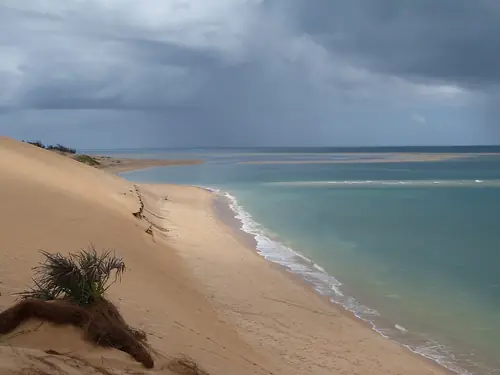
- Tofo (Mozambique): This small town in Inhambane Province has accessible beach waves in warm water: you can surf in the morning and dive with manta rays in the afternoon.
The best dive sites in Africa
- Hurghada (Egypt): The gateway to Egypt's Red Sea, with clear, calm water for much of the year: reefs around the Giftun Islands and wrecks. Ideal for beginners, even though the reefs close to town have suffered badly from tourism.
- Ras Mohammed (Egypt): At the tip of the Sinai, this national park, protected since 1983, has more than 220 species of coral. The walls of Shark Reef and Yolanda Reef are famous, and the wreck of the Thistlegorm lies nearby. Intermediate to advanced, because of the currents.
- Dahab and the Blue Hole (Egypt): Dahab, on the Gulf of Aqaba, offers many shore dives. A word of warning: the Blue Hole is reputed to be the deadliest dive site in the world. Its arch lies at around 55 metres, far beyond recreational diving limits. Stay in the shallower parts, with a guide.
- Marsa Alam (Egypt): Further south, the coast is less built up. In Abu Dabbab Bay you can see turtles and sometimes dugongs. Elphinstone Reef, offshore, known for its oceanic whitetip sharks and strong currents, is for experienced divers only.
- Sanganeb and Port Sudan (Sudan): An isolated coral reef off Port Sudan, inscribed as a UNESCO World Heritage Site in 2016 together with Dungonab Bay: manta rays, turtles, sharks and dolphins. Please note: Sudan has been at war since 2023 and the French and British governments advise against all travel there.
- Tofo (Mozambique): One of the best places in the world for reef manta rays and whale sharks, often seen for much of the year, with seasonal variations. Dives are often in open ocean, launching from the beach: intermediate level recommended.
- Ponta do Ouro (Mozambique): At the far south of the country, just north of the South African border, this small town is known for its resident dolphins and its reef dives. All levels, depending on the site.
- Zanzibar and Mafia (Tanzania): Zanzibar has easy reefs and plenty of snorkelling trips. Further south, Mafia Island is home to Tanzania's first marine park, created in 1995, and to a seasonal gathering of whale sharks, seen while snorkelling.
- Watamu and Diani (Kenya): Watamu Marine National Park is considered one of the best snorkelling and diving areas on the East African coast (turtles, coral gardens). Diani, a long beach south of Mombasa, suits beginners.
- Seychelles: Since spearfishing and dynamite fishing were banned in the 1960s, the fish have been remarkably unafraid, and whale sharks pass around Mahé. The 1998 bleaching event damaged many reefs, some of which are recovering well.
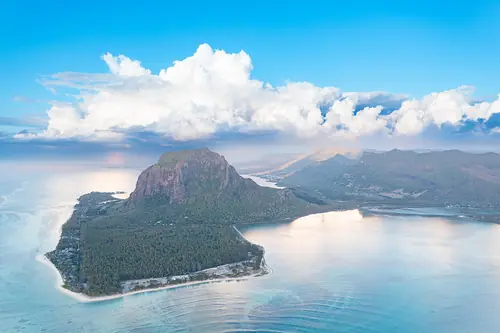
- Mauritius: The island is almost entirely ringed by reefs and lagoons, perfect for snorkelling and try-dives; the walls and wrecks outside the reef suit more experienced divers.
- Nosy Be (Madagascar): Off north-west Madagascar, the bay of Nosy Be is one of the places where you can meet whale sharks, as well as turtles. These fragile reefs deserve responsible trips.
- Aliwal Shoal (South Africa): A rocky reef about 5 kilometres off the KwaZulu-Natal coast, inside a marine protected area, known for its ragged-tooth sharks ("raggies") from about July to November. The sardine run, from May to July, draws dolphins, sharks and seabirds, but it does not happen every year.
- Cape Verde: On Sal, the pier at Santa Maria is the departure point for dive boats. Volcanic seabeds, wrecks and Atlantic marine life make for a different kind of diving from coral reefs.
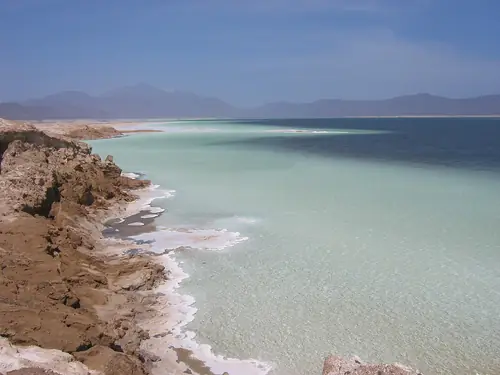
- Gulf of Tadjoura (Djibouti): Young whale sharks come here to feed on plankton in winter, roughly November to February depending on the year. They are seen while snorkelling. The gulf also has fine coral reefs for diving.
Swell seasons and water temperature: which wetsuit?
On the North Atlantic coast (Morocco, Senegal, Cape Verde), the best swells arrive during the European winter, from autumn to spring. In the south of the continent (South Africa, Namibia), it is the other way round: they arrive during the southern winter, roughly May to September. In the Gulf of Guinea and the Indian Ocean, you can surf more or less all year.
For diving, the Red Sea is good all year round, with warmer water in summer. In the Indian Ocean, avoid cyclone season and heavy rains where possible, as they cloud the water. Whale shark gatherings are seasonal: check the usual timing, and never treat an encounter as guaranteed.
As a rough guide for wetsuits (depending on the season and how much you feel the cold): in Morocco, a 3/2 mm, or even a 4/3 mm in midwinter; in Senegal and Cape Verde, a 3/2 mm or a shorty. In Ghana, Liberia, Mozambique, Kenya, Tanzania or the Seychelles, a rash vest is enough. Jeffreys Bay calls for a 3/2 or 4/3 mm, and Skeleton Bay, washed by a cold current, a 4/3 mm or even a 5/4 mm with boots. For diving, a 3 mm suit is fine in tropical water, and a 5 mm is welcome in the Red Sea in winter or off KwaZulu-Natal.
Safety: currents, certification, insurance and flying
Currents are the main danger. Before paddling out, watch the spot, look for rip currents and ask local surfers or the surf school for advice. If a rip carries you out, do not fight it: swim parallel to the beach to get out of it. Never surf above your level and beware of shallow reefs at low tide.
When diving, never dive alone and choose a centre affiliated to a recognised organisation (PADI, SSI or CMAS, for example), which will check your certification and logbook, so bring them with you. Stay within the limits of your level. Insurance that specifically covers diving, including evacuation and hyperbaric chamber treatment, is essential: many travel policies exclude it.
Be careful with flying: the nitrogen absorbed while diving needs to be eliminated before a flight. Divers Alert Network recommends at least 12 hours after a single no-decompression dive and at least 18 hours after multiple dives in a day or over several days (longer after decompression dives); many divers allow 24 hours to be safe. Plan a dive-free day before your flight home, and do not dive deep after a long surf session: fatigue increases the risks.
Finally, check your government's travel advice for each country.
Respecting reefs and wildlife
Coral reefs are fragile and have already suffered a great deal from warming seas, pollution and tourism. Never touch or stand on coral, do not feed the fish, take nothing away, and master your buoyancy near walls.
Choose a sunscreen free of oxybenzone and octinoxate or, better still, a long-sleeved rash vest, which protects you without releasing anything into the water.
With whale sharks, manta rays, turtles and dolphins, keep your distance: local codes of conduct generally ask you to stay at least 3 metres from the head and body, and further from the tail, never to touch them or block their path, and not to use flash. Choose trips that limit the number of swimmers and turn down any that feed the animals. The whale shark is listed as endangered by the IUCN and the reef manta ray as vulnerable: your behaviour matters.