AfriqueUnie
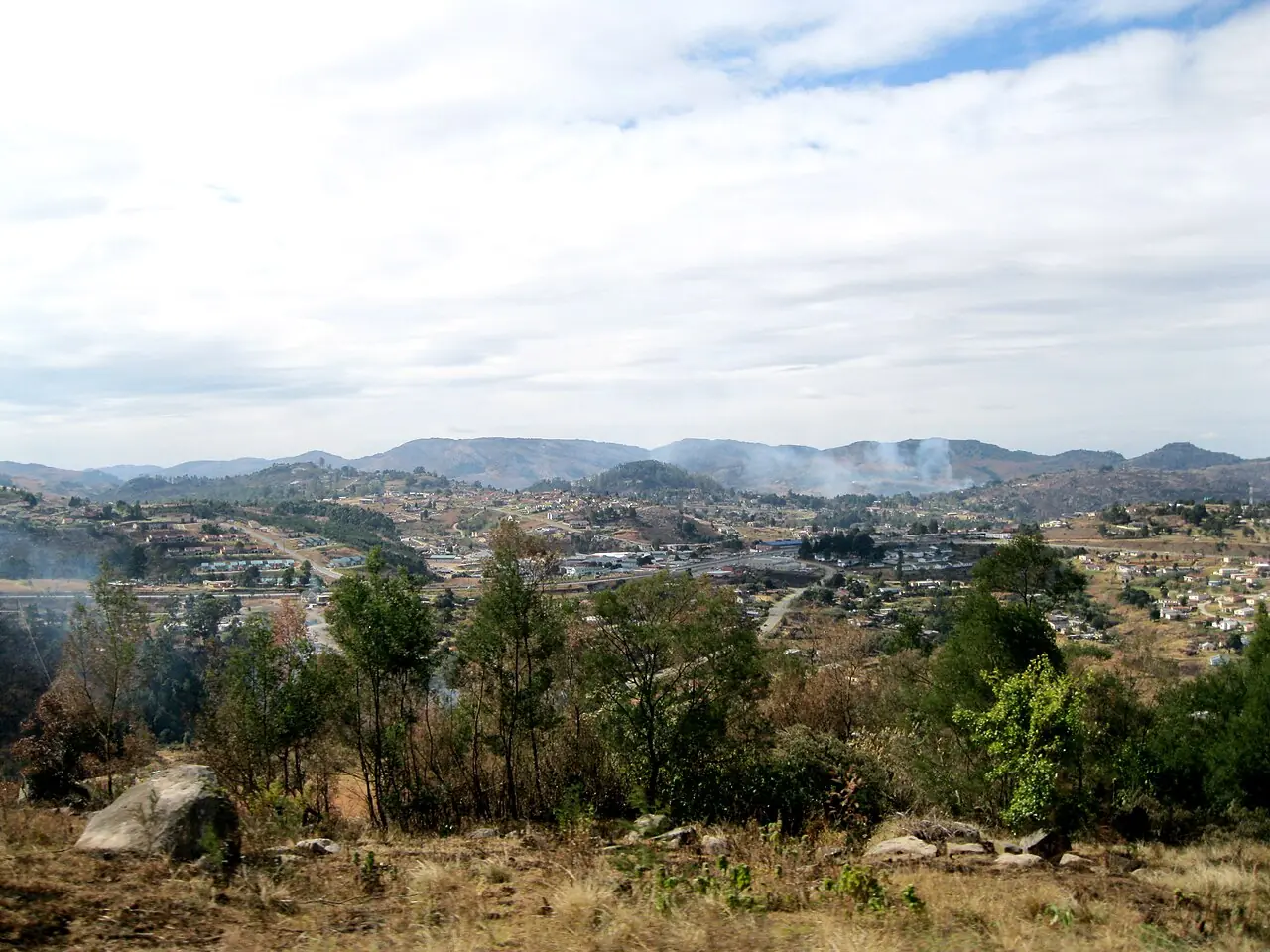 Photo: Athena Lao from Bulgaria · CC BY 2.0
Published by Adama Doumbia, founder of Afrique Unie · updated 28 November 2026 · our method and sources
Why visit Mbabane?
Mbabane surprises you with its modesty. The kingdom's administrative capital feels more like a hilltop provincial town than a metropolis: a few shopping streets, government buildings, a lively market and, all around, hills covered in pines and granite outcrops. Its altitude gives it a cool, sometimes misty climate, in contrast with the heat of the Lowveld an hour's drive away.
It is not a city of monuments, but it is a practical and pleasant base for exploring the west of the country. Twenty minutes or so away are the Ngwenya glass factory, the very ancient iron mine of the same name, which archaeologists count among the oldest known mining sites, and the Malolotja reserve, with its spectacular hikes. To the south, the road drops quickly into the Ezulwini Valley and its reserves.
In the morning, Mbabane market is the best place to take the town's pulse. Women stallholders pile up vegetables, chillies and woven baskets, craftsmen offer soapstone carvings and wooden bowls, and you hear far more siSwati than English. In the late afternoon the khumbis crowd into the bus station, and the town empties at nightfall.
Things to do in Mbabane: 6 ideas
- 01Mbabane marketFruit, spices, basketry and carvings in a down-to-earth atmosphere, best visited in the morning.
- 02Ngwenya GlassGlassblowers shape recycled glass before your eyes; the adjoining shop sells sturdy pieces that are easy to take home.
- 03Malolotja reserveTrails to the Malolotja Falls, high grasslands and a canopy walkway.
- 04Sibebe RockA guided climb up a huge granite dome, with a panorama over the surrounding hills.
- 05Ngwenya mineAn archaeological site where haematite was mined for pigments tens of thousands of years ago.
- 06Down to EzulwiniA short, winding road links the capital to the royal valley, its craft markets and its reserves.
Where to stay in Mbabane
Central Mbabane is mainly functional and empties in the evening; most travellers prefer to stay in the residential hills, in guesthouses surrounded by gardens with views of the hills, or to head down into the Ezulwini Valley, some fifteen kilometres away, where hotels, lodges and restaurants are concentrated. For a hiking-focused stay, the cabins and campsites of Malolotja let you sleep in the heart of nature. The areas near the bus station are convenient for transport but quiet after dark.
Frequently asked questions
How long should you spend in Mbabane?
One or two days are enough for the town, Ngwenya and a hike in Malolotja. Mbabane is mainly a base for the west of the country and combines easily with the nearby Ezulwini Valley.
How do you get to Mbabane?
King Mswati III International Airport is in the east of the country, about an hour and a half's drive away. Many travellers arrive by road from Johannesburg, roughly four to five hours via the Oshoek-Ngwenya border post; the UK government considers airport transfer coaches between Johannesburg and Mbabane generally safe. Drive with the doors locked and only in daylight: carjackings are reported on the main roads from South Africa.
Is Mbabane safe?
Eswatini is considered generally safe, but sometimes violent attacks cannot be ruled out. The French government advises against walking in central Mbabane at night, so take a taxi recommended by your accommodation and do not drive after dark. Avoid urban minibuses, which are often overcrowded and poorly maintained.
Which currency is used in Mbabane?
The currency is the lilangeni, pegged at par to the South African rand, which is itself accepted throughout the country. Cards work in larger shops and hotels and there are cash machines in town; keep some cash for markets and small nature reserves.
When is the best time to visit Mbabane?
From April to September the dry season brings clear skies, ideal for hiking, though nights are cold at altitude. October to March is warmer and wetter, with thunderstorms and frequent fog on the heights. In late August or early September the Umhlanga ceremony livens up the neighbouring valley.
 Eswatini