 AfriqueUnie
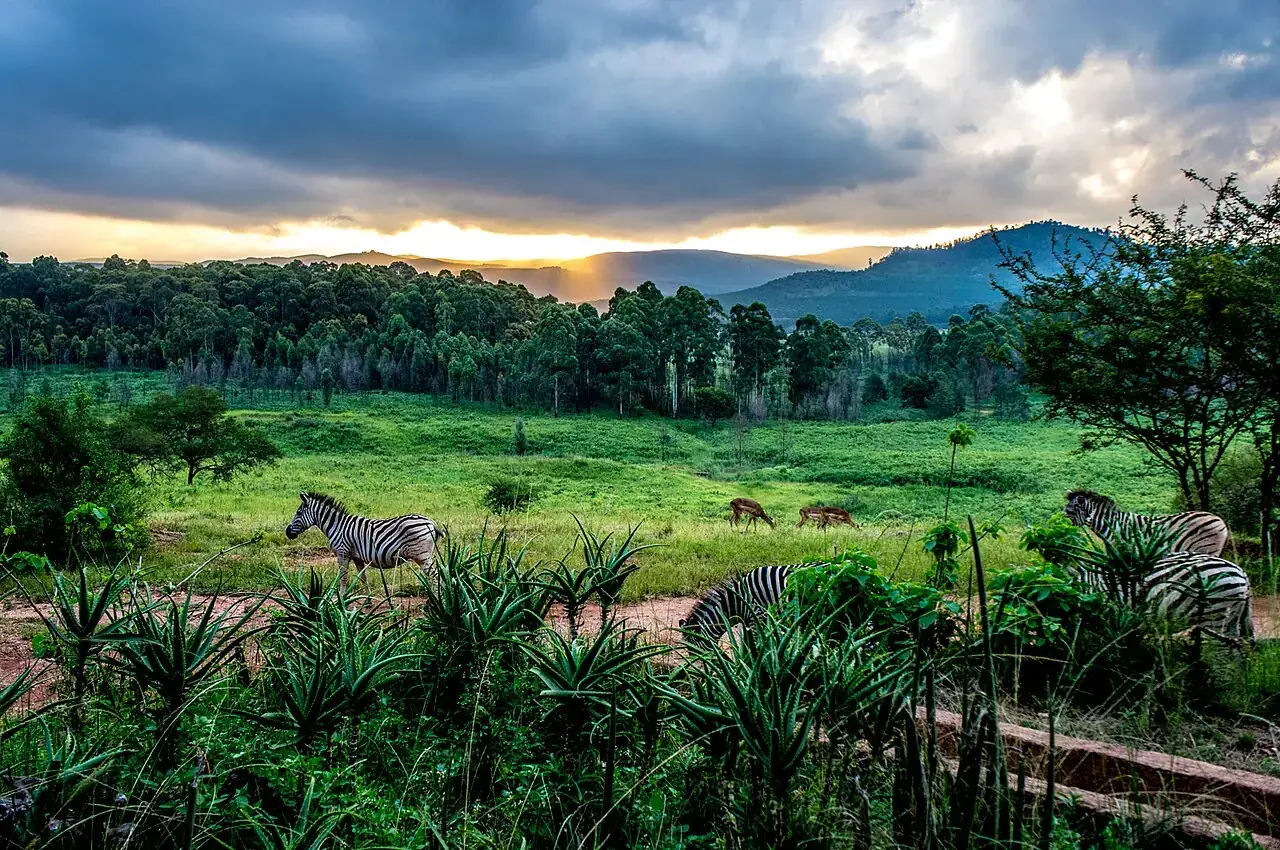 Photo: Vaiz Ha · CC BY 2.0
Published by Adama Doumbia, founder of Afrique Unie · updated 28 November 2026 · our method and sources
Why go
The country's first protected area, Mlilwane was born of the determination of a passionate farmer, Ted Reilly, who turned the family property into a refuge for wildlife that hunting had then decimated. Today the reserve spreads across the slopes of the Ezulwini Valley, between grassland, open woodland and cliffs, overlooked by Nyonyane rock. There are no big predators here, and that changes everything: you are free to explore on foot, by bike or on horseback.
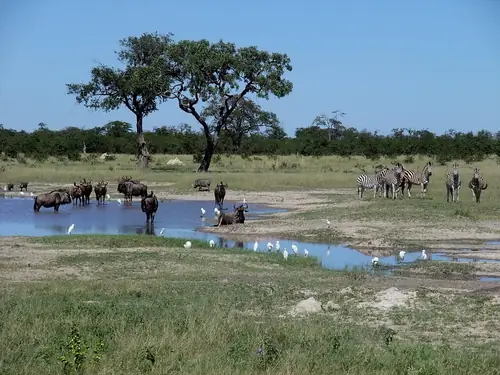
Zebras, wildebeest, impalas, nyalas, kudus and warthogs let you get close, often right up to the edges of the main camp, where warthogs graze peacefully between the huts. Near the restaurant, a pool is home to hippos and crocodiles. The birdlife is rich, and walks at daybreak, while dew still covers the grass, are moments of great serenity.
Getting there
The reserve lies in the heart of the Ezulwini Valley, about twenty minutes' drive from Mbabane and a few minutes from Lobamba. The main entrance is clearly signposted from the main road, and the internal tracks are passable in an ordinary car in dry weather. From Johannesburg, allow a good half-day's drive via the Oshoek border post.
Frequently asked questions
Can you walk around Mlilwane Wildlife Sanctuary?
Yes, this is one of Mlilwane's great draws: with no large predators, the southern section can be explored freely on foot, by bike or on horseback. The northern section can only be visited on guided walks. Keep a sensible distance from the animals and never approach the hippo and crocodile pool.
How do you get to Mlilwane from Mbabane or Johannesburg?
The sanctuary is about twenty minutes' drive from Mbabane, in the heart of the Ezulwini Valley. From Johannesburg, allow a good half-day via the Oshoek border post. Drive by day with your doors locked, as France Diplomatie reports violent carjackings on the main roads linking the country with South Africa.
What activities can you do at Mlilwane?
You can go on self-guided or guided walks, mountain biking on bikes hired at the camp, guided horse rides and game drives along the tracks. Horse rides and bike hire are booked at reception, ideally the day before. Nyonyane Rock offers fine views over the valley.
How long should you spend at Mlilwane, and in which season?
A day visit is possible, but a night on site lets you enjoy the morning and evening light, when animals are most active. The southern winter, from May to August, is dry and clear and offers better visibility, while summer makes the sanctuary lush, with frequent storms.
What is there to see near Mlilwane?
The sanctuary is a few minutes from Lobamba, the royal and legislative capital, and from Mantenga Cultural Village, with its waterfall. The Ezulwini Valley also has craft markets and plenty of accommodation. To see elephants, rhinos and lions, head on to Hlane Royal National Park in the east of the country.
 Botswana
 Malawi
 Mozambique