AfriqueUnie
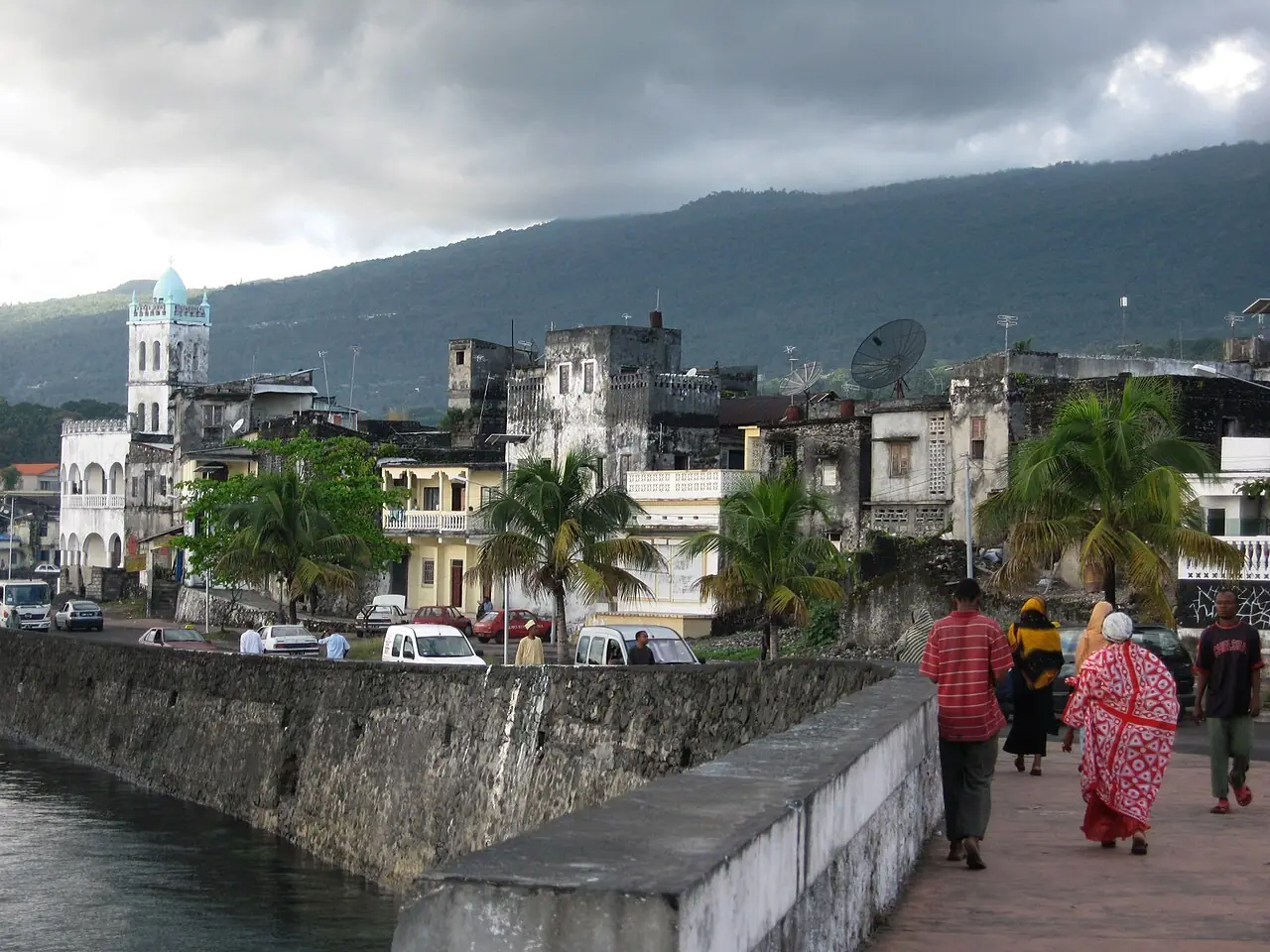 Photo: Woodlouse · CC BY-SA 2.0
Published by Adama Doumbia, founder of Afrique Unie · updated 28 November 2026 · our method and sources
Why visit Moroni?
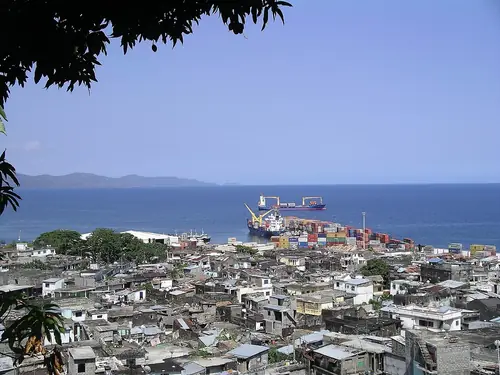
Moroni, capital of the Union of the Comoros, spreads along the west coast of Grande Comore at the foot of the slopes of Mount Karthala. According to an often-quoted etymology, its name means “in the heart of the fire”, a nod to the volcano that towers over it. A port town on a human scale, it mixes modern districts and government offices with, down by the water, an old medina whose narrow lanes tumble towards the harbour.
Moroni's emblem is the old Friday Mosque, white and slender, set right on the seafront. Its origins go back several centuries, though its minaret was added in the 20th century. Around it the medina unfurls its houses of stone and coral, its carved wooden doors and its small squares where men chat in the shade. The harbour, where dhows and fishing boats tie up, comes alive whenever the boats come in.
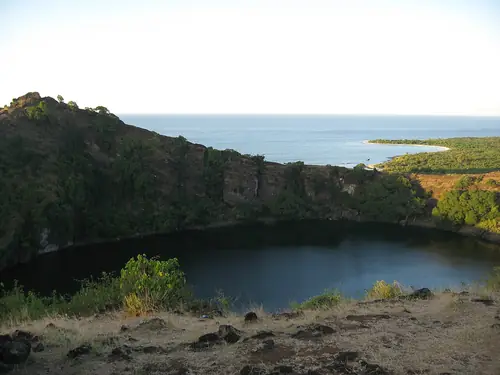
The big Volo Volo market is the perfect place to feel the city's pulse: spices, vanilla, fish, fruit, fabrics and goods of every kind are piled high in a cheerful crush. Moroni is also a handy base for exploring the rest of the island: the beaches of the north, Lac Salé, fishing villages and the climb up Mount Karthala.
Things to do in Moroni: 6 ideas
- 01Old Friday MosqueThe city's iconic monument, on the seafront; it can be admired from the outside.
- 02MedinaNarrow lanes, carved doors and old houses, best explored on foot.
- 03Volo Volo marketSpices, vanilla, fruit and fabrics in the capital's largest market.
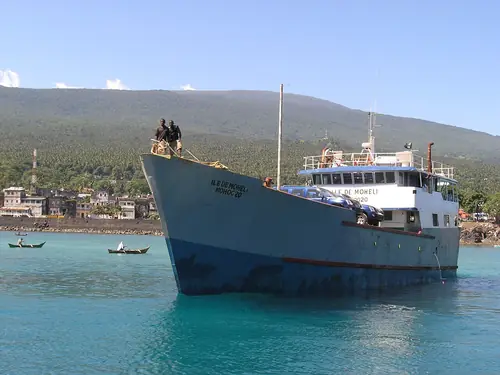
- 04Moroni harbourDhows and fishing boats bring the harbour to life at the end of the day.
- 05National documentation centreThe CNDRS holds collections on the history, culture and nature of the Comoros.
- 06Itsandra beachNorth of the city, a sandy beach and the ruins of old fortifications.
Where to stay in Moroni
Accommodation in Moroni is concentrated in the centre, near the harbour and the medina, and in the residential districts close to the shore. You will mostly find mid-range hotels and guesthouses. For more peace and quiet, the coast north of the city, towards Itsandra, has a few seafront places to stay. The choice remains limited: book ahead, especially during the holidays and the grand marriage season in July and August.
Frequently asked questions
How do you get from the airport to Moroni?
Prince Said Ibrahim International Airport is at Hahaya, north of Moroni, about half an hour by road. Arrange a pick-up through your accommodation or take a taxi, agreeing the fare before you set off.
How many days should you allow for Moroni and Grande Comore?
A day is enough for the medina, the old Friday Mosque and Volo Volo market. Allow three to four days for Grande Comore as a whole: the northern beaches, Lac Salé, coastal villages and, for walkers, two days for Mount Karthala.
Can you climb Mount Karthala?
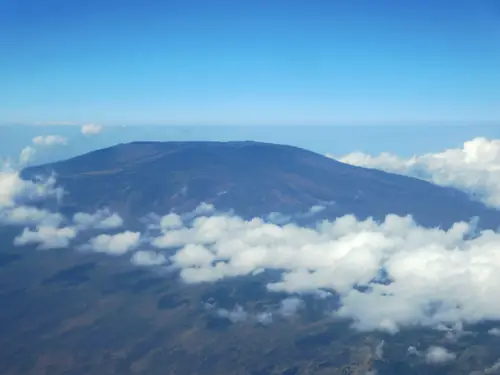
Yes, but it is an active volcano and the climb should be prepared like a high-mountain trek: the French government recommends an experienced guide and proper hiking gear, and checking beforehand that the embassy has issued no alert. Camping inside the caldera is strongly discouraged because of volcanic gases.
Is Moroni safe?
The Comoros are under heightened vigilance, mainly because emergency and medical services are weak. Crime remains relatively rare, but bag snatching and burglaries do happen, so stay alert at the market and on the beach and avoid gatherings. Between the islands, fly: most sea links do not meet international safety standards, and boarding a kwassa-kwassa is illegal.
When is the best time to visit Moroni?
From May to October the drier, cooler season is the most pleasant and ideal for Karthala. November to April is hot and humid, with heavy rain and a risk of cyclones. In July and August, the season of grand weddings makes for a festive atmosphere, but accommodation fills up fast.
 Comoros