 AfriqueUnie
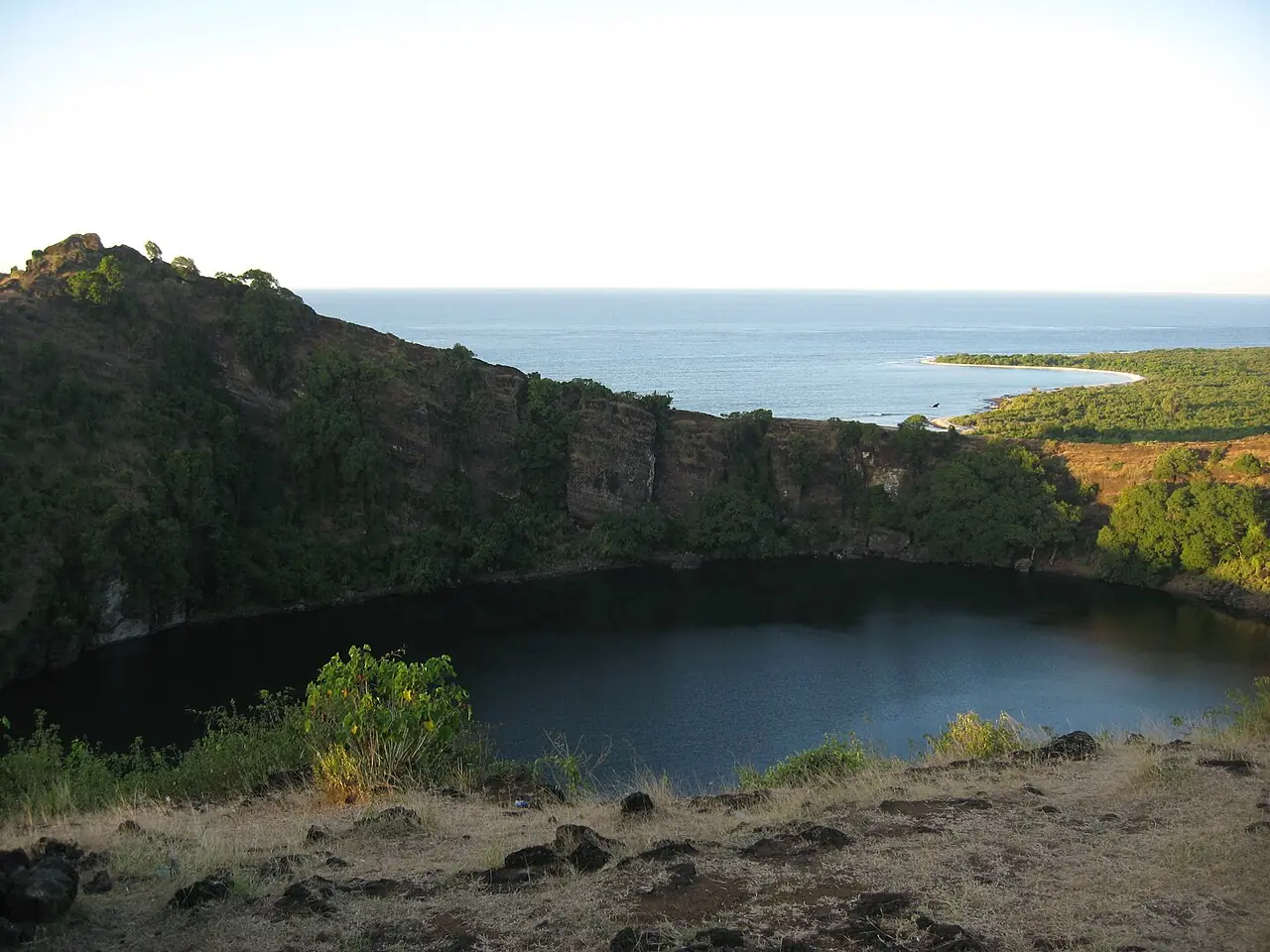 Photo: Woodlouse · CC BY-SA 2.0
Published by Adama Doumbia, founder of Afrique Unie · updated 28 November 2026 · our method and sources
- Days 1-2
Moroni, its medina and old harbour
The international airport is at Hahaya, about twenty kilometres north of Moroni. Use the first day to settle in and get cash, as cash machines are unreliable. The next day, explore the medina, a maze of lanes and coral-stone houses with carved doors. Facing the old harbour, where a few dhows still dock, the white-fronted Old Friday Mosque is the most photographed monument in the city. Then walk through the Volo Volo market, at its busiest in the morning, for spices, vanilla and ylang-ylang. The Comoros is a Muslim country: cover your shoulders and knees in town and always ask before photographing anyone.
- Day 3
Northern Grande Comore and Lac Salé
Head for the northern tip of the island, about an hour and a half away depending on the state of the road. Lac Salé, near Bangoi-Kouni, fills an old crater right by the ocean: its green water contrasts with the black rock and the nearby sea, and walking around the rim does not take long. Continue to the Trou du Prophète, a cove surrounded by lava flows where, according to tradition, a boat landed at the time of the arrival of Islam. The white-sand beaches of the north coast, around Mitsamiouli, are good for a quiet swim. On the way back, stop at Itsandra, a former royal town beside a pretty beach.
- Day 4
Iconi and the lava flows of the south
South of Moroni, Iconi was one of the island's first capitals. A cliff towers over the village: according to tradition, women threw themselves from it to escape raiders from Madagascar in the nineteenth century. Continue along the south-west coast road, where villages alternate with lava fields. At Singani, a flow from the 1977 eruption crossed the village and reached the sea, and you can still walk on the solidified rock between the rebuilt houses. Finish on one of the southern beaches, then head back before dark. Use the evening to confirm the details of the Karthala climb with your guide and check that no volcanic alert is in force.
- Days 5-6
Climbing Mount Karthala
Mount Karthala rises to 2,361 metres and its caldera measures roughly three by four kilometres. The long, demanding climb starts from the villages above Moroni: allow most of a day to go up through the rainforest, then the heathland of giant heather. It must be done with an experienced guide, good shoes, plenty of water and warm clothes, as nights at the top are cold. The camp is set up outside the caldera, at a spot chosen by the guide: camping inside it is strongly discouraged because of gas emissions. At daybreak, the view over the crater and the ocean rewards the effort. The descent takes up the sixth day.
- Days 7-9
Mohéli, its marine park and turtles
A short domestic flight links Moroni with Fomboni, the small capital of Mohéli. From there, drive to Nioumachoua on the south coast, the starting point for boat trips to the islets of the marine park, protected since the early 2000s. Snorkelling on the reefs, empty beaches and dense forest fill these three days, best enjoyed slowly. In the evening, an outing organised with the eco-guides of Itsamia village lets you watch green turtles coming ashore to lay their eggs, depending on the season, without torches or flash. From about July to October, humpback whales often pass offshore. Mohéli has almost no tourist infrastructure: expect simple lodgings and bring cash.
- Days 10-11
Anjouan, Mutsamudu and Domoni
Fly to Anjouan, directly or via Moroni depending on current schedules. Mutsamudu, the island's capital, hides an old medina of narrow lanes behind its harbour, overlooked by a citadel built in the late eighteenth century to protect the town from Malagasy raids. The next day, cross the island to Domoni, an old town on the east coast with stone houses and ancient tombs, on a mountain road with fine views over valleys planted with ylang-ylang and clove trees. With a guide, a hike to Lake Dzialandzé in the highlands sometimes offers a glimpse of Livingstone's fruit bat, a large endangered bat found only on Anjouan and Mohéli.
- Day 12
Back to Moroni and departure
Take the morning flight to Moroni, then head to Hahaya international airport for your flight home. Domestic flights often change time, or even day: ideally, book an international flight in the late afternoon or, better still, return to Moroni the day before. If you have a little time, a last stroll along the seafront or a detour to Itsandra beach rounds off the trip gently. Before leaving, buy some vanilla or ylang-ylang essence locally, two of the archipelago's main products. Finally, check your own country's rules on bringing plant products home.
Getting around
On each island, the easiest option is to hire a car with a driver or go through a local guide: roads are narrow, sometimes in poor condition and poorly signposted. Between the islands, fly whenever possible: the French authorities advise against most sea links, which do not meet international safety standards, and boarding kwassa-kwassa boats is illegal. Domestic flights are few and their schedules change often, so reconfirm them the day before and keep a spare day. Bring cash in euros, easy to change into Comorian francs, as cards are rarely accepted.
When to do this trip
The best time is from May to November, during the dry season: milder temperatures, little rain and good conditions for climbing Mount Karthala. Humpback whales are mostly seen from July to October. From December to April, the hot and humid season brings heavy downpours, and cyclones can hit the archipelago, especially from January to March. During Ramadan, avoid eating or drinking in public during the day.
The travel notebook
The itinerary, practical information (entry, health, money, emergencies) and the checklist in a few pages, to print or keep offline on your phone.
Variations
- In 8 days: stick to Grande Comore and Mohéli and drop Anjouan, which also reduces the number of domestic flights.
- In 14 days: add a buffer night in Moroni before the international flight and an extra day on Anjouan for a hike in the central mountains.
- Without Karthala: replace the climb with a beach day on the north coast and a visit to the craft villages around Moroni.