AfriqueUnie
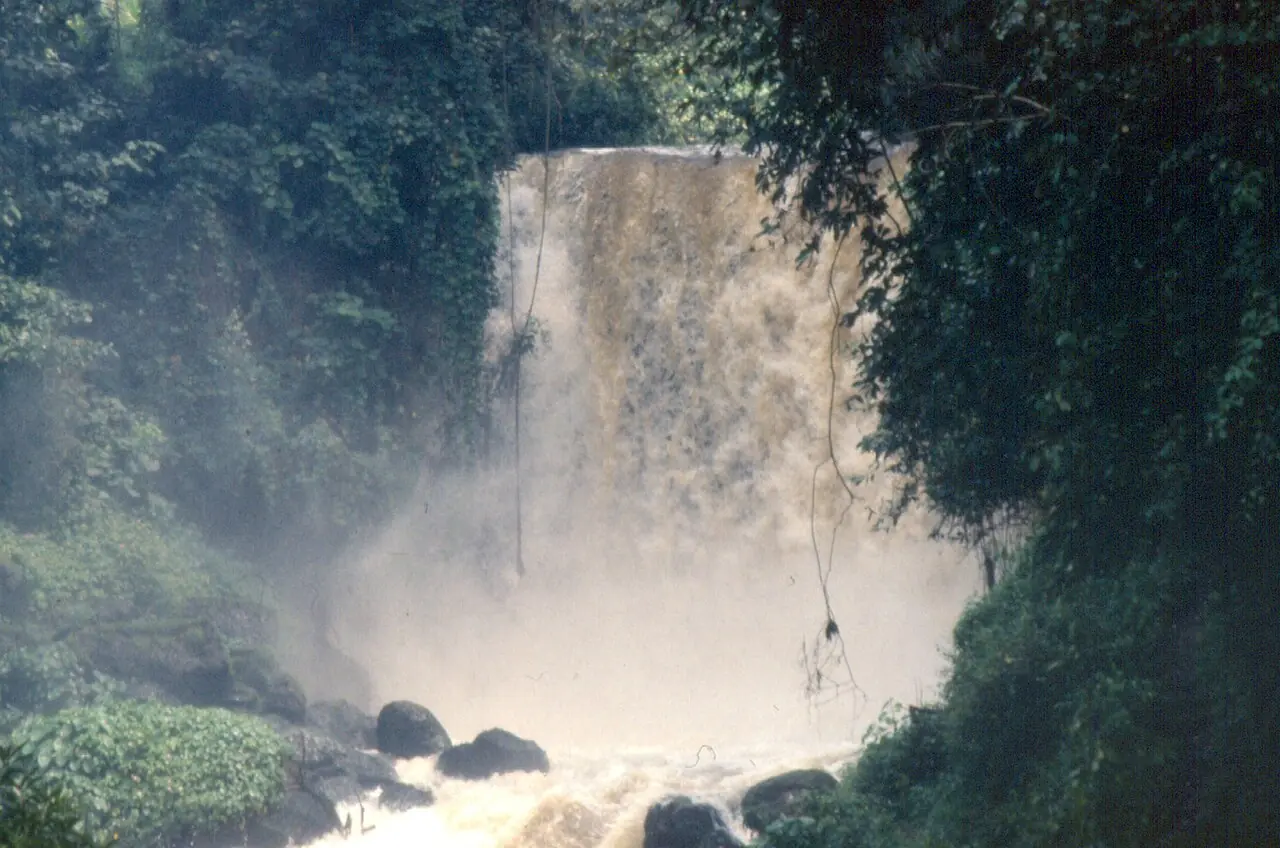 Photo: Ad Meskens · CC BY-SA 3.0
Published by Adama Doumbia, founder of Afrique Unie · updated 28 November 2026 · our method and sources
What the official advice says
The UK Foreign, Commonwealth & Development Office (FCDO) advises against all travel to the provinces of Haut-Uélé, Ituri (including the entire border with South Sudan), North Kivu, South Kivu, Maniema, Tanganyika and Haut-Lomami, to Kwamouth territory in Mai-Ndombe province, to within 50 km of the border with the Central African Republic, and against all air travel into and out of Goma airport.
It advises against all but essential travel to Upemba National Park, to Bangoka International Airport in Kisangani, after multiple drone attacks in the area, to the N'djili and Kimbanseke districts of Kinshasa south of the main access road to N'djili airport, and to the N1 road between Menkao and Kenge. If you are in North or South Kivu and judge it safe to do so, the FCDO says you should leave, and it warns that its support is severely limited outside Kinshasa.
The French foreign ministry goes further: « Les voyages touristiques sont déconseillés sur l'ensemble du territoire » (tourist travel is advised against throughout the country). Its red zone (formally advised against) covers the whole east, where the M23 rebellion, backed by the Rwandan armed forces, has taken Goma and Bukavu; the Virunga, Kahuzi-Biega and Garamba parks, where kidnappings are regularly reported; Tanganyika, Kwilu and Kwango provinces; Kwamouth territory; and the Batéké plateaux, Bombo-Lumene park and the N1 towards Kikwit.
Everywhere else, Kinshasa included, is in France's orange zone (advised against unless there is a compelling reason), because of political instability and general insecurity, with particular mention of the three Kasaï provinces, Mai-Ndombe and armed incursions into Kongo Central. In the capital, France describes a high and worsening level of crime (armed robbery, carjacking, fake police checks) and strongly advises against walking alone.
The two maps therefore differ: France places the whole country at orange or red, while the FCDO targets specific areas and does not advise against the rest of Kinshasa. Both the UK and France have an embassy in Kinshasa.
What it means for insurance
Most travel and assistance policies exclude countries or areas that the foreign ministry formally advises against, and some also exclude areas advised against except for essential travel: medical costs, evacuation and repatriation would then not be covered. The UK government warns that your travel insurance could be invalidated if you travel against FCDO advice.
The French foreign ministry says it is essential to have a policy covering all medical costs, including surgery and hospital treatment, as well as medical repatriation; without one you may not get treatment, even in a life-threatening emergency, and the embassy will not pay these costs.
Read the exclusions in your policy, including any cover attached to your bank card, and ask the insurer for written confirmation, raising the Ebola outbreak too. People sent by an employer, an NGO or a media organisation are usually covered by specialist high-risk policies arranged by their organisation: check exactly what they cover (medical evacuation, security evacuation, duration, areas).
This matters all the more here because, according to the FCDO, medical care is extremely limited, there is no general emergency medical number, Western-standard facilities are almost non-existent outside Kinshasa and evacuation to South Africa or elsewhere could be necessary. France adds that public hospitals are in very poor condition, that a few private clinics, mainly in Kinshasa and Lubumbashi, come close to European standards, and that all treatment must be paid for in advance.
Visa and passport: how it works
Information checked in November 2026. These rules can change at any time: read the official sources again and contact the country's embassy before taking any step.
A visa is required for British and French nationals alike. The UK government tells British citizens to apply through the DRC Embassy in the UK and to allow at least two to three weeks. Some applications are referred to Kinshasa for a decision; a letter of invitation from the person or organisation you are visiting, stamped by the Ministry of Foreign Affairs in Kinshasa, may speed things up. French nationals can apply online or at the DRC Embassy in Paris.
Passport: the UK and France both say it must be valid for at least six months from the date you enter the DRC. For stays of more than six months, a residence permit has to be requested in the country.
Travellers without the required documents can be turned back on arrival. The FCDO says Rwandan or Ugandan stamps in your passport may cause difficulties on arrival but should not prevent entry, and that satellite phones, GPS receivers and military-style clothing can cause problems at customs.
A departure tax is payable in US dollars on every flight, international or domestic, at check-in: get an official receipt and a copy for each fee, hand over the originals when asked and keep the copies.
You must show a yellow fever vaccination certificate on arrival; certificates are checked as each flight lands.
Health, vaccinations and Ebola
Ebola: on 17 May 2026 the World Health Organization declared the Ebola (Bundibugyo virus disease) outbreak in the DRC a Public Health Emergency of International Concern. The FCDO describes it as active, evolving and geographically widespread. According to the French foreign ministry (update of 16 October 2026), eight provinces are affected: Ituri, North Kivu, Haut-Uélé, Tshopo, South Kivu, Bas-Uélé, Sud-Ubangi and Nord-Ubangi.
Official advice: avoid contact with anyone who is unwell, with blood, body fluids and human remains, do not handle bushmeat or touch bats and other wild animals, and wash your hands regularly. Expect passenger locator forms and temperature checks on arrival and departure, including at airports. If you develop fever, severe headache, muscle pain, diarrhoea, vomiting or unexplained bleeding, seek medical advice immediately: symptoms can appear up to 21 days after exposure.
Uganda has temporarily closed its borders with the DRC, except to response teams and humanitarian aid, and several countries apply extra screening or entry restrictions to travellers who have recently been in the DRC. Check the rules of every transit and destination country, and of your airline. The UK's Returning Workers Scheme has been activated for health and humanitarian workers coming back to the UK.
Yellow fever: vaccination is compulsory to enter the DRC, and the French foreign ministry says travellers without a certificate are not allowed to stay and are sent straight back. Get vaccinated at a designated yellow fever centre, ideally at least ten days before you leave. The UK also lists a polio vaccination certificate, required in some circumstances.
Malaria is the leading cause of death from disease in the DRC: bite avoidance and preventive medication should be decided with a travel health doctor, at least eight weeks before the trip according to the UK. A cholera outbreak under way since early 2025 now affects 21 provinces, and France recommends seeing a travel vaccination centre before departure. Mpox, dengue and chikungunya also circulate. Check your routine vaccines too, including measles.
If you must go: the checklist
- Essential reason: Work, humanitarian mission or serious family reasons: the official advice does not cover any other kind of trip.
- FCDO alerts: Sign up for email alerts on your destination's page at gov.uk/foreign-travel-advice: you are notified each time the advice changes.
- Ariane (French nationals): French citizens are strongly encouraged to register on Ariane, the French foreign ministry's service reached from diplomatie.gouv.fr, before departure, to receive alerts and be contactable in a crisis.
- Ebola: Follow the latest on new outbreaks from the WHO and the official sources, and watch for symptoms for 21 days after leaving the affected area.
- Getting around: A car with a known local driver, doors locked and windows closed; no public transport, motorbikes, night travel or walking alone, as France advises. If you must take a taxi, book it privately rather than hailing one in the street.
- Insurance: Written confirmation that your policy covers the DRC, including medical costs, medical evacuation and repatriation.
- Documents: Visa, passport with six months' validity, yellow fever certificate and departure tax receipts; leave the originals somewhere safe and carry photocopies when moving around.
Heritage to discover when conditions allow
The DRC has five natural UNESCO World Heritage sites: the Virunga, Kahuzi-Biega, Garamba and Salonga national parks, and the Okapi Wildlife Reserve in Ituri. The Congo River, which separates Kinshasa from Brazzaville, and the Nyiragongo volcano above Goma are among its best-known landscapes.
We will update this guide if the official advice changes.