 AfriqueUnie
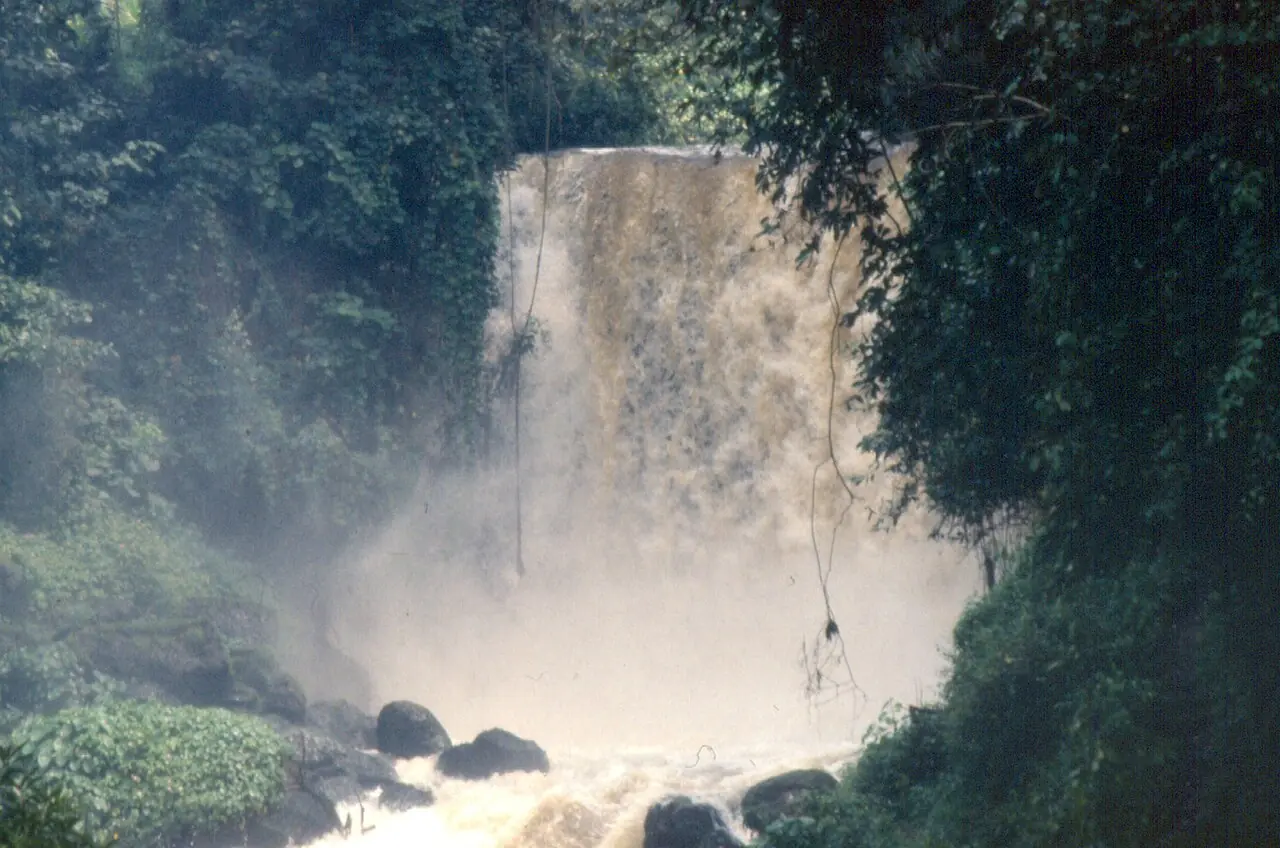 Photo: Ad Meskens · CC BY-SA 3.0
 DR Congo
Published by Adama Doumbia, founder of Afrique Unie · updated 28 November 2026 · our method and sources
Why go to the DR Congo
First, an essential point: France currently advises against all tourist travel anywhere in the DR Congo. Kinshasa is rated 'advised against except for compelling reasons', and the east, including North Kivu and Ituri, is advised against entirely. Always check your own government's official travel advice before any trip: what follows presents the country for the day when conditions allow travel there again.
The Democratic Republic of the Congo is not a country you tick off a list. It is a country the size of a continent, four times as big as France, crossed by the world's second-largest river by discharge, covered by a forest that forms the heart of the Congo Basin, and bordered to the east by a chain of Rift volcanoes and lakes. People come for the sheer scale, for that feeling of facing a natural world and a society that refuse to be reduced to ready-made images.
They also come for Kinshasa, one of the largest French-speaking cities in the world, which pulses to the sound of Congolese rumba, inscribed on UNESCO's Intangible Cultural Heritage list, and its heirs, from ndombolo to today's urban scenes. Creativity is everywhere: popular painters who tell the city's story in garish colours, sculptors who recycle scrap metal, street performers, sapeurs who turn elegance into a philosophy. Kinois have a fierce sense of humour and a hospitality that quickly disarms the traveller. Further south, Lubumbashi, a high-altitude mining city, shows quite another face, more spacious and more orderly.
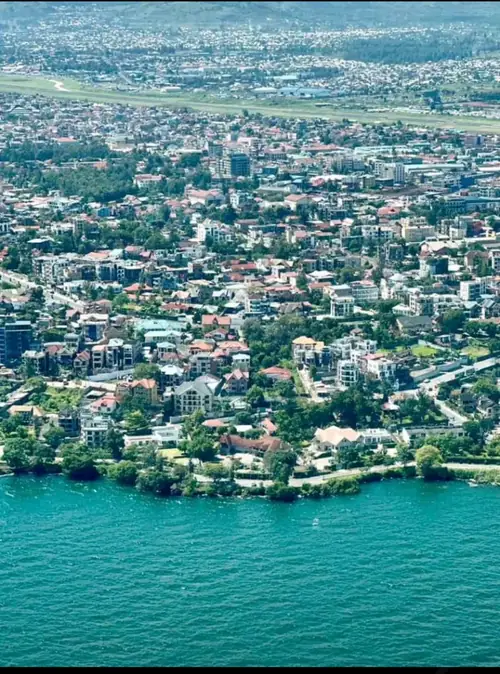
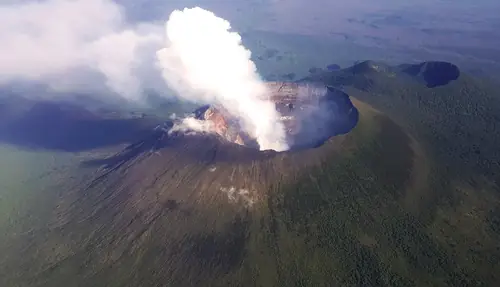
Let's be clear, though: the DRC is not an easy destination. Infrastructure is limited, roads are often impassable, red tape is heavy and costs are high. Above all, the east of the country, home to Virunga National Park, Mount Nyiragongo and the city of Goma, is in the grip of armed conflict and a severely deteriorated security situation: travel there is strongly advised against at present. Before making any plans, check your government's official travel advice, which sets out the areas concerned. Kinshasa and its surroundings, along with Lubumbashi, remain the most accessible points of entry, with vigilance essential.
History and culture
Long before Europeans arrived, the Congo Basin gave rise to powerful states: the Kingdom of Kongo at the mouth of the river, in contact with Portugal from the late fifteenth century, the Luba and Lunda kingdoms in the south, and the Kuba kingdom, renowned for its raffia textiles and masks. At the end of the nineteenth century, Leopold II, King of the Belgians, made the territory his personal possession, the Congo Free State, whose rubber exploitation, founded on violence, caused an international scandal. Belgium took over control in 1908.
Independence was proclaimed on 30 June 1960, with Patrice Lumumba as Prime Minister; he was assassinated a few months later. Mobutu Sese Seko seized power in 1965 and renamed the country Zaire. His fall in 1997 opened a period of particularly deadly regional wars. Since then, the country has remained scarred by instability in the east, while its mineral resources, from copper to cobalt, make it a central player in the global economy.
8 experiences not to miss in the DR Congo
- 01Spend a rumba night in KinshasaSpend an evening in a dance bar in Matonge or Bandal, where the bands play until the early hours.
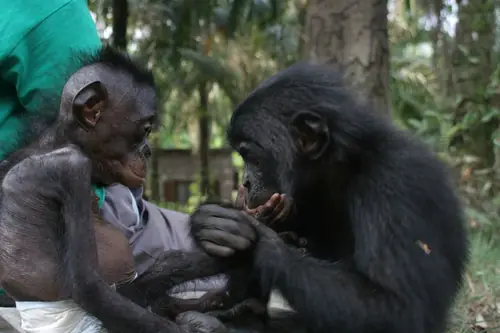
- 02Meet the bonobosVisit the Lola ya Bonobo sanctuary on the edge of Kinshasa and watch these great apes, found only in the DRC.
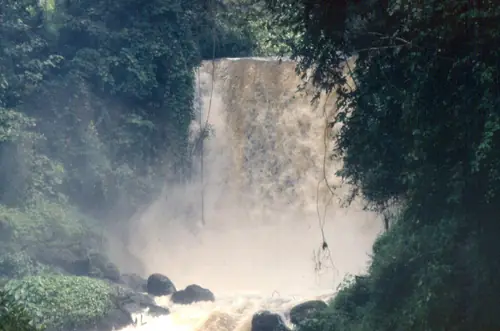
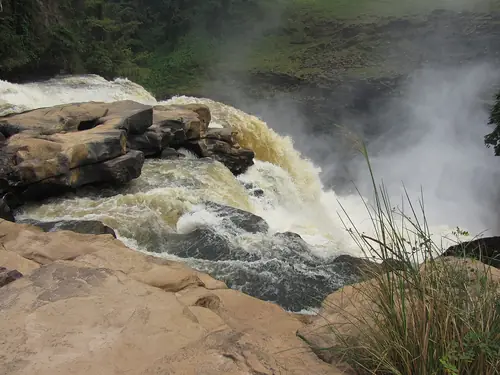
- 03Marvel at the Zongo FallsMake the trip to this powerful forest-fringed waterfall in Kongo Central for a weekend away from the city.
- 04Step inside the Académie des Beaux-ArtsDiscover the sculptors' and painters' studios in Kinshasa, where many acclaimed artists trained.
- 05Watch the river from GombeSee pirogues and barges glide along the Congo, with Brazzaville opposite, in the late afternoon.
- 06Explore LubumbashiDiscover its national museum, its tree-lined avenues and the mining history of Katanga.
- 07Try libokeSavour fish steamed in banana leaves, the signature dish of the riverbanks.
- 08Mountain gorillas, laterWhen the situation allows, Virunga will once again be a major place to see mountain gorillas; for now, that is not the case.
When to go to the DR Congo
As the country straddles the equator, its climates vary greatly from one region to another. In Kinshasa and the west, the dry season runs roughly from June to September: skies are often grey, temperatures slightly cooler and journeys easier. From October to May, the heat turns sticky and tropical storms can transform streets into torrents. In Katanga, around Lubumbashi, the dry season is clearly defined from May to September, with cool nights thanks to the altitude. In the mountainous east, it rains for much of the year, with drier spells around June to August and December to February.
Getting around
Distances are immense and the road network very patchy: between major cities, flying is almost always the only realistic option, with national airlines whose punctuality is hit and miss. Look into aviation safety before you choose. In Kinshasa, traffic is dense and chaotic; you're better off hiring a car with a driver than going it alone, and avoiding overloaded taxi-buses if you don't know the city. Motorbike taxis are everywhere but risky. The tarmacked road from Kinshasa to Matadi takes you to Kongo Central. The river crossing to Brazzaville is by boat from Beach Ngobila, with formalities that are often lengthy.
Etiquette and customs
In Kinshasa, talk is an art: people greet each other at length, joke and negotiate with a smile. Take your time, show an interest in music or football, and you'll soon be adopted. Dress matters a great deal, especially for meetings or visits. Photography is a sensitive subject: it is forbidden to photograph public buildings, soldiers, police officers, bridges and strategic installations, and you'll sometimes be asked for authorisation even for street scenes. Always ask people's permission. Carry a copy of your papers, stay calm and courteous at checkpoints, and avoid going out alone late at night. Lingala, with “mbote” as a greeting, opens many doors.
Food and drink in the DR Congo
Congolese cooking is generous and fragrant. Moambe, a palm-nut sauce, accompanies chicken or fish and is eaten with fufu, a cassava or maize dough, or with chikwangue. Pondu, pounded cassava leaves simmered with onions, palm oil and sometimes salted fish, is a mainstay of everyday meals. Liboke, fish or meat cooked over embers in a parcel of banana leaves, shows off the skills of the river communities. You'll also find makayabu (salted fish), grilled caterpillars in season, plantains and capitaine from the river. In Kinshasa, nganda, small neighbourhood restaurants, are the ideal place to try it all with a well-chilled beer.
 Angola
 Cameroon
 Central African Republic
 Chad
 Equatorial Guinea
 Gabon
 Republic of the Congo
 São Tomé and Príncipe