 AfriqueUnie
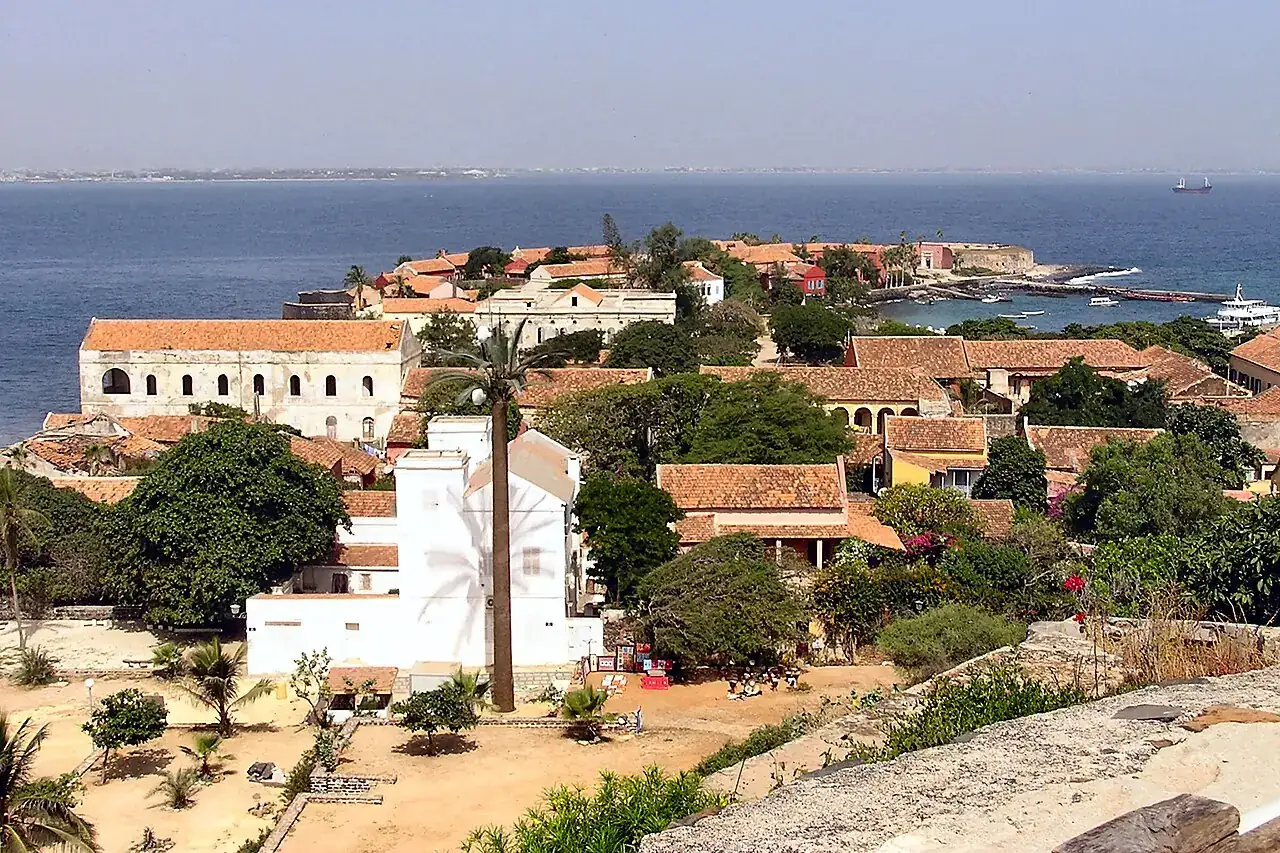 Photo: Manu25 · CC BY-SA 4.0
Published by Adama Doumbia, founder of Afrique Unie · updated 28 November 2026 · our method and sources
- Days 1-2
Dakar, capital of teranga
The international airport is at Diass, roughly an hour from Dakar depending on traffic. Base yourself around Les Almadies or Ngor, which are airier than the centre. The next day, head down to the Plateau: Kermel market, Independence Square, then the Museum of Black Civilisations, devoted to African cultures and their diasporas. Climb the African Renaissance Monument for the view over the peninsula, and finish on the western corniche at sunset. In the evening, Dakar moves to the beat of mbalax in its bars and music venues. With an extra hour, the little island of Ngor, a few minutes away by pirogue, is perfect for a swim.
- Day 3
Gorée Island
The ferry leaves from Dakar port and reaches Gorée in about twenty minutes. Free of cars, the UNESCO-listed island first strikes you with its gentleness: ochre and pink houses, bougainvillea and sandy lanes. Take time to visit the House of Slaves and its ‘door of no return’, a memorial to the Atlantic slave trade, then the history museum inside the Fort d'Estrées. Climb up to the Castel, the island's high point, where artists display their work facing the bay of Dakar. Have grilled fish for lunch near the jetty and catch the ferry back in the late afternoon. On Sundays, the island is busy with families from Dakar.
- Day 4
The Pink Lake and its dunes
An hour's drive north-east of Dakar, Lake Retba owes its colour to an alga that thrives in its very salty water. The shade varies with the light, the wind and the season: it is often strongest in the dry season, on calm and sunny days. Watch the salt collectors diving to break salt from the bottom before loading it into their pirogues, and the women sorting it on the shore. In the afternoon, head out by 4x4 or quad bike across the dunes that separate the lake from the ocean, all the way to the beach. Sleep in a lakeside camp to enjoy the evening calm, far from the bustle of the capital.
- Days 5-6
Saint-Louis, the island of balconies
Allow four to five hours' drive north to Saint-Louis, the former capital of French West Africa. You enter the UNESCO-listed island over the Faidherbe Bridge and its long metal frame. The next day, tour the grid of streets by horse-drawn carriage or bicycle to admire the colonial houses with their wrought-iron balconies. Then cross to the Langue de Barbarie and the fishing district of Guet Ndar, one of the liveliest in the country, where hundreds of painted pirogues come back to shore late in the day. In the evening, look for live music: the town is famous for its jazz festival, held in the spring.
- Day 7
The birds of Djoudj
Set off early for Djoudj National Bird Sanctuary, about an hour and a half north of Saint-Louis in the Senegal River delta. From November to April, millions of migratory birds from Europe join the local species here. The pirogue trip from the park's landing stage takes you to the colonies of great white pelicans, an impressive spectacle of noise and movement. With a little luck you will also see flamingos, cormorants, herons and crocodiles. Bring binoculars, a hat and water: it gets hot quickly. Return to Saint-Louis in the early afternoon for a final stroll around the island and a well-earned thieboudienne.
- Day 8
Heading south to Joal-Fadiouth
A transition day: allow five to six hours' drive south, skirting Dakar inland, to reach the Petite Côte. Stop at Joal-Fadiouth, the birthplace of Léopold Sédar Senghor. A long wooden footbridge links Joal to the island of Fadiouth, built entirely on shells piled up over the centuries. The streets, the houses and even the mixed cemetery, where Christians and Muslims lie side by side on a neighbouring island, stand on these shell mounds. A local guide will lead you past the millet granaries on stilts. Then continue to the delta, around Palmarin, Ndangane or Toubacouta, for two nights in a camp.
- Days 9-10
The creeks of the Saloum, then home
The UNESCO-listed Saloum Delta is a maze of channels, known as bolongs, lined with mangroves. The best way to explore it is by pirogue: glide between mangrove roots heavy with oysters, land on islands inhabited by Serer fishermen and watch the birds at sunset. A walk through the villages and a lunch of grilled fish complete the day. On the last day, enjoy a morning swim before setting off: depending on where you are staying in the delta, the airport at Diass is two to three hours away, so you can catch an evening flight without going back through Dakar.
Getting around
The most comfortable option is to hire a car with a driver for the whole trip: driving is tiring, signposting is patchy and police checkpoints are frequent. Main roads are paved, but the last few kilometres to the Saloum camps are often dirt tracks. Bush taxis and minibuses link every town on the route on a tight budget, at the cost of long waits. For Gorée, the ferry leaves Dakar port several times a day.
When to do this trip
The dry season, from November to May, is the best time: clear skies, reasonable heat on the coast and migratory birds at Djoudj, which is generally open from November to April. December and January are the coolest months, sometimes hazy with the harmattan. The rainy season, from July to October, brings humid heat, storms and muddy tracks in the Saloum, and Djoudj closes.
The travel notebook
The itinerary, practical information (entry, health, money, emergencies) and the checklist in a few pages, to print or keep offline on your phone.
Variations
- In 7 days: drop Saint-Louis and Djoudj, and spread your time between Dakar, Gorée, the Pink Lake and the Saloum Delta.
- In 14 days: add Casamance, flying or sailing to Ziguinchor, then the beaches of Cap Skirring and the Diola villages.
- Beach version: spend longer on the Petite Côte, between Saly and the Saloum, with a day at the Bandia reserve for wildlife.