 AfriqueUnie
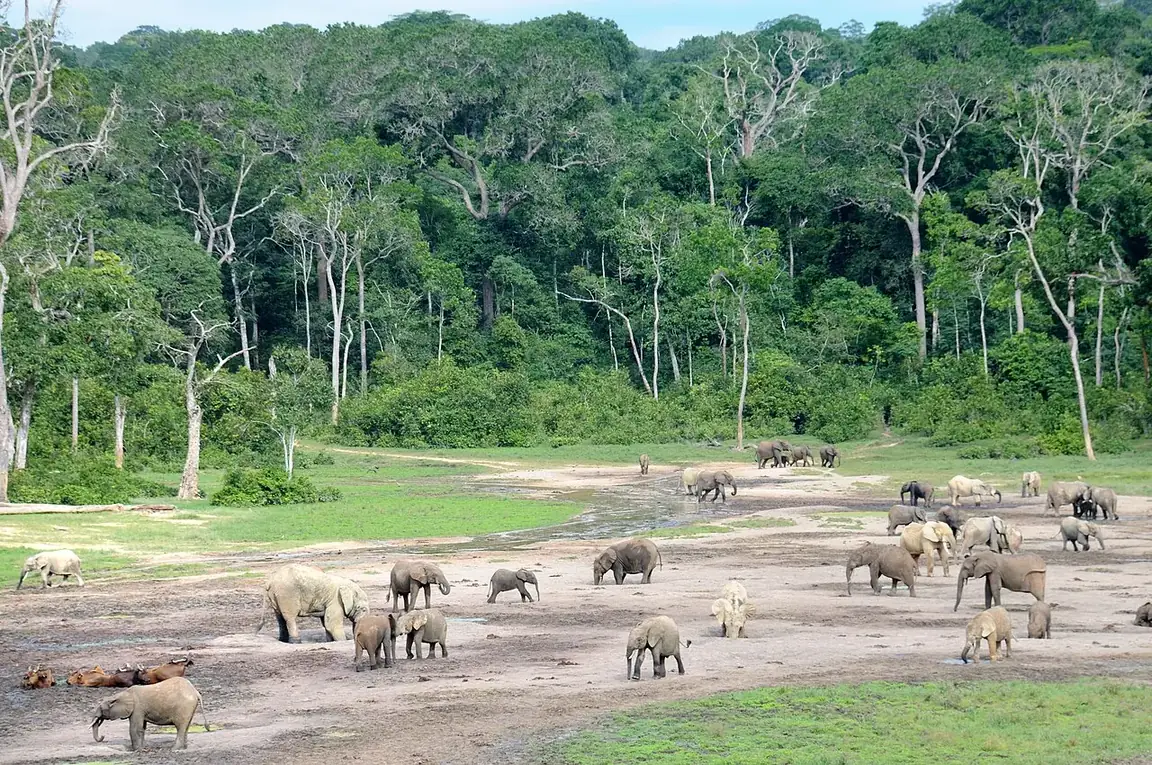 Photo: JosepMGracia · CC BY-SA 4.0
Published by Adama Doumbia, founder of Afrique Unie · updated 28 November 2026 · our method and sources
Why go
Warning: the Central African Republic is the subject of official advice against travel. Before making any plans, check your government's official travel advice. The Dzanga-Sangha reserve nonetheless remains one of the great natural treasures of Central Africa. Together with protected areas in Cameroon and the Republic of the Congo, it forms the Sangha Trinational, a UNESCO World Heritage Site. Its dense forest, laced with rivers and swampy clearings known as bais, is home to forest elephants, lowland gorillas, chimpanzees, bongos, sitatungas and remarkable birdlife.
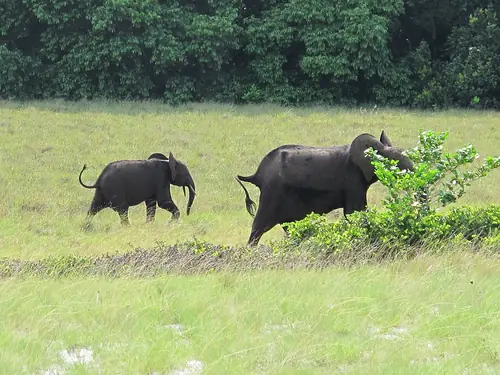
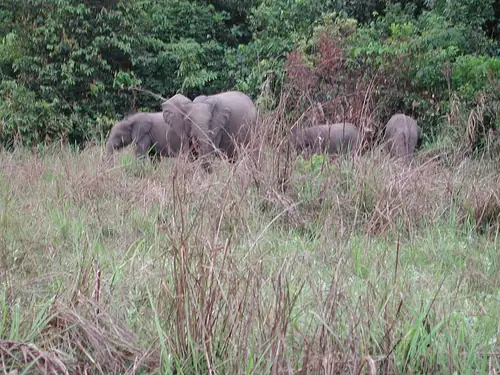
The most famous site is the Dzanga Bai clearing. From a raised platform you can watch several dozen forest elephants, smaller and more elusive than their savannah cousins, digging into the mud to extract mineral salts. Youngsters playing, males sparring, females keeping watch: you can spend hours observing them. Elsewhere in the reserve, families of lowland gorillas were habituated to human presence over many years, thanks to the knowledge of Aka trackers, who read the forest like a book.
Getting there
Historically, most visitors reached the reserve by charter flight from Bangui to the Bayanga airstrip, as the road is very long and unreliable. Others came from neighbouring Cameroon or the Republic of the Congo, along tracks and the Sangha River, as part of organised tours. From Bayanga, the viewing sites are reached by vehicle and then on foot, often wading through streams. When the situation allows, only a supervised trip with organised transfers would be conceivable.
 Cameroon
 Chad
 Gabon
 Republic of the Congo