 AfriqueUnie
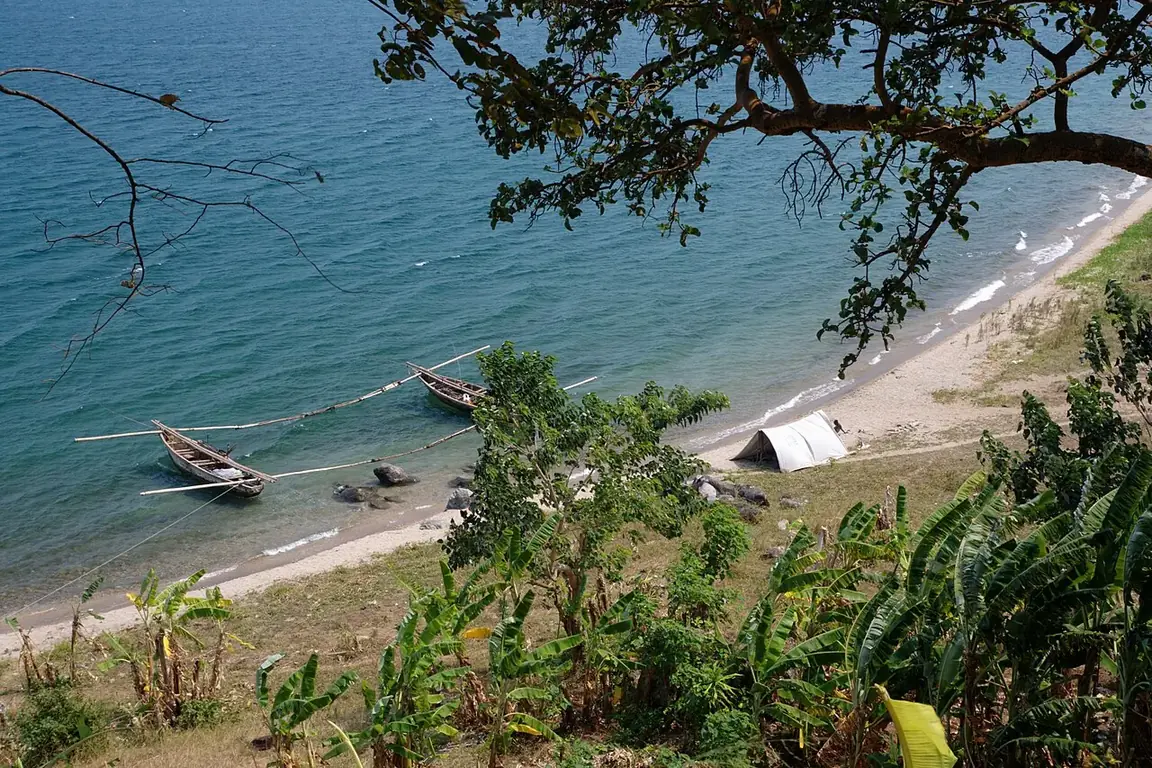 Photo: Emesik · CC BY-SA 3.0
Published by Adama Doumbia, founder of Afrique Unie · updated 28 November 2026 · our method and sources
Why go
Nearly 700 kilometres long and shared by four countries, Lake Tanganyika is one of the largest and deepest freshwater lakes in the world, and one of the oldest. Burundi has its north-eastern tip, with golden sandy beaches stretching north of Bujumbura and along the southern road towards Rumonge. The water is remarkably clear, and the Congolese mountains etched against the horizon make for unforgettable sunsets.
The lake harbours exceptional biodiversity, including hundreds of species of colourful cichlid fish, most of them endemic, as well as the mukeke and ndagala on which the fishermen depend. At night the lamps of the fishing canoes twinkle on the water, a peaceful sight you can enjoy from the lakeside terraces.
Getting there
From Bujumbura, the northern beaches are a few minutes away by taxi. For wilder shores, follow the southern road towards Rumonge and Nyanza-Lac, one to two hours' drive away, where coves and fishing villages follow one after another. Rusizi National Park, on the delta to the north-west, should however be avoided: the UK government advises against all travel there, and France Diplomatie advises against all travel to the whole border with the DRC.
Frequently asked questions
Can you swim in Lake Tanganyika in Bujumbura?
It is best not to: France Diplomatie advises against swimming right next to Bujumbura because of crocodiles and hippos, and the UK government advises avoiding swimming in the lake because of wildlife and waterborne diseases. Never swim near river mouths or in weedy areas, and always follow local advice. The beaches are still lovely for relaxing and watching the sunset without going in.
Can you visit Rusizi National Park at the moment?
No, it is advised against. The UK government advises against all travel to Rusizi National Park, and France Diplomatie advises against all travel to the border with the DRC and the Uvira road beyond the reserve, because of armed groups. Check the latest official advice before making any plans.
How deep is Lake Tanganyika?
It is the second-deepest lake in the world after Lake Baikal, and the second-largest freshwater lake by volume. Nearly 700 kilometres long, it is shared by Burundi, the DRC, Tanzania and Zambia. It is also one of the oldest lakes on the planet.
Where are the most beautiful shores of Lake Tanganyika in Burundi?
For wilder shores, follow the southern road towards Rumonge and Nyanza-Lac, one to two hours from Bujumbura, where coves and fishing villages follow one another. Travel by day, as France Diplomatie advises against driving at night in the provinces. Stay in properly guarded accommodation.
Which fish should you try by Lake Tanganyika?
Mukeke and ndagala, two fish from the lake, are the must-try specialities of the lakeside terraces. The lake is also home to hundreds of species of colourful cichlids, most of them found nowhere else. In the evening, the lamps of the fishing boats twinkle across the water.
 Djibouti
 Kenya
 Tanzania
 Cape Verde