The Great Migration in the Masai Mara, elephants against the backdrop of Kilimanjaro in Amboseli, the Rift Valley lakes and Indian Ocean beaches: Kenya is the benchmark for safaris.
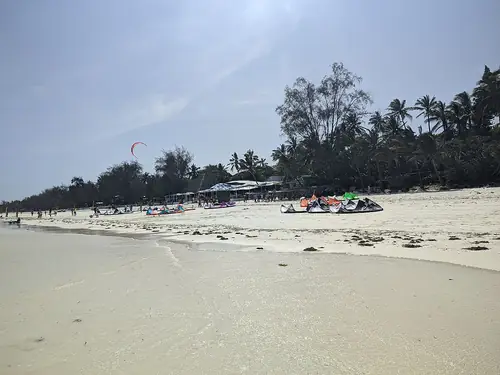
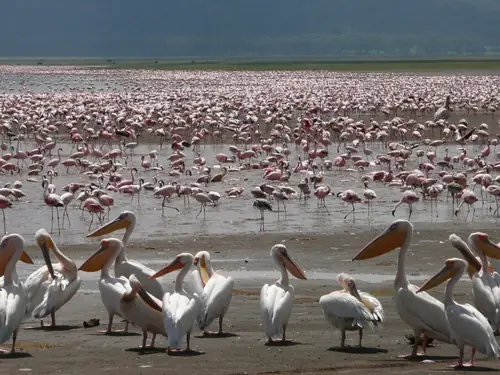
The word “safari” comes from Swahili, where it simply means “journey”, and it was in Kenya that it took on the meaning the whole world gives it today. There is a reason for that: few countries pack such a variety of landscapes and wildlife into so compact a territory. In ten days or so you can watch lions squabbling over a carcass in the golden grass of the Masai Mara, see elephants walking in single file before the snowy outline of Kilimanjaro at Amboseli and rhinos grazing on the shores of Lake Nakuru, then end up stretched out beneath the coconut palms of an Indian Ocean beach.
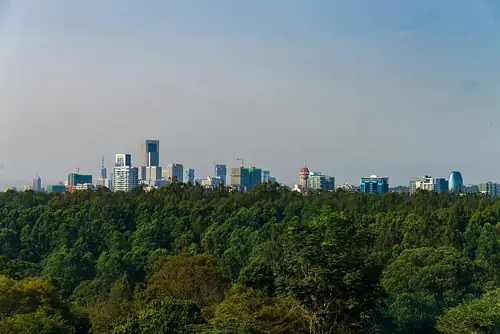
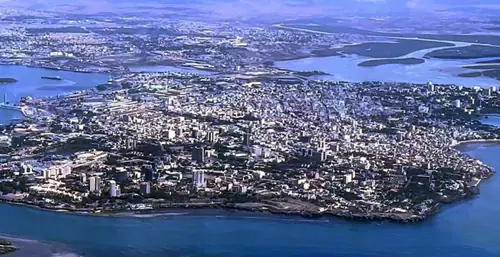
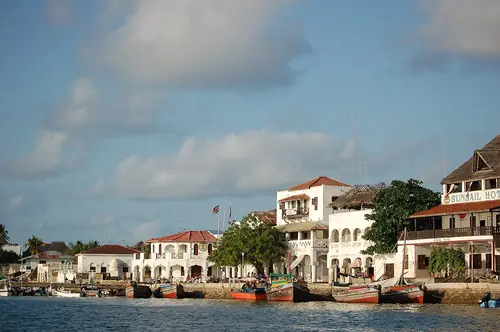
But Kenya is about far more than its parks. It is a country of forty-seven counties and more than forty communities, from Maasai and Samburu herders to the Kikuyu of the highlands, from the Luo of Lake Victoria to the Swahili of the coast. Nairobi, its capital, fizzes with energy: start-ups, art galleries, graffiti-covered matatus blasting out music, markets where people haggle in Sheng, the urban slang that blends Swahili and English. On the coast, Lamu and Mombasa's Old Town tell the story of a thousand years of trade with Arabia, Persia and India.
Finally, Kenya is a country that has learnt how to welcome visitors. The tourism infrastructure runs like clockwork, the naturalist guides are among the most skilled on the continent, and the conservancies, private or community-run areas managed with Maasai herders on the edges of the reserves, have pioneered a model in which tourism directly funds wildlife protection and family incomes. For a first safari it is a safe bet; for a second, it is a country that reveals itself to be richer still.
History and culture
The Lake Turkana basin in the north has yielded some of the most important hominid fossils ever found, including the almost complete skeleton of “Turkana Boy”. Much later, from around the 8th century, the coast saw the birth of Swahili civilisation: Muslim trading cities such as Lamu, Malindi and Mombasa, built of coral stone, dealing in ivory, gold and spices across the Indian Ocean. The Portuguese arrived with Vasco da Gama in 1498, before being driven out by the Omanis at the end of the 17th century.
British colonisation at the end of the 19th century brought the construction of the Uganda Railway and the confiscation of the best land in the highlands for European settlers. The Mau Mau uprising, harshly suppressed in the 1950s, paved the way for independence in 1963 under the leadership of Jomo Kenyatta. Since then the country has seen the return of multi-party politics in 1991, some very tense elections, and the adoption in 2010 of a new constitution that devolved power to the counties.
8 experiences not to miss in Kenya
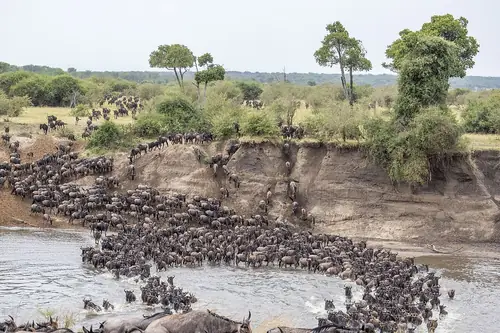
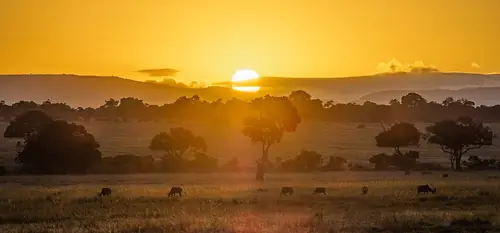
Photo : Charles J. Sharp · CC BY-SA 4.001A Mara river crossingWait on the banks of the Mara River for the moment the wildebeest plunge into the water under the gaze of crocodiles, between July and October.
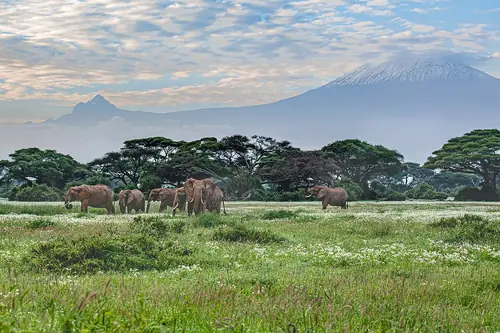
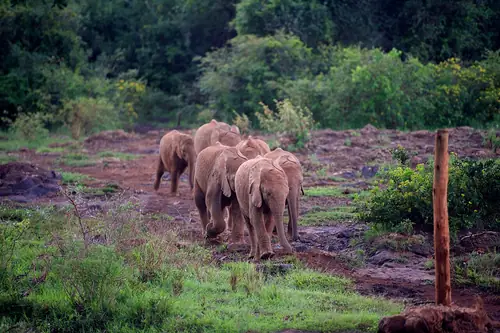
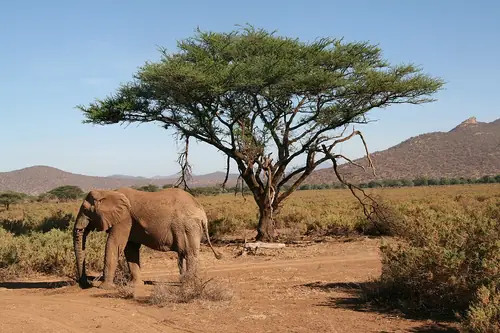
Photo : Ninaras · CC BY 4.002The elephants of AmboseliPhotograph the great herds in the swamps at dawn, when Kilimanjaro emerges from the clouds.
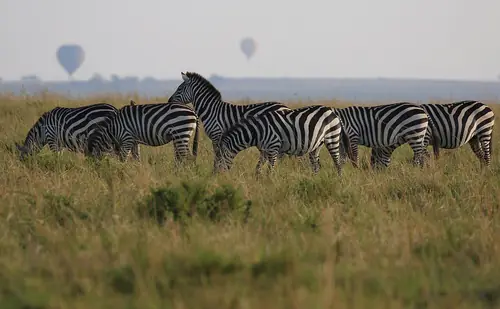
Photo : flowcomm · CC BY 2.003A hot-air balloon flightFloat over the Masai Mara savannah at sunrise, then land for breakfast out in the bush.
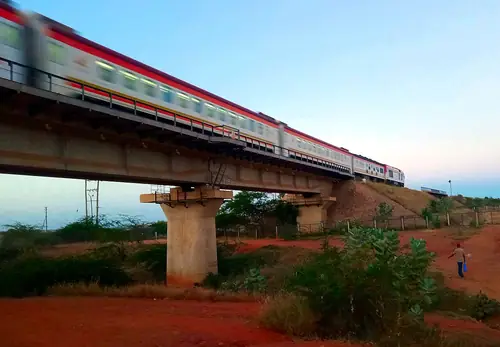
Photo : TTC dude · CC BY-SA 4.005The train to the coastRide the Madaraka Express between Nairobi and Mombasa and spot zebras and giraffes from the window as you cross Tsavo.
Photo : Danijel Mihajlovic · CC BY-SA 4.007A night in a conservancySleep in a tented camp in a Maasai conservancy, where walking safaris and night drives are possible.
Photo : Luigi Guarino · CC BY 2.008The Kisite reefSet off from Shimoni to snorkel in Kisite-Mpunguti Marine Park, often frequented by dolphins.
When to go to Kenya
Kenya can be visited all year round, but two main dry seasons dominate. From July to October is high season: the vegetation thins out, animals gather near water holes and the great migration is in full swing in the Masai Mara. January and February, hot and dry, are also excellent. The long rains, from April to early June, make some tracks difficult and close a few camps, while the short rains of November are generally brief and give way to lush green landscapes, newborn animals and gentler prices. On the coast it is hot and humid all year; July to March are the most pleasant months there. In Nairobi, at almost 1,700 metres above sea level, July evenings are cool.
Getting around
For safaris, the most common option is a pop-top minibus or 4x4 with a driver-guide, booked through a local operator. Domestic flights from Nairobi's Wilson Airport serve the bush airstrips of the Masai Mara, Amboseli, Lamu and Diani in record time, with strict baggage limits and soft bags only. The Madaraka Express train links Nairobi and Mombasa comfortably in a few hours. Matatus, shared minibuses, are the quintessential local experience, but packed and fast. In town, ride-hailing apps work well in Nairobi and Mombasa. Traffic drives on the left, and driving at night outside the cities is best avoided.
Etiquette and customs
Greetings matter: “Jambo” is the one for visitors, but “Habari?” (“What news?”) will earn you more warmth, with “Nzuri” as the reply. “Asante sana” means thank you very much, and “pole pole”, slowly, sums up a certain attitude to time. Always ask before photographing anyone, especially the Maasai and Samburu, and accept that you may sometimes be asked for something in return. On the Muslim coast, particularly in Lamu, cover your shoulders and knees away from the beaches. Single-use plastic bags have been banned since 2017: leave them at home. Tipping guides and drivers is an expected practice on safari.
Food and drink in Kenya
Kenyan food is simple and generous. Nyama choma, goat or beef slowly grilled, is shared among friends at the weekend, carved on a board and served with kachumbari, a spicy salad of raw tomatoes and onions. Ugali, a firm maize-flour porridge, comes with almost everything, notably sukuma wiki, sautéed collard greens whose name means “stretch the week”, because they help you hold out until payday. On the coast, Swahili cooking is fragrant with coconut, cardamom and cloves: pilau, biryani, fish in coconut milk, and fried mandazi for breakfast. Everywhere, people drink very sweet, milky chai, and the renowned Kenyan coffee can be sampled in Nairobi's cafés.
The best time to visit Kenya: July to October, January to February.
What should I see first in Kenya?
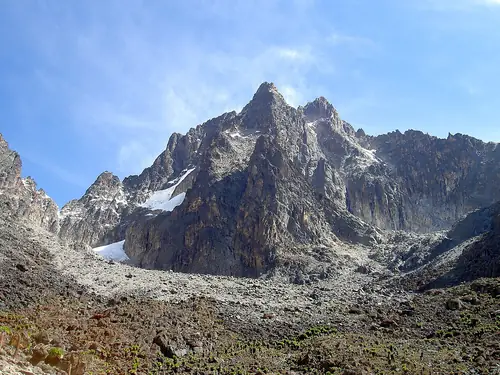
The must-sees: Maasai Mara, Amboseli National Park, Diani Beach, Lake Nakuru, Mount Kenya, Samburu National Reserve.
Which cities should I visit in Kenya?
Nairobi, Mombasa, Lamu. The capital is Nairobi.
How much should I budget for a trip to Kenya?
Mid-range: around €60–120 per person per day, excluding flights. This is only a guide and depends above all on the accommodation and activities you choose.
The main international airport has the code NBO. Compare flights with the ‘Flights’ button on this page.
Do I need a visa to visit Kenya?
Entry requirements depend on your nationality and change regularly. Check them on the country's official website or with your foreign ministry before booking, and make sure your passport is valid.
What should I eat in Kenya?
Dishes to try while you're there: Nyama choma, ugali, sukuma wiki.
Jambojet, Kenya Airways and Safarilink link Nairobi with Mombasa, Kisumu, Malindi, Lamu and the airstrips of major reserves such as the Masai Mara. The Madaraka Express, a modern train, runs several daily departures between Nairobi and Mombasa in about five to six hours, and trains also run to Kisumu and Nanyuki on the older line. On the road, matatus (minibuses) and long-distance buses serve the whole country, while boda-bodas (motorbike taxis) cover short hops. In Nairobi, Uber and Bolt are widely used; for safaris, a 4x4 with driver-guide is the usual choice. Traffic drives on the left.
Health and safety
Yellow fever
Certificate required only if you arrive from, or transited through, a country with a risk of yellow fever (from 1 year, incl. airport transits over 12 h); vaccine: recommended, except travel limited to Nairobi, the former North Eastern Province or the coast (Mombasa, Malindi, Lamu…): generally not recommended.
Malaria
Present in some areas (areas below 2,500 m, incl. game parks; rare in central Nairobi): ask a doctor depending on your itinerary.
Water and food
Unless your accommodation says otherwise, drink sealed bottled or filtered water, and wash your hands often.
Sources: France Diplomatie, Viaggiare Sicuri, Belgian Foreign Affairs, GOV.UK, checked in November 2026. All 54 countries
Entry requirements (visas, vaccinations) and security conditions change regularly: check them with the official authorities before booking. Official tourism website: Kenya Tourism Board (Magical Kenya).
Affiliate cookiesWe would like to load a script from our partner Travelpayouts. It may set cookies so that we receive a commission when you book through our links, at no extra cost to you. If you decline, the site works in exactly the same way. Find out more
 AfriqueUnie
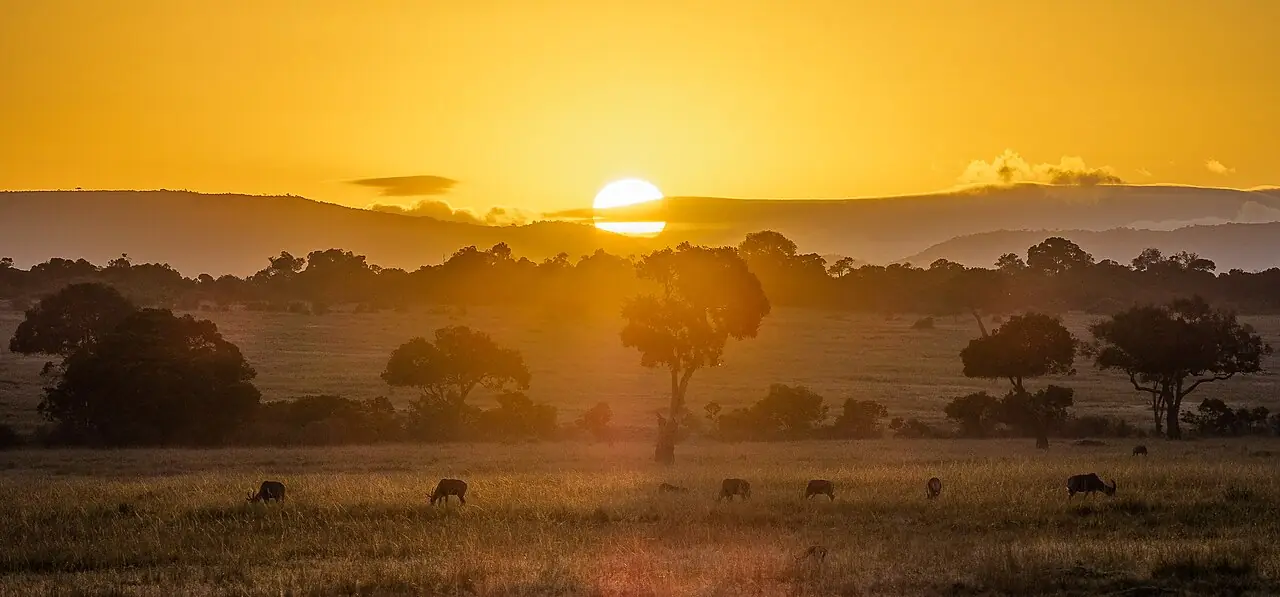 Photo: Danijel Mihajlovic · CC BY-SA 4.0
 Kenya
 Kenya or Tanzania
 Kenya or South Africa
 Kenya or Uganda
 Burundi
 Djibouti
 Eritrea
 Ethiopia
 Rwanda
 Somalia
 South Sudan