 AfriqueUnie
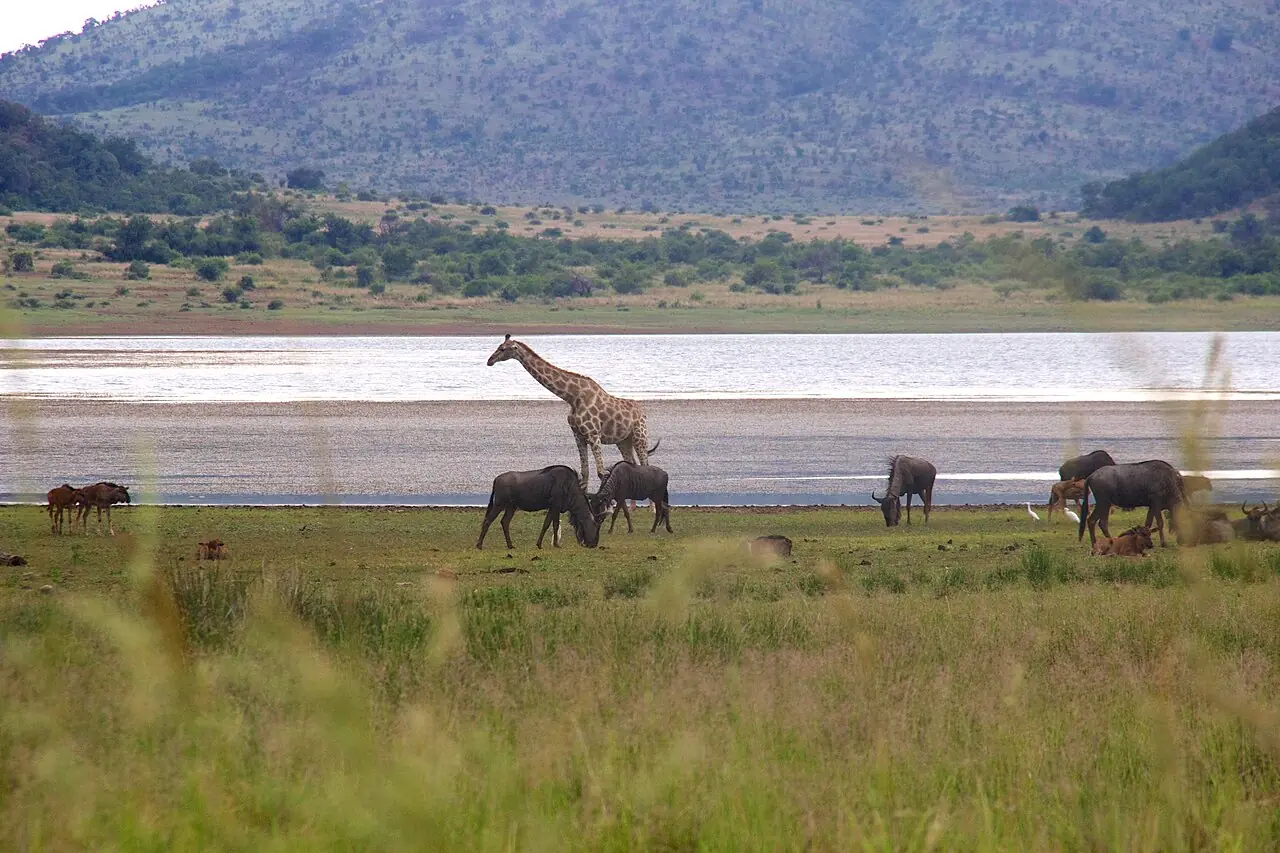 Photo: Mike Peel (www.mikepeel.net) · CC BY-SA 4.0
Africa is home to two rhino species: the white rhino, which grazes in small groups on open savannah, and the smaller black rhino, a solitary browser that hides in thickets. Wiped out in many places by poaching for their horn, they now survive only in closely guarded parks and reserves, mainly in Southern Africa and Kenya.
Your best chances are in Pilanesberg and Kruger in South Africa, Lake Nakuru in Kenya and Etosha in Namibia, where black rhinos come to drink at floodlit waterholes at night. Namibia's Damaraland offers tracking of desert-adapted black rhinos on foot, and Rwanda's Akagera National Park has reintroduced both species.
Where to see them
- 1
Pilanesberg National Park ·
 South Africa
This Big Five park set in an ancient volcanic crater, less than three hours' drive from Johannesburg, offers good chances of seeing both white and black rhinos.
- 2
Lake Nakuru ·
 Kenya
The fenced park around the lake is a sanctuary where white rhinos often graze near the shore and black rhinos also live.
- 3
Etosha National Park ·
 Namibia
Floodlit waterholes at camps such as Okaukuejo let you watch black rhinos drinking at night, sitting quietly behind a low wall.
- 4
Twyfelfontein and Damaraland ·
NamibiaDesert-adapted black rhinos roam free in these arid mountains; you track them on foot or by 4x4 with specialist trackers.
- 5
Akagera National Park ·
 Rwanda
Black rhinos were reintroduced here in 2017 and white rhinos in 2021, making it Rwanda's only Big Five park.
- 6
Hlane Royal National Park ·
 Eswatini
's largest protected area, where white rhinos are easily seen around waterholes, often at close range.
- 7
Kruger National Park ·
South AfricaPoaching has sharply reduced numbers here, but white rhinos are still seen, mainly in the south of the park.
- 8
Ngorongoro Crater ·
 Tanzania
A small population of black rhinos lives on the crater floor; they are often seen at a distance through binoculars.
When to go
The dry season is best: May to September in South Africa and Eswatini, June to October in Kenya, Tanzania, Namibia and Rwanda. The grass is shorter and rhinos visit waterholes regularly, where it is easier to wait for them. In Etosha, southern winter nights (June to September) are ideal for seeing them at the floodlit waterholes.
Our tips
- Never post a rhino's exact location and turn off geotagging on your photos: poachers monitor social media.
- When tracking on foot, follow the tracker's instructions exactly: stay behind them, in single file, downwind and silent.
- Keep your distance from black rhinos, which have poor eyesight and charge readily when startled.
- Choose parks and reserves that fund anti-poaching patrols; your entrance fee contributes directly.
- Never buy anything said to contain rhino horn: international trade in it is banned.
Frequently asked questions
Where can you see rhinos in Africa?
The best places are Pilanesberg National Park and Kruger National Park (South Africa), Lake Nakuru (Kenya), Etosha and Damaraland (Namibia), Akagera National Park (Rwanda) and Hlane Royal National Park (Eswatini).
How many rhinos are left in Africa?
According to the IUCN, Africa had about 22,540 rhinos at the end of 2024: 6,788 black rhinos, a rising number, and 15,752 white rhinos, a falling one.
What is the difference between white and black rhinos?
The white rhino has a wide, square lip for grazing and lives in small groups; the smaller black rhino has a pointed lip for grasping leaves and lives alone in thickets. Their colour is in fact almost the same.
Where can you see black rhinos?
In Etosha at floodlit waterholes at night, in Damaraland on foot with trackers, in Ngorongoro Crater and at Lake Nakuru.