AfriqueUnie
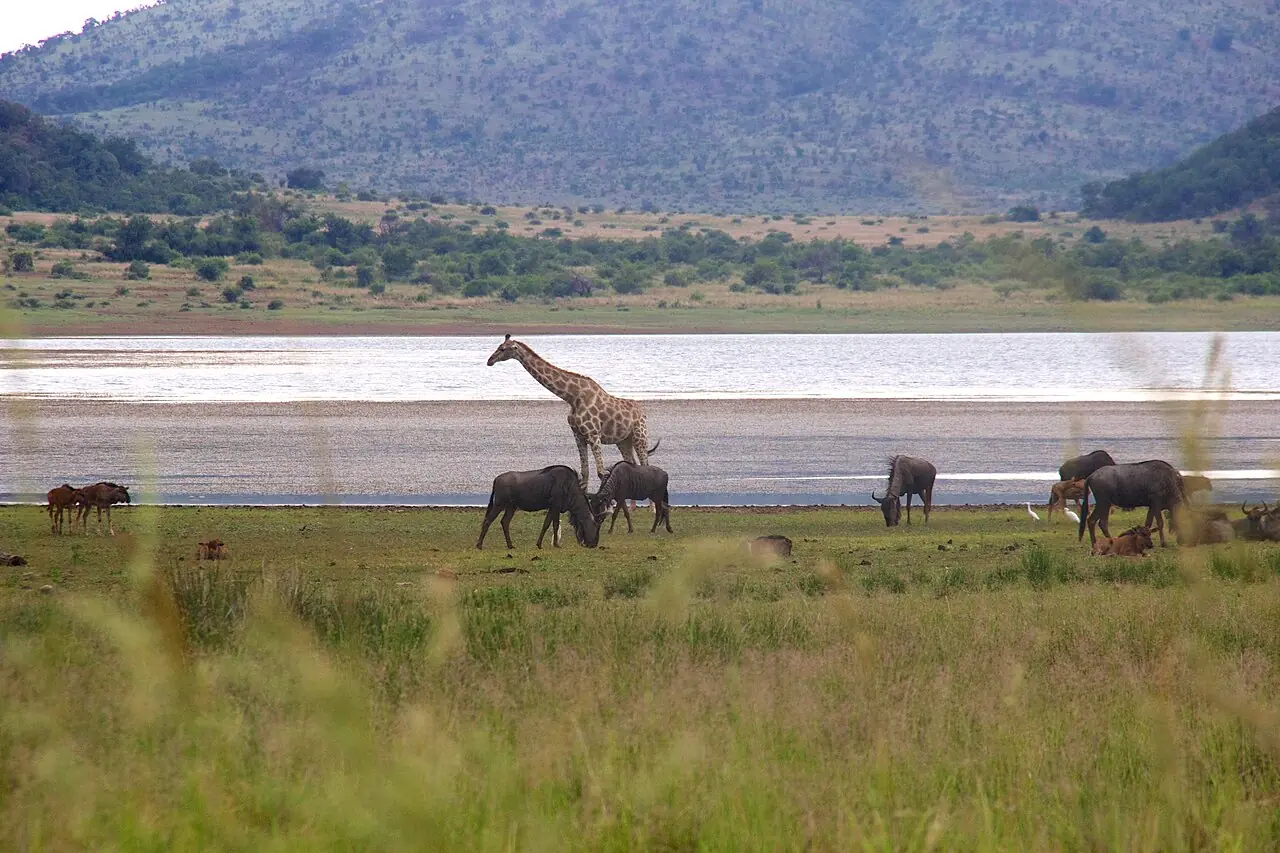 Photo: Mike Peel (www.mikepeel.net) · CC BY-SA 4.0
Published by Adama Doumbia, founder of Afrique Unie · updated 28 November 2026 · our method and sources
Why go
North-west of Johannesburg, in North West Province, Pilanesberg National Park lies at the heart of an ancient volcanic complex more than a billion years old. Erosion has carved concentric rings of hills rising 300 to 600 metres above the bushveld plains, around a large central lake, Mankwe Dam. The park, covering about 570 square kilometres, was created in the late 1970s through a vast reintroduction programme, Operation Genesis, which brought wildlife back to former farmland.
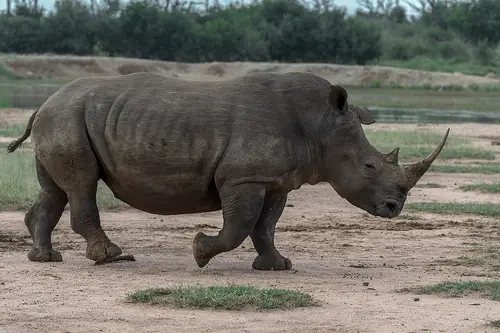
Today it is home to the Big Five, lion, leopard, elephant, rhino and buffalo, as well as cheetahs, brown hyenas, giraffes, zebras, hippos and many antelopes, plus more than 360 bird species. Lying in a transition zone between the Kalahari and the bushveld, the park mixes the landscapes and species of both. Its main draw for families: it lies outside South Africa's malaria-risk areas, just a few hours from Johannesburg and Pretoria.
The massif takes its name from Pilane, a 19th-century Tswana chief of the Kgafela people, and Stone Age and Iron Age sites scattered across the park show that people have lived here for a very long time. The outermost ring of hills is about 24 kilometres across, and the northern peaks rise to almost 1,690 metres above sea level. Several viewpoints, such as the one on Lenong hill, take in the whole crater, while the shores of Mankwe Dam, home to hippos and crocodiles, are among the best places to watch wildlife. A large hotel and leisure resort lies on the park's southern edge, but the inside of the crater is left to the wildlife.
Getting there
Allow about two to two and a half hours by road from Johannesburg or Pretoria, on tarred roads via Rustenburg or Brits. The park has four public gates: two in the south, Manyane Gate in the east and Bakgatla Gate in the north. You can explore it in your own car, on a network of tarred roads and gravel tracks suitable for ordinary vehicles, or on a guided safari in an open vehicle.
Frequently asked questions
Is Pilanesberg really malaria-free?
It lies outside South Africa's malaria transmission areas, which are mainly the lowlands of Limpopo, Mpumalanga, including Kruger National Park, and northern KwaZulu-Natal. Preventive medication is therefore not usually recommended, which makes it a favourite with families with young children. Still, ask a doctor or travel clinic for advice before you leave, especially if your trip continues to other regions.
Can you see the Big Five in Pilanesberg?
Yes, all five species live here: lion, leopard, elephant, rhino and buffalo. The leopard remains the hardest to spot. As the park is smaller and busier than Kruger, sightings are often good, but nothing is guaranteed, so plan several drives early in the morning and late in the afternoon.
Should you take a guided safari or self-drive in Pilanesberg?
Both are possible. By car, you set your own pace and route on easy roads. A guided safari in an open vehicle gives a better view, the experience of a guide who knows where to look for animals and access to night drives, which are not allowed for private visitors.
How much time do you need for Pilanesberg?
A day trip from Johannesburg is possible but long. Two nights let you go on several game drives, including one at sunrise, and head up to the crater viewpoints. It makes a good stop at the start or end of a trip, not far from Johannesburg's airport.
When is the best time for a safari in Pilanesberg?
The dry season, from May to September, is best: the vegetation is sparse and animals gather near waterholes. Winter mornings are cold, so bring warm clothes. Summer, from October to April, is hot and rainy, with green landscapes, newborn animals and many migratory birds.
 Botswana
 Eswatini