AfriqueUnie
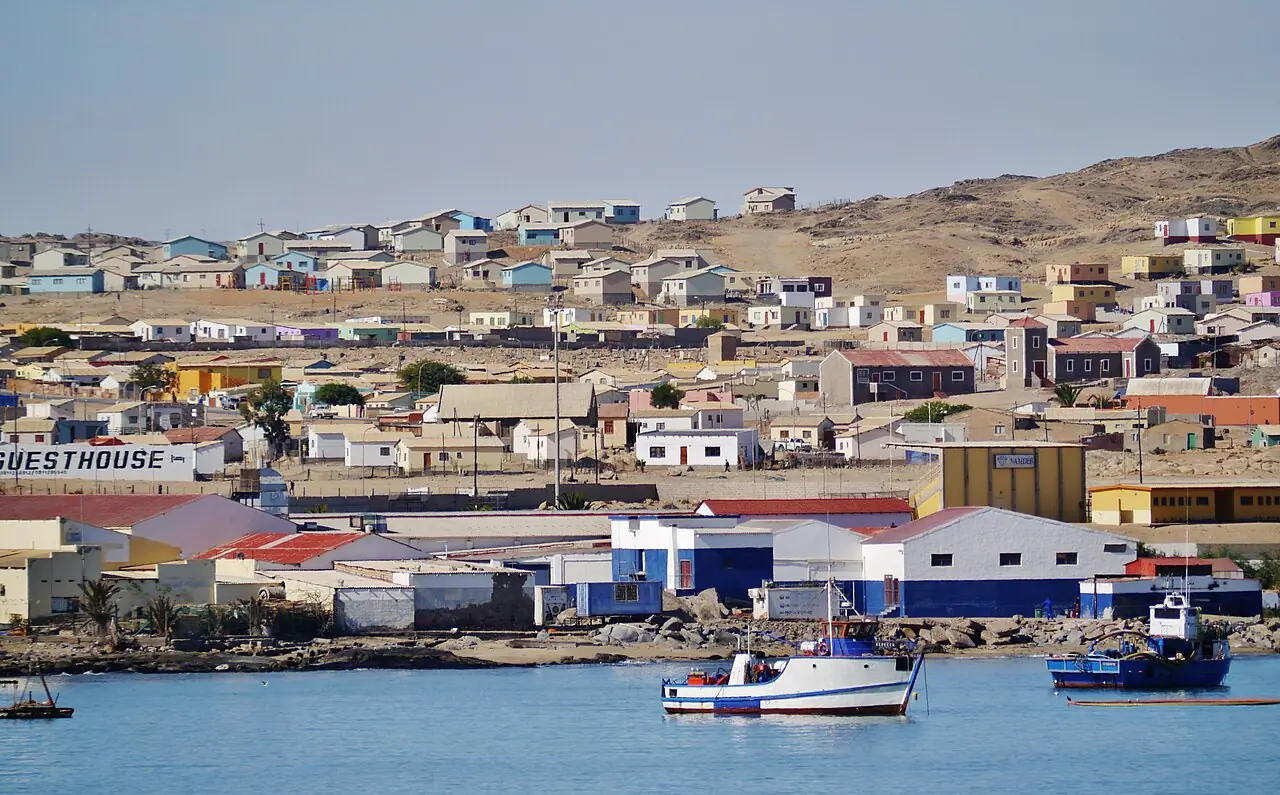 Photo: Zairon · CC BY-SA 4.0
Published by Adama Doumbia, founder of Afrique Unie · updated 28 November 2026 · our method and sources
Why visit Lüderitz?
At the end of a long road across the desert from Keetmanshoop, Lüderitz appears like an unexpected stage set: a small fishing port of colourful houses clinging to granite rocks around an often choppy bay. Founded in the late 19th century by German merchants, the town lived through a diamond rush in the early 20th century, still visible in its Art Nouveau mansions, Goerke House and the Lutheran Felsenkirche perched on its hill. The wind blows here with rare persistence, and the Atlantic, chilled by the Benguela Current, stays icy all year round.
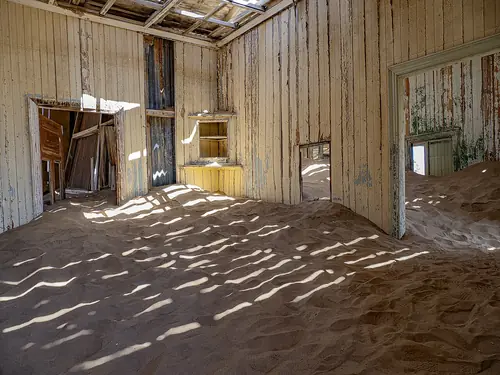
Lüderitz is above all the ideal base for visiting Kolmanskop, the old mining town swallowed by sand some ten kilometres away. But the town deserves a longer stay: the nearby peninsula, cut into coves and lagoons, is home to flamingos, seals and penguins, and leads to Diaz Point, where a replica of the stone cross planted by the Portuguese navigator Bartolomeu Dias in 1488 overlooks the waves. Shark Island, now joined to the mainland, recalls a dark chapter: a concentration camp was set up there during Germany's war against the Nama and Herero in the early 20th century.
Things to do in Lüderitz: 6 ideas
- 01KolmanskopExplore early in the morning the houses filled with dunes in this former diamond town, with a permit and a guided tour.
- 02The FelsenkircheClimb up to the Lutheran church for its stained glass and the view over the bay and colourful rooftops.
- 03Goerke HouseDiscover a diamond-era mansion clinging to the hillside, a witness to past prosperity.
- 04The Lüderitz peninsulaFollow the track to Diaz Point, its lighthouse and cross, stopping at coves and flamingo lagoons.
- 05Shark IslandWalk around the peninsula and read the plaques of the memorial to the camp's victims.
- 06Oysters and rock lobsterTaste oysters farmed in the bay's cold waters and, in season, local rock lobster.
Where to stay in Lüderitz
The historic centre, around the main street and the harbour, has most of the guesthouses, small hotels and restaurants: everything can be done on foot. The heights near the Felsenkirche offer rooms with views over the bay. The waterfront and marina area have a few newer places facing the water. Supply remains modest for such a visited town: in high season and during the holidays, it is best to book.
See places to stay in Lüderitz
Frequently asked questions
How many days should you stay in Lüderitz?
Allow two nights: a morning at Kolmanskop, half a day on the peninsula out to Diaz Point and time to wander around town. The drive from Keetmanshoop is long, and a single night leaves very little time on the ground.
How do you get to Lüderitz?
Along the B4, a tarred road of about 330 km from Keetmanshoop via Aus, which takes nearly four hours across the desert. Fill up before you leave and only drive in daylight: the French government strongly advises against night driving in Namibia because of animals on the road.
How do you visit Kolmanskop?
The ghost town lies about 10 km from Lüderitz inside the restricted diamond area: you enter with a ticket, and guided tours run at set times, mainly in the morning. Photographers can apply for a special permit to get in earlier or stay later. Check the times locally the day before.
Can you freely visit the Sperrgebiet restricted area?
No: the restricted diamond area, which stretches south of Lüderitz to Oranjemund, cannot be entered without authorisation, although the town itself is freely accessible. Its sectors, now protected as a national park, can only be visited with licensed operators. Never leave the authorised roads.
Can you swim in Lüderitz?
Rarely with any pleasure: the Atlantic, chilled by the Benguela Current, stays icy all year and the bay is often whipped up by the wind. The sea is better enjoyed on a boat trip to see seals, penguins and dolphins, or on walks around the peninsula's coves. Pack warm layers even in summer.

 Namibia