AfriqueUnie
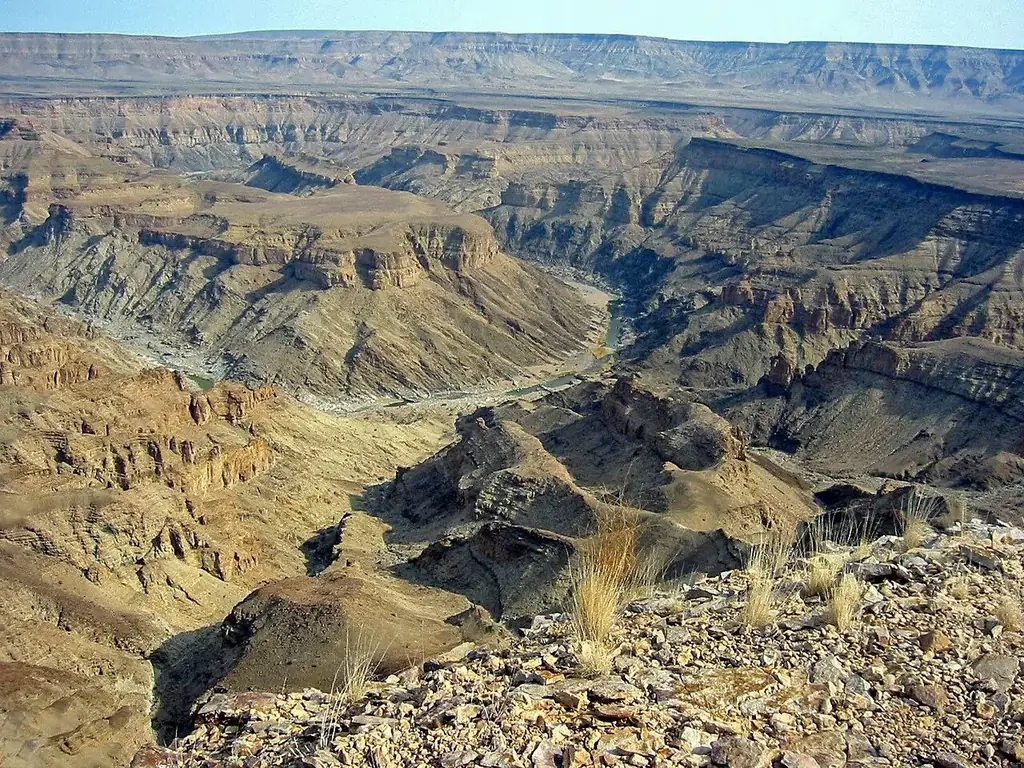 Photo: Thomas Schoch · CC BY-SA 3.0
Published by Adama Doumbia, founder of Afrique Unie · updated 28 November 2026 · our method and sources
Why go
In Namibia's arid south, the Fish River has carved a dizzying gash into the plateau over millions of years: around 160 kilometres long and several hundred metres deep, a succession of meanders where, for much of the year, the water survives only in small pools. It is often described as the largest canyon in Africa. From the viewpoints on the rim, the view over layers of dark and ochre rock beneath an immense sky gives you a sense of geological time.
The site sees fewer visitors than the Namib, which only adds to its charm: it is not unusual to have the main viewpoint almost to yourself at the end of the day. For hikers, the descent into the canyon is a multi-day adventure, reputed to be one of the great treks of southern Africa. At the end of the trail, the hot springs of Ai-Ais offer a welcome soak.
Getting there
The canyon lies in the far south of the country, a day's drive from Windhoek or a few hours from Keetmanshoop. Most travellers combine it with a detour via Lüderitz and the southern coast, or with a crossing into South Africa. The main viewpoints are reached via the Hobas station, on a gravel road. Ai-Ais, at the bottom of the valley, is reached by another track. Lodges and campsites are dotted across the surrounding plateau.
Frequently asked questions
Can you hike the Fish River Canyon?
Yes, but only from 1 May to 15 September, with a permit booked well in advance from the Namibian national parks. Groups must have at least three people, and hikers must be over 12 and present a medical fitness certificate. The route, about five days to Ai-Ais, has no marked trail or accommodation: you carry everything, and fires are not allowed.
How much time do you need to see the Fish River Canyon?
If you are just passing through, half a day is enough for the viewpoints near Hobas. Ideally, spend a night on the plateau to catch the sunset from the main viewpoint. Add a stop at Ai-Ais, at the bottom of the valley about 70 kilometres from Hobas, for its hot spring.
When is the best time to visit the Fish River Canyon?
The cool season, roughly from May to September, when days are pleasant and nights cold. In summer the heat at the bottom of the canyon can exceed 45°C and becomes dangerous, and the river can flood in late summer. That is why the long hike is closed for the rest of the year.
How do you get to the Fish River Canyon?
The canyon is a day's drive from Windhoek, or a few hours from Keetmanshoop. The main viewpoints are reached via Hobas on a gravel road, and Ai-Ais by a separate track. The French foreign ministry recommends a 4x4 with dipped headlights on once you leave the tarmac, and no more than 80 km/h on gravel.
What is there to see near the Fish River Canyon?
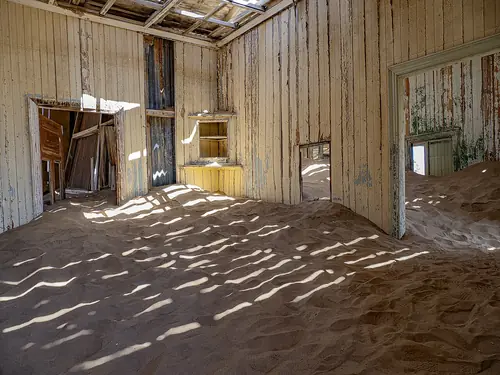
At the bottom of the valley, Ai-Ais and its hot spring mark the end of the long hike. The canyon is part of the Ai-Ais/Richtersveld Transfrontier Park, which continues into South Africa. Further west, Lüderitz, the ghost town of Kolmanskop and the wild horses of Garub fit easily into the itinerary.
 Lesotho
 South Africa