 AfriqueUnie
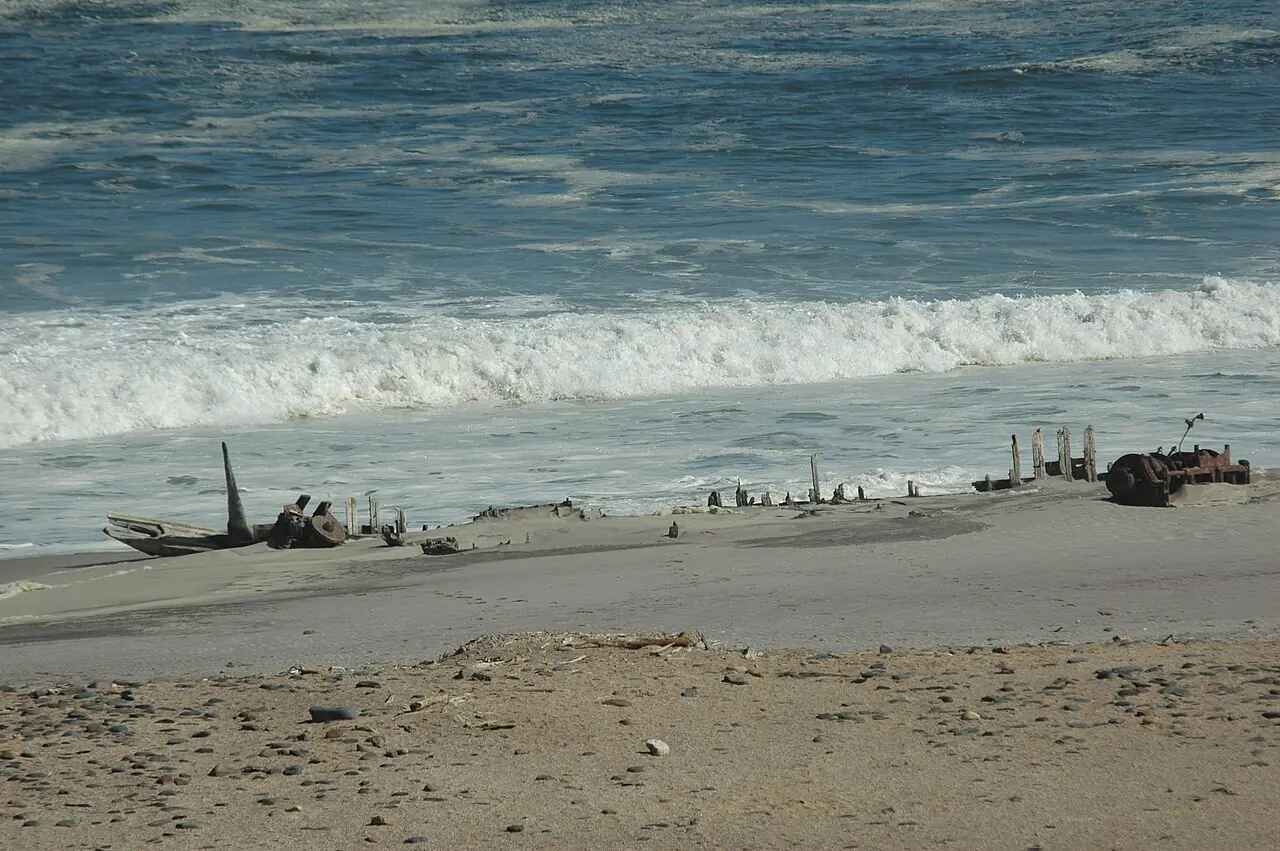 Photo: GIRAUD Patrick · CC BY 2.5
Published by Adama Doumbia, founder of Afrique Unie · updated 28 November 2026 · our method and sources
Why go
The name comes from the whale and seal bones that once littered the beaches, and from the wrecks of ships driven onto this coast by fog and currents. Over hundreds of kilometres, the Namib Desert meets the Atlantic in an end-of-the-world atmosphere: thick fog in the early morning, incessant wind, deserted grey beaches and rusting hulks half buried in the sand.
It is far from empty, though. At Cape Cross, a colony of Cape fur seals numbers tens of thousands, and from a boardwalk you can watch the mothers, the pups and the jackals prowling around them. Further north, in Skeleton Coast National Park, dry riverbeds serve as corridors for desert-adapted elephants, lions and brown hyenas. Anglers come here to cast for kabeljou in the surf.
Getting there
The southern part, as far as Cape Cross and the wreck of the Zeila near Henties Bay, is easily visited in a day from Swakopmund along a salt road. The national park itself is entered through Ugab Gate in the south and crossed inland via Springbokwasser Gate towards Damaraland: transit times are strict and you must leave before closing time if you are not staying overnight. The far north can only be reached by light aircraft, as part of a stay at a private lodge.
Frequently asked questions
Can you drive through Skeleton Coast National Park?
Yes, the southern part of the park can be crossed between Ugab Gate on the coast and Springbokwasser Gate towards Damaraland, with formalities handled at the gates. The hours are strict: you generally have to pass the entry gate before mid-afternoon and leave before closing the same day if you are not staying in the park. The far north, set aside for lodge stays, can only be reached by light aircraft.
How much time should you allow for the Skeleton Coast?
One day is enough for the southern stretch from Swakopmund, with Cape Cross and the Zeila wreck near Henties Bay. Allow two to three days to cross the park and continue into Damaraland. Distances are long and fuel stations very scarce, so fill up whenever you can.
When is the best time to see the Cape Cross seals?
The colony can be visited all year round from a boardwalk that lets you watch the animals without disturbing them. Pups are born towards the end of the year, in November and December, when there are huge numbers of young and jackals prowl around. The smell is powerful whatever the season, and there is a fee to enter the reserve.
What is the weather like on the Skeleton Coast?
It is cool and often grey, even in summer: fog is common in the early morning and the wind blows almost constantly. The ocean, chilled by the Benguela Current, is cold and often rough, which makes swimming both uninviting and risky. Take a warm jacket and a windproof layer whatever the season.
What precautions should you take when driving on the Skeleton Coast?
Drive slowly on the gravel and salt roads, where the French foreign ministry advises not exceeding 80 km/h. Carry two spare tyres and plenty of water, and avoid driving at night, when animals on the road are a real hazard. Wild camping is banned in Namibia, so stay at authorised campsites and lodgings.

 Botswana

 Algeria
 Chad