AfriqueUnie
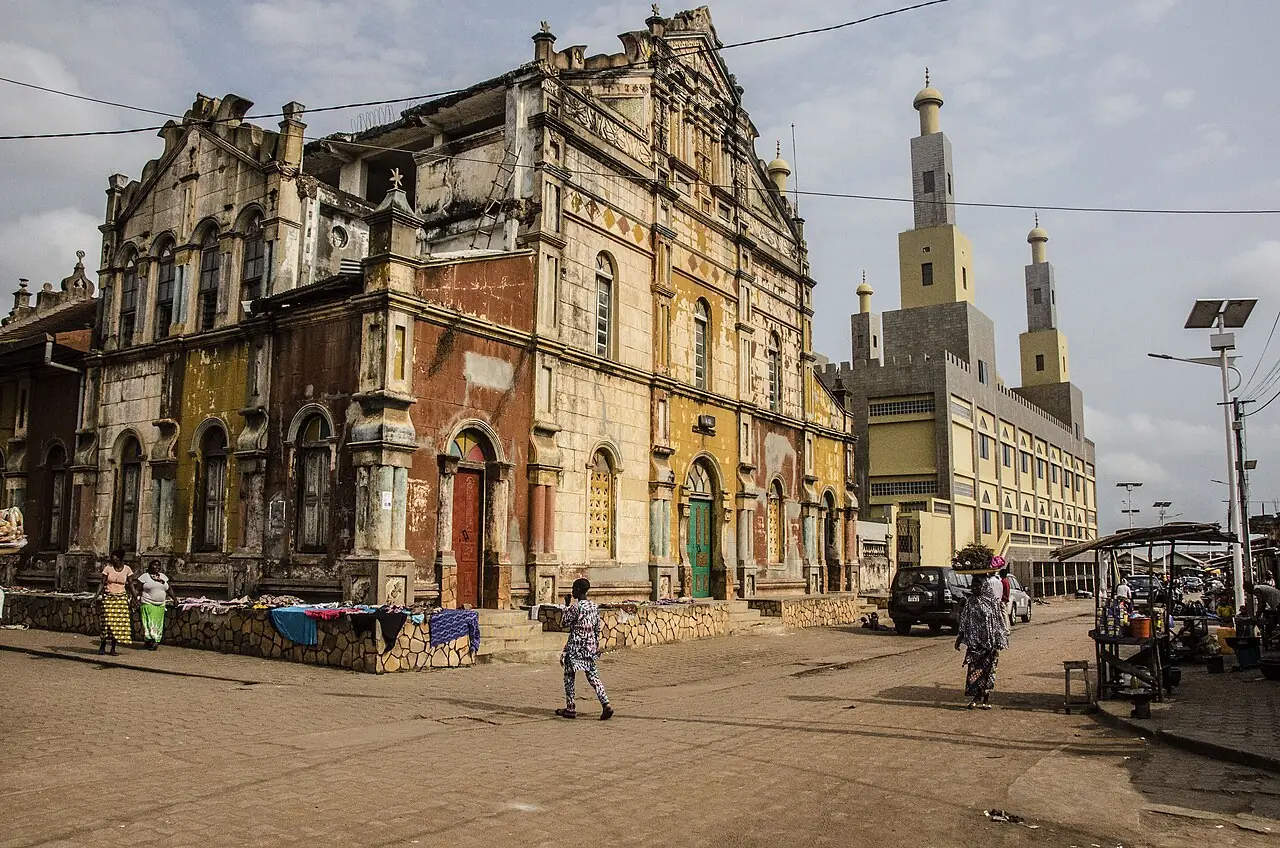 Photo: GBETONGNINOUGBO JOSEPH HERVE AHISSOU · CC BY-SA 4.0
Published by Adama Doumbia, founder of Afrique Unie · updated 28 November 2026 · our method and sources
Why visit Porto-Novo?
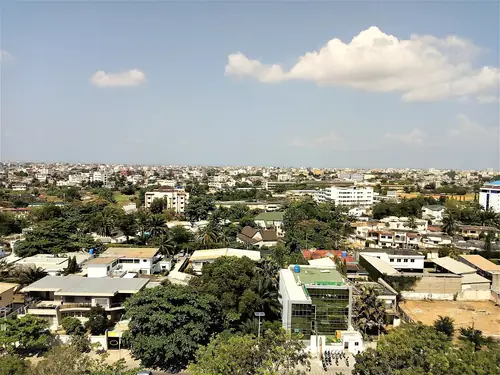
Porto-Novo, Benin's official capital, surprises with its calm. Set on the edge of the lagoon some thirty kilometres from Cotonou, it has kept the atmosphere of a historic town, far from the bustle of the economic capital. Once the capital of a kingdom and then of the colony, it saw many Afro-Brazilian families settle here in the 19th century, former slaves or their descendants returning from Brazil, who left their mark on its architecture.
The Great Mosque, built in the early 20th century on the model of a Brazilian baroque church, with its bright colours and ornate façade, is the most striking example of this heritage. Around it, the lanes reveal multi-storey houses, wrought balconies and inner courtyards, some restored, others crumbling.
The town also has several remarkable museums: the Honmè Museum, in the former palace of King Toffa; the Ethnographic Museum, rich in masks and ritual objects; and the Da Silva Museum, devoted to Afro-Brazilian history. The botanical garden, a small sacred forest in the middle of town, offers a welcome breathing space.
Things to do in Porto-Novo: 6 ideas
- 01The Great MosqueAstonishing Afro-Brazilian architecture, to admire from outside and to visit discreetly if permitted.
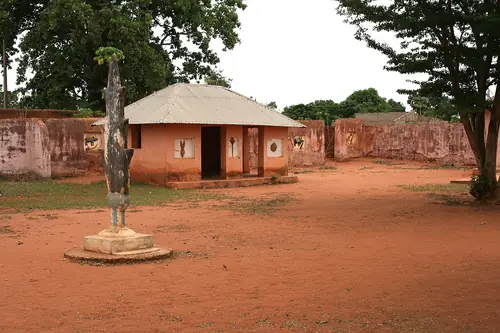
- 02Honmè MuseumThe former royal palace of King Toffa, with its courtyards, chambers and royal objects.
- 03Ethnographic MuseumA fine collection of Gelede and Egungun masks, instruments and ritual objects.
- 04Botanical and nature gardenA small sacred forest where monkeys live, in the heart of the town.
- 05Songhaï CentreA renowned centre for agriculture and innovation, with a shop selling its produce and a restaurant.
- 06Ouando MarketA big, lively local market, especially for farm produce and ritual objects.
Where to stay in Porto-Novo
Accommodation in Porto-Novo is limited: a few mid-range hotels and guesthouses in the centre or by the lagoon. Many travellers choose to stay in Cotonou and visit Porto-Novo as a day trip. To enjoy the calm, a night in a guesthouse in the historic centre lets you discover the town at dawn and dusk.
See places to stay in Porto-Novo
Frequently asked questions
How do you get from Cotonou to Porto-Novo?
Porto-Novo is about thirty kilometres from Cotonou; allow three quarters of an hour to an hour depending on traffic leaving the city. The safest option is a car with driver booked in advance, as France's foreign ministry advises against motorbike taxis. Try to return before dark.
What can you see in Porto-Novo in a day?
Start with the Afro-Brazilian Great Mosque, then visit the Honmè Museum, the Ethnographic Museum and the Da Silva Museum. Take a break in the Jardin des Plantes et de la Nature, have lunch at the Songhaï Centre and then wander the lanes of the old centre. Check museum opening times before you go, as they can vary.
Is Porto-Novo safe?
Porto-Novo is under heightened vigilance, like the rest of southern Benin, and the city is known for being calm. The usual precautions apply: keep valuables out of sight and do not walk alone at night. The Nigerian border is close, and France's foreign ministry advises particular caution in border areas.
When should you visit Porto-Novo?
From December to March the dry season is the most comfortable for exploring on foot. Choose a weekday to see the markets and workshops in action, as Sunday is very quiet. In early January the Vodun festival brings celebrations across the south of the country.
Can you take photos in Porto-Novo?
Always ask before photographing someone: France's foreign ministry recommends it in Benin, and it is essential during ceremonies and at Vodun shrines. Some museums ban photography or allow it only under conditions. At the Great Mosque, admire the façade from outside and ask before going in, dressed modestly.

 Benin