A small country with an immense culture: the lake village of Ganvié, the royal palaces of Abomey, the Slave Route in Ouidah and the Grand-Popo coast. The north, including Pendjari National Park, is advised against entirely.
Capital
Porto-Novo (official) · Cotonou (seat of government)
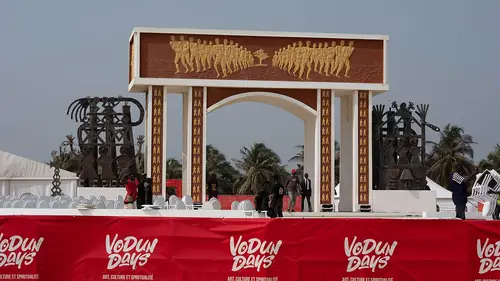
Benin is a small, long, narrow country slipped in between Togo and Nigeria, but it carries an immense memory. This is where the Kingdom of Dahomey stood, its earthen palaces at Abomey still telling of its power; it is also where vodun, an ancient religion often caricatured in the West, is lived day to day and officially celebrated every January. Travelling in Benin means discovering a living spirituality of convents, sacred forests, protective deities and rites that accompany births, marriages and funerals, and which coexists peacefully with Christianity and Islam.
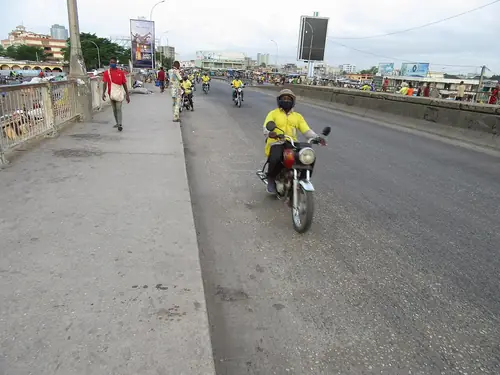
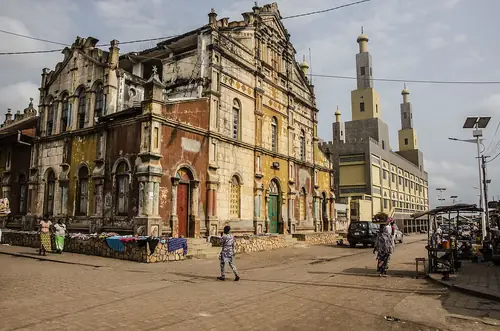
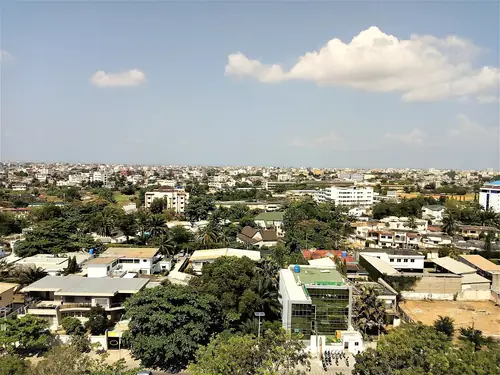
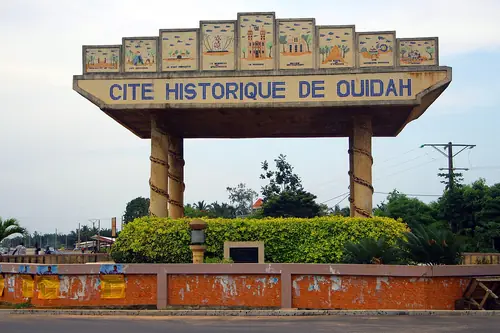
The south holds most of the sights, over short distances. Cotonou, the bustling economic capital, is best explored by zémidjan, the motorbike taxis whose riders wear yellow tabards, taking in the giant Dantokpa Market, the recent murals and the beaches of Fidjrossè. Ouidah, an hour to the west, invites you to follow the Slave Route to the Door of No Return on the beach. Porto-Novo, the official capital, reveals its Afro-Brazilian houses, the legacy of former slaves who returned from Brazil. On Lake Nokoué, the stilt village of Ganvié is explored by pirogue. And a few hours to the north, Abomey shows off its royal bas-reliefs.
The country has also embarked on a major effort to showcase its heritage, notably around the return in 2021 of royal treasures of Dahomey restituted by France. It is an accessible, human-scale country where you quickly feel at home, and where the welcome is frank and often funny. One important caveat: the north, including Pendjari National Park, is now subject to formal advice against travel because of insecurity linked to armed groups. Check the official advice before making any plans, and concentrate on the south and centre, where most of the heritage lies.
History and culture
In the 17th century the Kingdom of Dahomey took shape around Abomey, on the plateau, while the kingdoms of Allada and Porto-Novo controlled the coast. Dahomey expanded in the 18th century, conquered Ouidah and took an active part in the Atlantic slave trade, which deported hundreds of thousands of people, notably to Brazil and the Caribbean, where vodun was transformed into candomblé and Haitian Vodou. The kingdom is also known for its regiments of women warriors, the Agojie, whom Europeans called the “Amazons”.
King Béhanzin resisted the French conquest before being defeated in 1894. Independent in 1960 under the name Dahomey, the country became the People's Republic of Benin in 1975 under Mathieu Kérékou, then, in 1990, pioneered a peaceful democratic transition through its National Conference that became a model for the continent. Vodun has been officially recognised and celebrated since the 1990s. Since then the country has seen several changes of power through the ballot box. It has also set out to make its heritage a lever for development: restoring the historic sites of Ouidah and Abomey, building new museums and honouring the memory of the Agojie and of the slave trade.
Photo : Borisghost · CC002The Slave RouteWalk the four kilometres from Ouidah to the beach, pausing at the symbolic stations along the way.
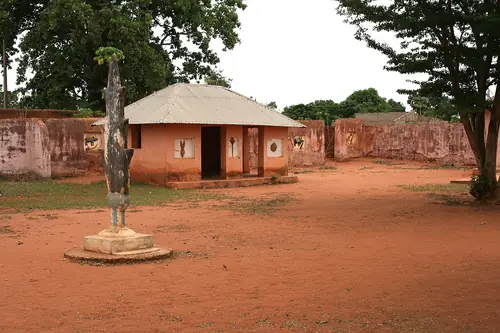
Photo : Dominik Schwarz · CC BY-SA 3.003Abomey's bas-reliefsRead the emblems of the kings of Dahomey, shark, lion or buffalo, on the walls of the royal palaces.
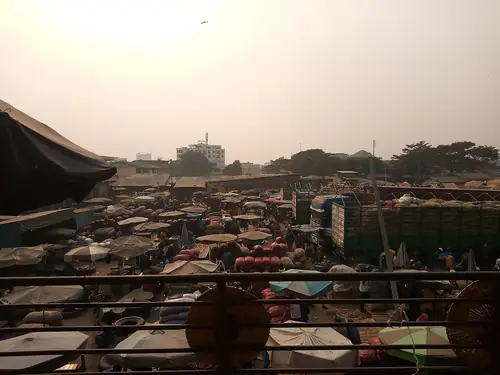
Photo : Adoscam · CC BY-SA 4.005Dantokpa at daybreakDive into one of the biggest markets in West Africa, from fabrics to the ingredients for vodun ceremonies.
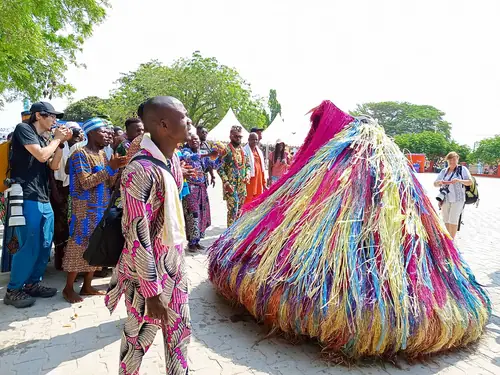
Photo : Blacklaine · CC BY-SA 4.006The Zangbeto danceIf the chance arises, watch these guardians of the night come out, clad in colourful straw.
08A sodabi eveningTaste, with caution, this palm spirit that features at celebrations and in offerings.
When to go to Benin
Southern Benin has two rainy seasons, the long one from April to July and the short one in September and October, and two dry seasons. The best time to travel is the long dry season, from November to February or March, with pleasant temperatures and roads in good condition; it is also the time of the Vodun Festival, in January. The harmattan can haze over the sky between December and February. August often brings a relatively dry, cool lull on the coast. The more continental north has just one rainy season, from May to September, and fierce heat in March and April.
Getting around
Cotonou's international airport is the main gateway. In towns, zémidjans, motorbike taxis recognisable by their riders' coloured tabards, are the most common way to get around: agree the fare and ask for a helmet. Shared taxis and minibuses link Cotonou with Ouidah, Porto-Novo and Abomey. For more comfort, hire a car with a driver, the ideal solution for a tour of the south and centre. Coach companies serve the main towns inland. Avoid driving at night, and do not go to the border areas in the north, which are currently advised against.
Etiquette and customs
In Benin you greet everyone, even in passing, and take time to answer greetings. Use your right hand to give and receive. Vodun is a religion in its own right: approach temples, convents and ceremonies with respect and without mockery, and photograph nothing without permission, as some places and objects are forbidden to the uninitiated. At ceremonies it is common to make a small offering or pay a fee to take pictures. Masked figures, such as the Egungun, spirits of the dead dressed in sumptuous fabrics, must not be touched. Respectful dress is appreciated, especially in villages.
Food and drink in Benin
Beninese cooking is based on maize or cassava pastes served with sauces. Amiwo, a red maize paste cooked in tomato sauce and served with chicken or fish, is a festive classic. Try sauce gombo (okra sauce), leaf sauce, grilled fish served with akassa, a fermented paste wrapped in leaves, atassi, rice with beans, aloko, fried plantain, and wagasi, a Fulani cheese often served fried. The markets sell bean fritters and akara. To drink: bissap juice, tchoukoutou, the millet beer of the north, and sodabi, a spirit distilled from palm wine, to be enjoyed in moderation.
Budget: around €30–60 per person per day, excluding flights. This is only a guide and depends above all on the accommodation and activities you choose.
What currency and languages are used in Benin?
Currency: West African CFA franc (XOF). Languages: French, Fon.
How do I get to Benin?
The main international airport has the code COO. Compare flights with the ‘Flights’ button on this page.
Do I need a visa to visit Benin?
Entry requirements depend on your nationality and change regularly. Check them on the country's official website or with your foreign ministry before booking, and make sure your passport is valid.
What should I eat in Benin?
Dishes to try while you're there: Amiwo (red maize paste), grilled fish.
Map
Benin on the map
Cities Places to see · Approximate positions
On the ground
Getting around and staying healthy
Getting around
There are no scheduled domestic flights or passenger trains, so travel is by road. Coach companies link Cotonou with Parakou and Natitingou, and bush taxis serve nearer towns such as Ouidah, Porto-Novo and Abomey. In town, zémidjans, motorbike taxis whose riders wear yellow vests, are everywhere, and the Gozem app lets you book a motorbike or car in Cotonou; for Ganvié, you board a pirogue at Abomey-Calavi. For the north and Pendjari, a car with driver is recommended and security advice should be checked; driving is on the right.
Health and safety
Yellow fever
Vaccination certificate required on entry for all travellers (from 9 months); vaccine recommended for the whole country (from 9 months).
Malaria
Present throughout the country: ask a doctor about preventive medication and protect yourself from mosquitoes.
Water and food
Unless your accommodation says otherwise, drink sealed bottled or filtered water, and wash your hands often.
Sources: France Diplomatie, Viaggiare Sicuri, Belgian Foreign Affairs, GOV.UK, checked in November 2026. All 54 countries
Entry requirements (visas, vaccinations) and security conditions change regularly: check them with the official authorities before booking. Official tourism website: Bénin Tourisme.
Affiliate cookiesWe would like to load a script from our partner Travelpayouts. It may set cookies so that we receive a commission when you book through our links, at no extra cost to you. If you decline, the site works in exactly the same way. Find out more
 AfriqueUnie
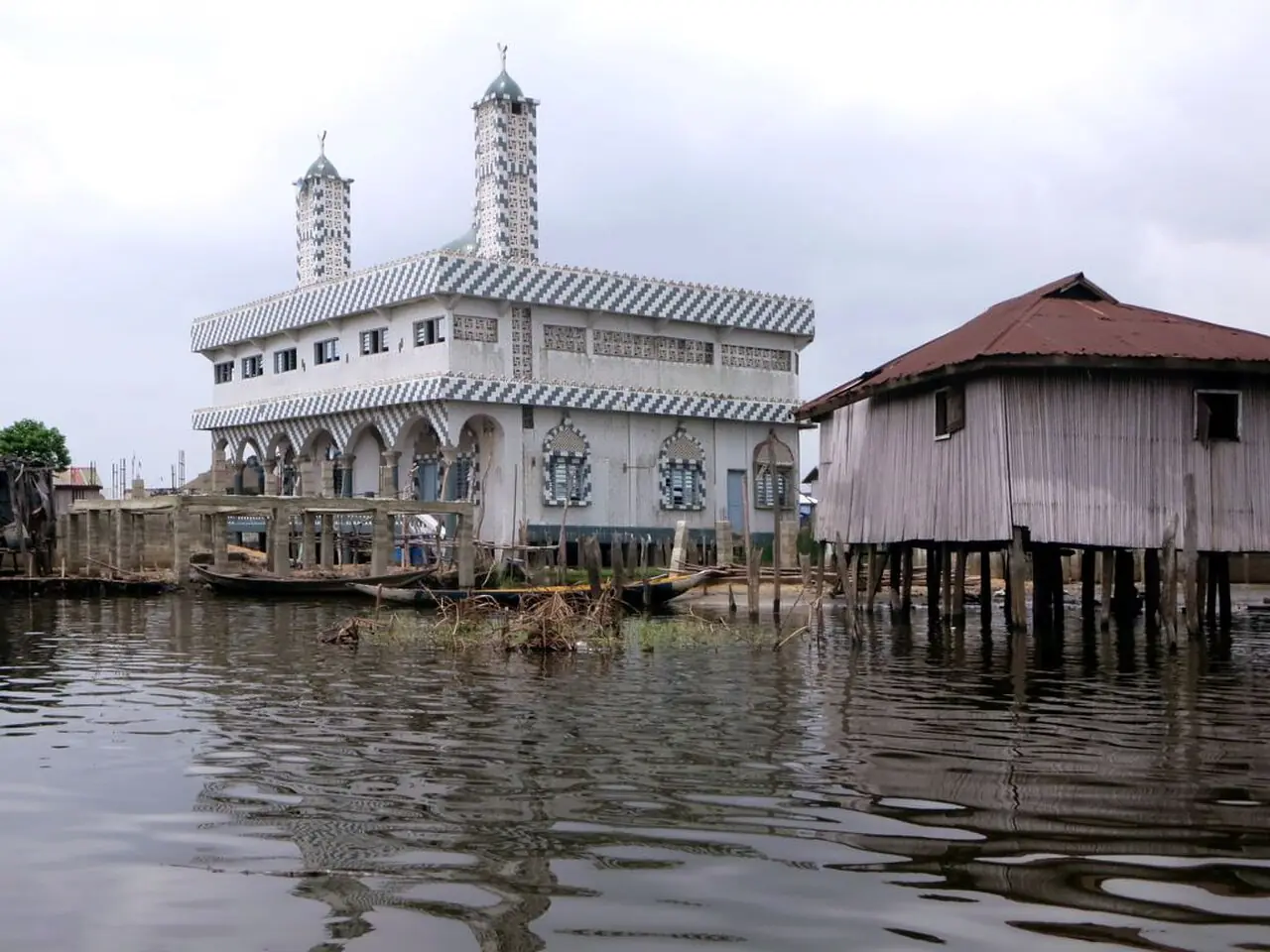 Photo: David Stanley from Nanaimo, Canada · CC BY 2.0
 Benin
 Benin or Togo
 Burkina Faso
 Cape Verde
 Côte d'Ivoire
 Ghana
 Guinea
 Guinea-Bissau
 Liberia
 Mali
 Mauritania
 Niger
 Nigeria
 Senegal
 Sierra Leone
 The Gambia