AfriqueUnie
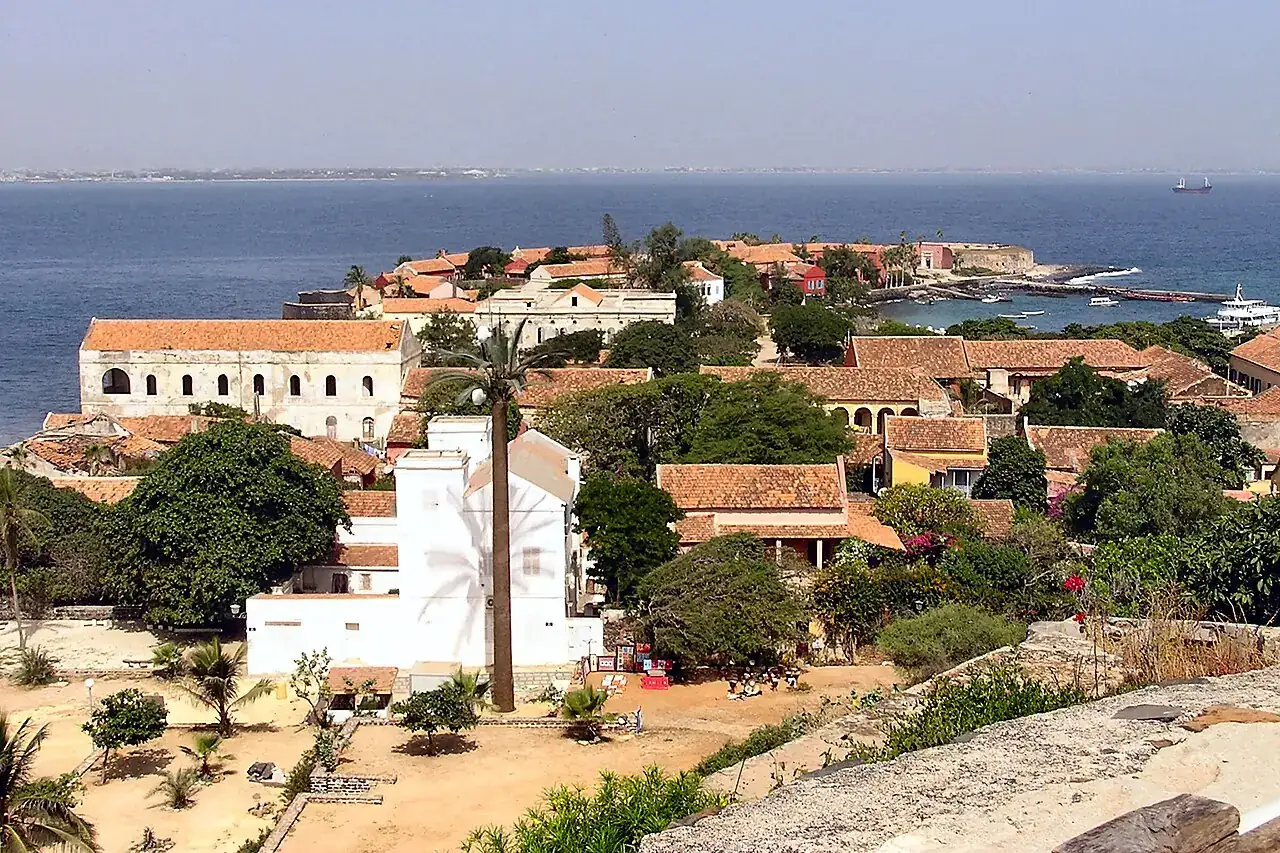 Photo: Manu25 · CC BY-SA 4.0
Published by Adama Doumbia, founder of Afrique Unie · updated 28 November 2026 · our method and sources
Why make this journey of remembrance
For many people of African descent in the Americas, the Caribbean and Europe, walking back through a "door of no return" is a deeply moving moment, sometimes awaited for a lifetime. People come looking for a connection with ancestors whose names and home regions are usually unknown, and few leave unchanged. Other travellers come to understand a history that shaped the entire Atlantic world.
These sites are not ordinary attractions. They are places of suffering, resistance and dignity, where local communities keep the memory alive today. Preparing your visit, reading some history before you go and taking your time on site will help you grasp their full meaning.
A brief history: three routes and abolition
The transatlantic slave trade is the best known. From the 15th to the 19th century, European powers (Portugal, the Netherlands, Britain, France, Denmark, Sweden and others) bought captives on the African coast, with the involvement of local kingdoms and traders, and shipped them to plantations and mines in the Americas. Historians estimate that around 12 million people were forcibly embarked, and many died during the crossing.
Two other routes existed, often older ones. The trans-Saharan trade took captives across the desert to North Africa and the Middle East. The Indian Ocean trade left the east coast, notably Zanzibar and Kilwa, for the Arabian Peninsula, the Persian Gulf, India and the Indian Ocean islands, including the sugar colonies of the Mascarenes.
Abolition came in stages. Britain banned the slave trade in 1807 and slavery in its colonies in 1833. France abolished slavery in 1794, restored it in 1802 and abolished it for good in 1848. On the East African coast, Zanzibar's slave market closed in 1873, though slavery itself lasted several more decades. Everywhere, revolts and maroon communities played a decisive role, starting with the 1791 uprising in Saint-Domingue that led to Haitian independence.
Gorée, Senegal: a global symbol
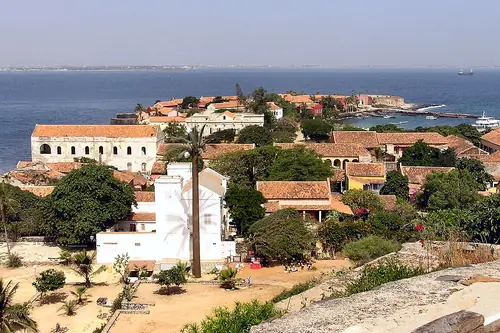
Facing Dakar, the small island of Gorée has been a UNESCO World Heritage Site since 1978. Car-free, with colourful houses, wooden balconies and lanes draped in bougainvillea, it stands in stark contrast with its history. The ferry from Dakar's port terminal takes about twenty minutes.
The House of Slaves, dating from the late 18th century, is the heart of the visit: the small ground-floor cells, the horseshoe staircase and the famous doorway opening onto the ocean. Its long-time curator, Boubacar Joseph Ndiaye, made it a memorial known worldwide, visited by many heads of state.
It is worth knowing that Gorée's actual role in the slave trade is debated by historians. Many consider that the number of captives who passed through the island was modest compared with ports such as Ouidah or Luanda, and that the house was primarily a merchant's residence. This debate takes nothing away from the power of the place: Gorée has become a symbol of the whole slave trade, where people come to honour all those deported. Round off your visit with the Historical Museum of Senegal in Fort d'Estrées. The Henriette Bathily Women's Museum, long based on the island, moved in 2015 to the Place du Souvenir Africain in Dakar.
Ouidah, Benin: walking the Slave Route
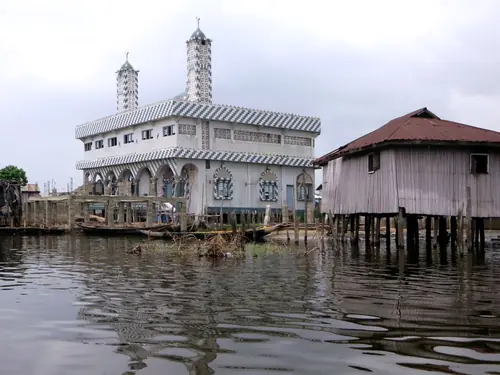
Ouidah, about an hour's drive west of Cotonou, was one of the largest slave ports on what Europeans called the "Slave Coast". The visit starts at the Portuguese fort, now the Ouidah History Museum, which covers the slave trade, the Kingdom of Dahomey and the links with Brazil and the Caribbean.
From there the Slave Route runs for about four kilometres to the sea, lined with monuments: Place Chacha, where sales took place, the Tree of Forgetfulness, around which captives were made to walk to erase their memories, the Zoungbodji memorial and the Tree of Return. At the end, on the beach, stands the Door of No Return, a monumental arch erected in 1995 on UNESCO's initiative.
Ouidah is also a centre of Vodun, a religion born in the region that travelled with the enslaved to Haiti, Brazil and Cuba. The Python Temple and the Kpassè sacred forest complete the day. Every year in early January, the festival of traditional religions (long held on 10 January, and since 2024 set on the second Friday of January) and the Vodun Days draw huge crowds to Ouidah: check the programme on official websites before booking.
Cape Coast and Elmina, Ghana: the castles of the Gold Coast
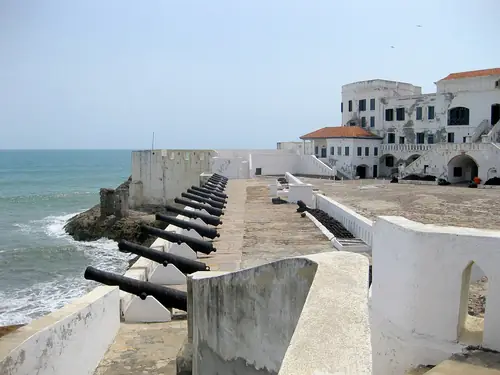
Ghana's coastal forts and castles were jointly inscribed as a UNESCO World Heritage Site in 1979. The two most visited, Cape Coast and Elmina, are only about fifteen kilometres apart, roughly three to four hours' drive west of Accra depending on traffic.
Elmina Castle, built by the Portuguese in 1482 and taken by the Dutch in the 17th century, is one of the oldest European buildings in sub-Saharan Africa. Cape Coast Castle, later the seat of the British administration, houses a museum on the region's history. At both, the guided tour leads down into the dungeons, where hundreds of people were crammed together in darkness, and then to the Door of No Return, the last doorway before the ships. On the sea side at Cape Coast, a "Door of Return" sign now welcomes descendants coming home.
Ghana actively reaches out to the diaspora, as shown by its 2019 "Year of Return", marking four hundred years since the documented arrival of enslaved Africans in Virginia. The PANAFEST pan-African festival and Emancipation Day, around 1 August, are partly held in Cape Coast: dates vary, so check official Ghanaian sources.
Other memorial sites to discover
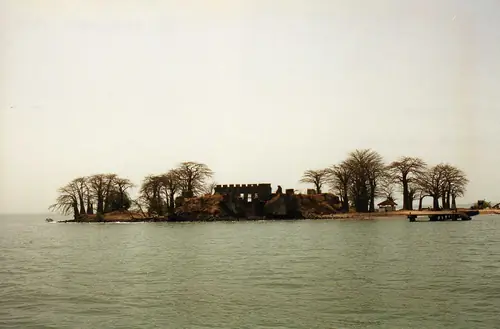
- Kunta Kinteh Island and Juffureh (Gambia): On the River Gambia, the former James Island bears the name of the hero of Alex Haley's novel Roots. The fort ruins and the nearby villages of Albreda and Juffureh, with their small museum, have been on the UNESCO list since 2003. Reach them from Banjul by the north-bank road, then by boat.
- Badagry (Nigeria): Near the Benin border, west of Lagos, this coastal town preserves slave barracoons, a museum and a path leading to the "Point of No Return" on the beach. Allow half a day to a full day from Lagos, depending on traffic.
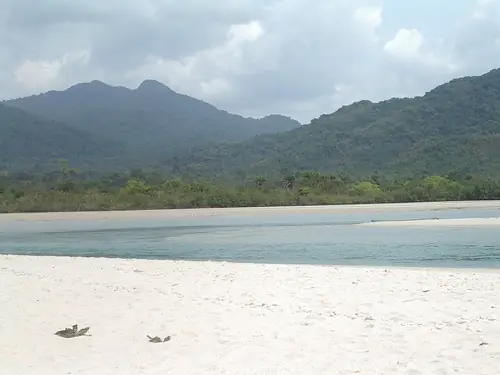
- Bunce Island (Sierra Leone): In the Sierra Leone River estuary, upstream from Freetown, the ruins of this British fort, founded around 1670, are linked to the history of the Gullah people of South Carolina and Georgia. Access is by boat, arranged from Freetown.
- Zanzibar (Tanzania): In UNESCO-listed Stone Town, the Anglican Christ Church Cathedral was built on the site of the former slave market, closed in 1873. An interpretation centre, underground chambers and a memorial sculpture recall the Indian Ocean slave trade. Regular ferries run from Dar es Salaam.
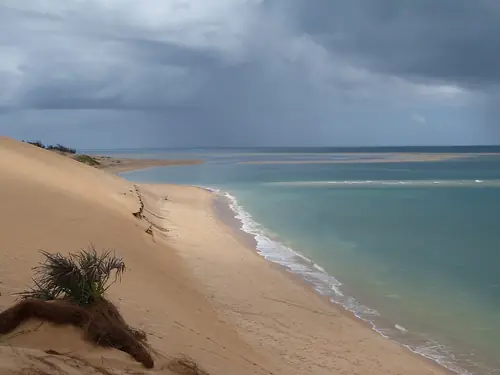
- Bagamoyo (Tanzania): A former caravan port north of Dar es Salaam, where routes from the interior reached the coast. Ruins, a Catholic mission and a museum tell the story of the slave trade and the beginnings of colonial history.
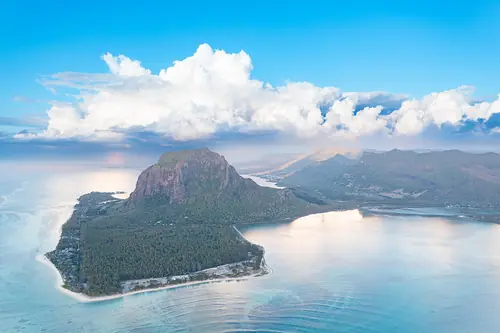
- Le Morne (Mauritius): This mountain in the south-west of the island sheltered runaway slaves, known as maroons. The Le Morne Cultural Landscape has been on the UNESCO list since 2008, and a monument at the foot of the mountain honours the maroons.
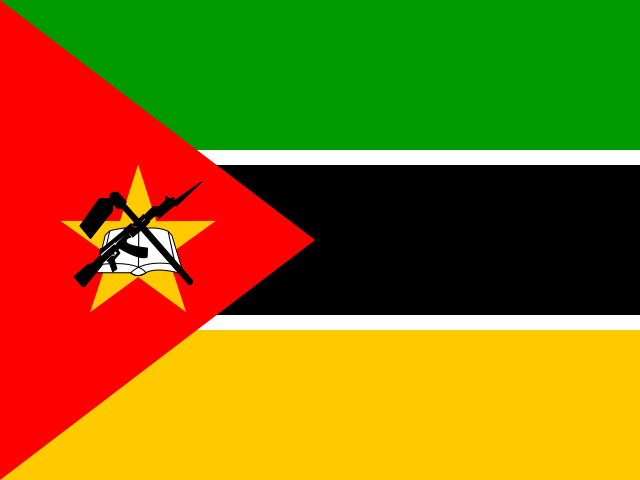
- Island of Mozambique (Mozambique): A former Portuguese colonial capital, UNESCO-listed and linked to the mainland by a bridge. It was one of the sites of the Indian Ocean slave trade. The Macuti quarter and the waterfront keep its memory alive. Note: the mainland approach (Mossuril district, the city of Nampula) is advised against except for essential travel by France; check the official advice before planning a visit.
How to approach these visits
- Prepare for strong emotions: Dungeons, doors and cells are overwhelming, especially if you are looking for your own ancestors. Leave time after the visit, do not overload the day and feel free to take a moment alone.
- Choose a local guide: Official site and museum guides tell the history accurately and connect it to the lives of today's communities. At Ghana's castles, visits are usually guided.
- Respect the places: Dress modestly, speak quietly in the dungeons and avoid holiday poses in front of the doors of no return. Some sites host ceremonies or libations: observe, and ask before taking part.
- Take photos with care: Photography is generally allowed in the castles and museums, sometimes with restrictions. Always ask before photographing a person, a Vodun priest or a ceremony.
- Support the local economy: Buy crafts directly from artisans, eat in local neighbourhoods and stay in small locally run guesthouses: this is another way of honouring these places.
Suggested itineraries and commemorations
Ghana, Togo and Benin: in about ten days you can follow the coast from Accra to Cape Coast and Elmina, then continue by road to Lomé and Ouidah. The keenest can go on to Badagry, across the Nigerian border. Senegal and the Gambia: a week is enough for Dakar and Gorée, then Banjul, Juffureh and Kunta Kinteh Island. East Africa: Dar es Salaam, Bagamoyo and Zanzibar combine easily, and Mauritius extends the trip into the Indian Ocean.
Several dates mark the calendar of remembrance. In 1994, UNESCO launched its "Slave Route" project in Ouidah, renamed "Routes of Enslaved Peoples" in 2022. 23 August is the International Day for the Remembrance of the Slave Trade and its Abolition, commemorating the Saint-Domingue uprising. 2 December is the International Day for the Abolition of Slavery, and 25 March the International Day of Remembrance of the Victims of Slavery and the Transatlantic Slave Trade. Mauritius marks the abolition of slavery every 1 February.
For entry requirements, visas and safety, especially at land borders, check your government's travel advice before you leave.