 AfriqueUnie
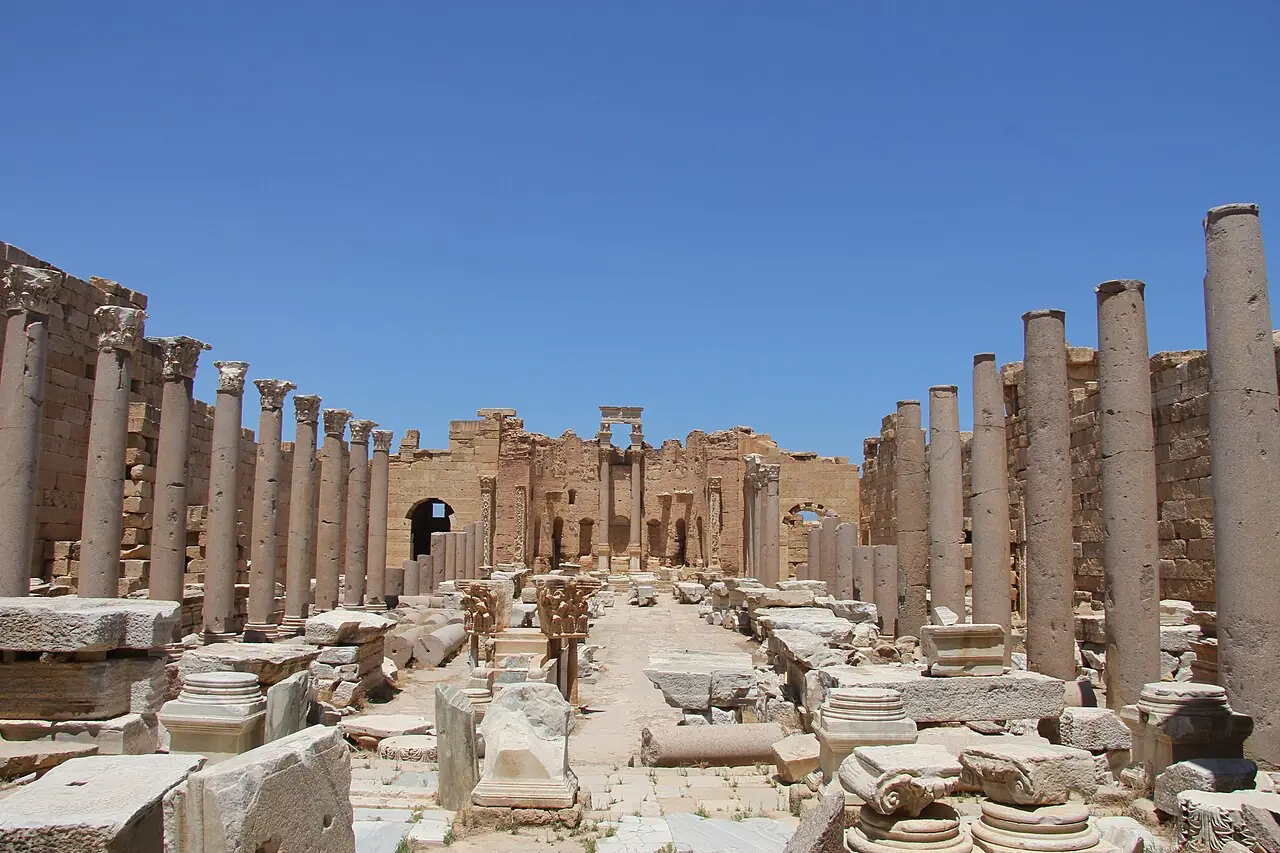 Photo: joepyrek from Richmond, Va, USA · CC BY-SA 2.0
 Libya
Published by Adama Doumbia, founder of Afrique Unie · updated 28 November 2026 · our method and sources
Why go to Libya
First and foremost, an essential point: Libya is currently a destination travellers are advised not to visit. The country remains divided between rival authorities, armed groups control part of its territory, and the risks of kidnapping, armed clashes and terrorist attacks are real. Most foreign ministries formally advise against all travel there. Before making any plans, check your government's official travel advice, and read what follows as an invitation to get to know the country, not to go there now.
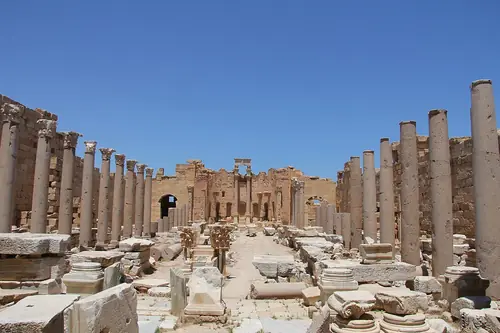
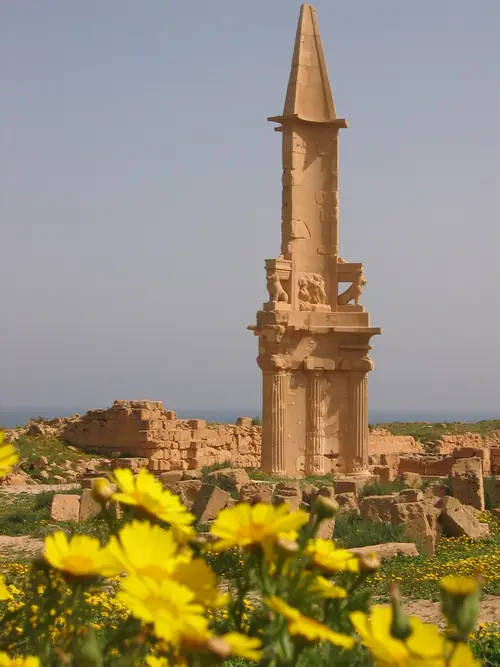
Because Libya has a heritage that ranks among the most extraordinary in the Mediterranean. Its ancient cities, Leptis Magna, Sabratha, Cyrene and Apollonia, are so well preserved and so little visited that the rare travellers of the 2000s came away with unforgettable memories: walking alone through a Severan basilica beside a turquoise sea, with no sound but the wind. The country has five UNESCO World Heritage Sites, all of them placed on the List of World Heritage in Danger since 2016.
Further south, the Libyan Sahara is one of the most spectacular on the continent: the dunes of Ubari and their palm-fringed saltwater lakes, the Acacus Mountains with their sandstone arches and thousands of rock paintings, and old caravan towns such as Ghadames. Libyans, finally, have a reputation for hospitality confirmed by everyone who has travelled in the country. When the situation allows, Libya could once again become one of the world's great archaeological and Saharan journeys. Until then, this guide invites you to discover it from afar, with respect for those who live there.
History and culture
Ancient Libya was split between two worlds. In the west, Tripolitania, with its three cities of Oea (today's Tripoli), Sabratha and Leptis Magna, was founded by the Phoenicians and then drawn into the orbit of Carthage and Rome; the emperor Septimius Severus was born in Leptis. In the east, Cyrenaica was colonised by Greeks, who founded Cyrene in the 7th century BC. To the south, the Garamantes controlled the Saharan trade routes.
After the Arab conquest of the 7th century, the region passed under various dynasties, then under Ottoman rule from the 16th century. Italy invaded in 1911. After the Second World War, Libya became independent in 1951 under King Idris. In 1969 Muammar Gaddafi seized power and held it until his fall in 2011. Since then the country has been going through a long period of instability and political division.
8 experiences not to miss in Libya
- 01Exploring Leptis MagnaWhen travel becomes possible again, this seaside Roman city, with its Arch of Septimius Severus and its forum, would be the number one priority.
- 02The theatre at SabrathaIts three-tiered colonnaded stage wall facing the Mediterranean is one of the most powerful images of Roman Africa.
- 03Cyrene and ApolloniaIn the Jebel Akhdar, the great Greek city and its ancient port look out over a coastline of cliffs and pines.
- 04The covered alleys of GhadamesThe old oasis town, with its shaded passageways and painted interiors, is a masterpiece of Saharan architecture.
- 05The Ubari lakesPalm-fringed salt lakes nestled among giant dunes, the best known of which is Gaberoun.
- 06The rock art of the AcacusThis range near the Algerian border shelters prehistoric paintings and engravings listed by UNESCO.
- 07The Tripoli medinaSouks, Ottoman mosques and the Arch of Marcus Aurelius at the foot of the Red Castle, the Assaraya al-Hamra.
- 08Libyan teaShare a very sweet, frothy tea, sometimes served with peanuts, the symbol of the country's hospitality.
When to go to Libya
In normal times, the best period to visit Libya runs from October to April. On the Mediterranean coast, winter is mild but sometimes rainy, and spring is pleasant for archaeological visits. The Sahara is only practicable in the cooler months, between November and March, with sunny days and cold nights. Summer is very hot on the coast and extreme in the desert. The ghibli, a hot, sand-laden wind from the south, can blow in spring. This information only applies to the day when the security situation allows travel once more.
Getting around
The current situation makes travelling around the country dangerous, and international flights are limited and subject to interruption. If travel became possible again, the immense distances would mean combining domestic flights between Tripoli, Benghazi and the south with road journeys, using a local vehicle and driver. Before 2011, foreign visitors had to travel with a local agency and a guide, an arrangement that would probably still be the norm. There is no railway network. For now, refer exclusively to your government's official travel advice.
Etiquette and customs
Libyan society is conservative and deeply attached to Islam and to tribal and family ties. Visitors would be expected to dress very modestly, especially women. Alcohol is banned. Hospitality is sacred: strangers are welcomed with tea, dates and a meal, and you should accept with gratitude. Avoid political subjects, which are highly sensitive, and never photograph people without their consent, nor official buildings, checkpoints or military installations. Friday is the day of prayer and rest. During Ramadan, discretion is essential during the day.
Food and drink in Libya
Libyan cooking draws on Berber, Arab, Ottoman and Italian traditions. Bazin, a barley dough shaped into a dome and surrounded by a spicy tomato sauce with lamb, eggs and potatoes, is eaten by hand from a shared dish. Couscous, often with lamb and chickpeas, is served at celebrations. Shorba libiya, a soup of tomato, lamb, fine pasta and dried mint, breaks the Ramadan fast. Thanks to the Italian influence, pasta is very popular, such as mbakbaka, cooked in a spicy sauce. The meal ends with strong tea, dates or makrouds.
 Algeria
 Egypt
 Morocco
 Sudan
 Tunisia