 AfriqueUnie
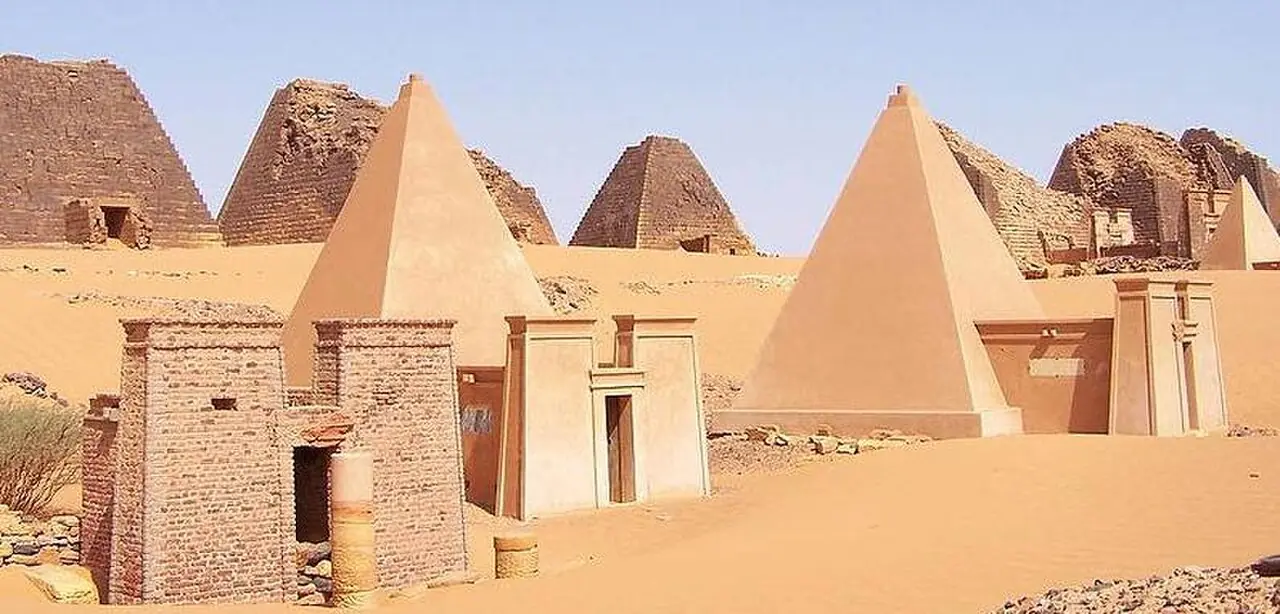 Photo: Wufei07 · Public domain
 Sudan
Published by Adama Doumbia, founder of Afrique Unie · updated 28 November 2026 · our method and sources
Why go to Sudan
Let us begin with what matters most: since April 2023, Sudan has been torn apart by a war between the regular army and the Rapid Support Forces. The conflict has claimed a huge number of lives, caused one of the worst humanitarian and displacement crises in the world, and devastated Khartoum. Foreign ministries formally advise against all travel. Check your government's official travel advice, and read these pages as a way of getting to know the country and keeping alive the wish to discover it one day, when peace allows.
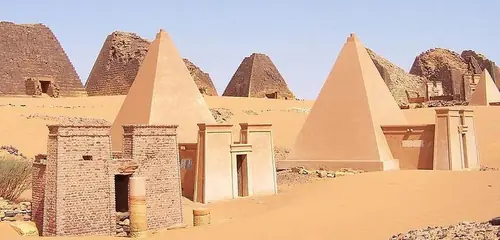
Because Sudan is one of the great overlooked countries of human history. It was here, along the Nile, that the kingdoms of Kush, Kerma, Napata and Meroë flourished, whose rulers at one point reigned over Egypt itself. The country has more pyramids than its northern neighbour: smaller and steeper, clustered by the dozen among the dunes, they give a sense of discovery that no Egyptian site can offer any more. Before the war, you could walk alone at Meroë and hear nothing but the wind in the sand.
Add to this heritage the shores of the Red Sea, with some of the best-preserved reefs in the region, and above all Sudanese hospitality, which every traveller describes as exceptional: you are offered tea, a meal and sometimes a bed for the night, with nothing expected in return. The Sufi ceremonies of Omdurman, the markets of the north and the Nubian villages with their painted doors make up a country of deep humanity. When the situation allows, Sudan will fully deserve to be rediscovered; until then, many humanitarian organisations are supporting its people.
History and culture
From the 3rd millennium BC, the Kingdom of Kerma dominated Nubia. Later, the kings of Napata, at the foot of Jebel Barkal, conquered Egypt in the 8th century BC and formed the 25th Dynasty, that of the Black Pharaohs, including Piye and Taharqa. Pushed back southwards, the Kushites then founded the Kingdom of Meroë, which prospered until the 4th century AD. Christian Nubian kingdoms such as Makuria succeeded it for almost a thousand years.
Islam spread gradually, and the Funj Sultanate dominated the centre of the country from the 16th century. In the 19th century, the Egypt of Muhammad Ali conquered the region, before the uprising of the Mahdi, who took Khartoum in 1885. The country then came under the Anglo-Egyptian Condominium until independence in 1956. Civil wars and military regimes followed, then the secession of South Sudan in 2011, the 2019 revolution and the war of 2023.
8 experiences not to miss in Sudan
- 01The pyramids of Meroë at sunriseWhen travel becomes possible again, watching the pyramids of the royal necropolis emerge from the dunes at dawn will remain a rare moment.
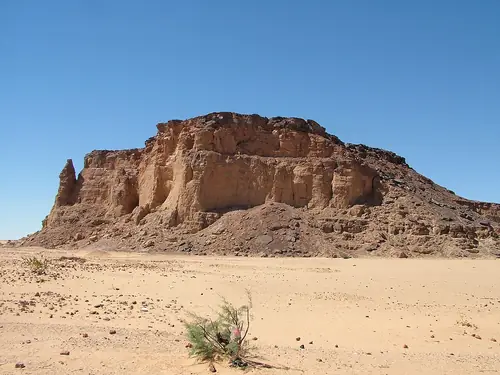
- 02Jebel BarkalClimb to the top of the sacred mountain of Napata to see the Nile, the temples and the pyramids at sunset.
- 03The Sufi ceremony in OmdurmanBefore the war, late on Friday afternoons, the dervishes of the Hamed el-Nil brotherhood whirled to the sound of drums near a mausoleum.
- 04The confluence of the two NilesIn Khartoum, the Blue Nile and the White Nile meet, each keeping its own colour for a few hundred metres.
- 05The temples of Naqa and Musawwarat es-SufraThese isolated Meroitic sites in the savannah blend Egyptian, Greek and African influences.
- 06The old town of SuakinA former Ottoman port built of coral stone, now in ruins, near Port Sudan.
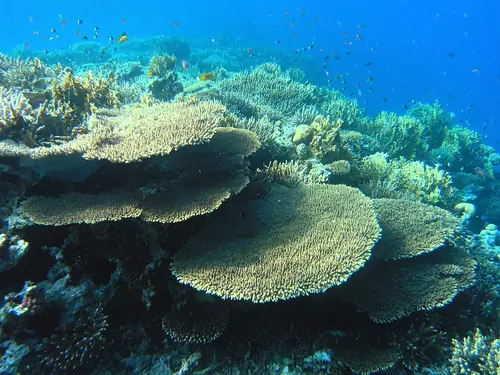
- 07Diving the Red Sea reefsSudanese waters shelter pristine reefs, sharks and historic wrecks, far from the crowds.
- 08Sudanese coffeeJebena, a ginger-spiced coffee served from a clay pot, is shared with those who welcome you.
When to go to Sudan
In peacetime, the best period to visit Sudan runs from November to February, when temperatures are bearable in the northern desert and in Khartoum, with hot days and cool nights. From March the heat becomes very intense, often exceeding 40°C, and summer is extremely hot. The rainy season, from July to September, mainly affects the centre and south and can bring sandstorms, known as haboobs, to Khartoum. For diving in the Red Sea, autumn and spring are the best seasons. This information applies to the post-conflict period.
Getting around
During the war, moving around Sudan is extremely dangerous, and Khartoum airport has been badly damaged. Before the conflict, travellers combined tarmac roads along the Nile, desert tracks and four-wheel-drive vehicles with drivers, as the archaeological sites are often far from the towns. Travel and photography permits were required and obtained in Khartoum. If travel became possible again, going through a reputable local agency would probably be essential. For now, refer exclusively to your government's official travel advice.
Etiquette and customs
Sudanese society is very welcoming and conservative. Modest dress is expected of everyone, and women often cover their hair in religious places. Hospitality is sacred: turning down tea or a meal can be badly received, while accepting at least a sip is a sign of respect. Greetings are long and warm, with a handshake between men. Avoid photographing people, official buildings or infrastructure without permission. People eat with their right hand, often from a shared dish. Politics and the conflict should be approached with great delicacy, and only if the person you are talking to wishes to.
Food and drink in Sudan
Sudanese cooking is simple, filling and made for sharing. Ful medames, stewed fava beans seasoned with sesame oil, cumin, white cheese or egg, is served for breakfast with bread. Kisra, a thin, slightly sour flatbread of fermented sorghum, accompanies the stews known as mullah, made with okra, dried meat or vegetables. Asida, a thick paste of sorghum or millet, is served with a sauce. Also try peanut salad and grilled Nile fish, and to drink, karkadé, an infusion of hibiscus, and jebena, a ginger-spiced coffee that is a ceremony in its own right.
 Algeria
 Egypt
 Libya
 Morocco
 Tunisia