Tunisia is the smallest country in the Maghreb, and that is its great strength: within a few hours' drive you go from a World Heritage medina to a Roman amphitheatre, from a fine sandy beach to a mountain oasis, from a fishing village to the first dunes of the Sahara. Just over two hours' flight from many European cities, it lends itself as well to a long cultural weekend in Tunis as to a grand two-week tour from north to south.
People often come for the sea, and rightly so: the Gulf of Hammamet, the Sahel beaches around Sousse and Monastir, the turquoise waters of Djerba and the wilder coves of Cap Bon and Tabarka offer swimming from May to October. But reducing Tunisia to its beach resorts would mean missing the essentials. The country is packed with exceptional ancient heritage, including Carthage, Dougga, El Jem, Bulla Regia and Sbeitla, and with living medinas such as those of Tunis, Sousse, Sfax and Kairouan, the holy city of a thousand domes.
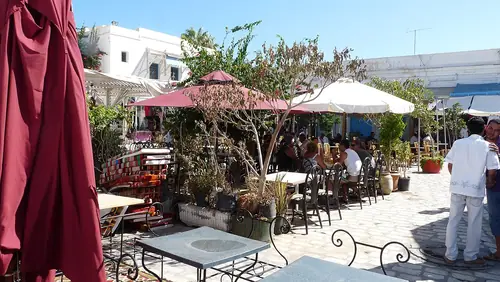
What strikes you most is the easy-going way of life. Tunisians take time over coffee, a shisha on a café terrace and the family evening stroll. Conversation flows easily, often in French, with humour and curiosity. Since the 2011 revolution the country has been through mixed years, but the welcome remains warm, and independent travel, by louage, train or hire car, is straightforward. For a first, accessible and varied trip to North Africa, Tunisia is an excellent starting point, and for regulars the south and the interior still hold plenty of surprises.
History and culture
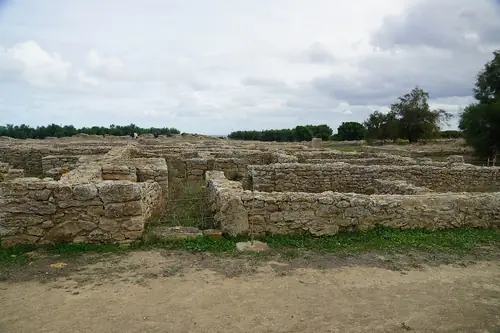
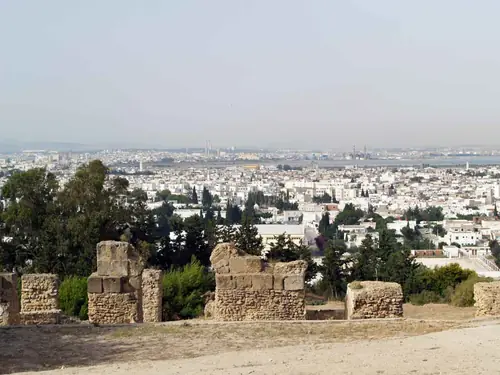
According to tradition, Carthage was founded in the 9th century BC by Phoenician settlers from Tyre. It became a maritime power and a rival to Rome, which destroyed it in 146 BC at the end of the Punic Wars before rebuilding it. The Roman province of Africa then flourished, as Dougga, El Jem and some of the finest mosaics in the world bear witness. The Vandals and then the Byzantines followed, before the Arab conquest in the 7th century and the founding of Kairouan.
Under the Aghlabids, Fatimids, Zirids and then the Hafsids, Tunis became a great capital. In the 16th century the region entered the Ottoman orbit, and the Husainid beys later ruled with a high degree of autonomy. The French protectorate began in 1881; independence came in 1956, driven by Habib Bourguiba, who proclaimed the republic the following year. In 2011 the Tunisian revolution set off the wave of Arab Spring uprisings.
8 experiences not to miss in Tunisia
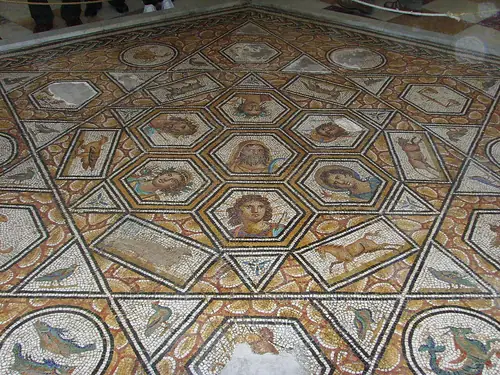
Photo : Effi Schweizer · Public domain01The mosaics of the Bardo MuseumHoused in a beylical palace, the Bardo holds one of the richest collections of Roman mosaics in the world.
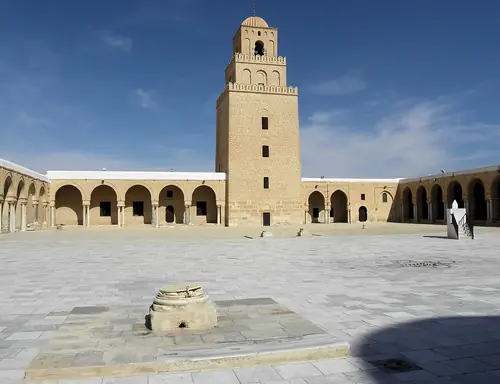
Photo : Keith Roper · CC BY 2.002Kairouan, the holy cityVisit the Great Mosque, whose courtyard is open to non-Muslims, then taste the honey-soaked makrouds of the medina.
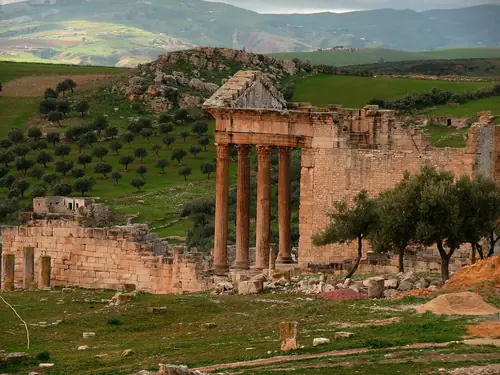
Photo : damian entwistle · CC BY-SA 2.003Dougga among the olive treesThis hilltop Roman city, remarkably complete and often quiet, offers temples, a theatre and houses set among the fields.
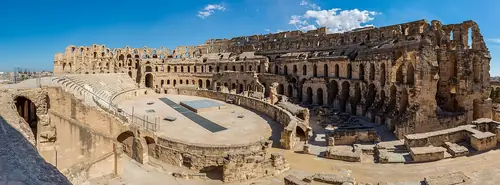
Photo : Diego Delso · CC BY-SA 4.004A performance at El JemIf the dates work out, catch a concert in the Roman amphitheatre during the summer symphonic music festival.
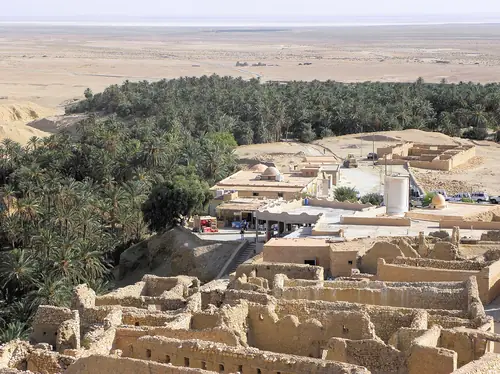
Photo : Keith Roper · CC BY 2.005The mountain oasesChebika, Tamerza and Midès, near the Algerian border, combine canyons, waterfalls and abandoned stone villages.
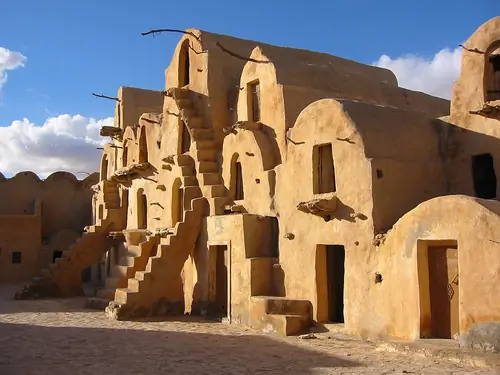
Photo : Ian Sewell · CC BY 2.506The ksour of the southAround Tataouine and Medenine, the honeycombed fortified granaries, such as Ksar Ouled Soltane, have inspired filmmakers.
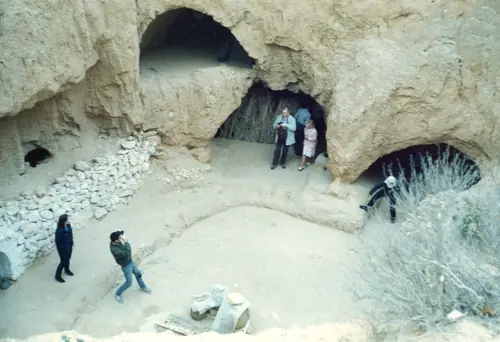
Photo : Robert Linsdell · CC BY 2.007A night in a troglodyte house in MatmataThese homes dug into the ground around a circular courtyard are a curiosity unique to southern Tunisia.
Photo : Noomen9 · CC008Cap Bon in springA peninsula of orchards, vineyards and coves, with the pottery of Nabeul and the Punic site of Kerkouane.
When to go to Tunisia
April, May and June are perfect for combining sightseeing with your first swims: the countryside is still green and the ancient sites are in flower. July and August are hot, very busy on the coast and enlivened by many festivals; the south becomes stifling. September and October are ideal for the sea, which is still warm, and there are fewer people about. From November to March the north is cool and rainy, but this is the best time for the desert, with mild days and cold nights. Ramadan, which shifts every year, changes the pace of daily life.
Getting around
SNCFT trains link Tunis with the Sahel, Sfax, Gabès and a few inland towns; they are cheap and sometimes slow. Louages, white shared minibuses with coloured stripes, leave as soon as they are full and serve the whole country: they are the most flexible and popular way to get around. Tunis has a light metro and the TGM, a train linking the centre with La Goulette, Carthage, Sidi Bou Said and La Marsa. For the south, a hire car lets you reach the oases and ksour at your own pace. Domestic flights link Tunis with Djerba and Tozeur.
Etiquette and customs
Tunisia is one of the most liberal countries in the Arab world, but modesty is still expected away from the beaches: cover your shoulders and knees in the medina and in mosques, most of which are not open to non-Muslims, with the courtyard of Kairouan's Great Mosque the exception. Take your time over greetings, and don't turn down an offered coffee. In the souks, bargaining is done good-humouredly. During Ramadan, be discreet during the day. French is widely spoken, but a few words of Tunisian Arabic, such as “aslema” for hello or “yaïchek” for thank you, always go down well.
Food and drink in Tunisia
Tunisian cooking loves heat, thanks to harissa, the chilli paste now on UNESCO's list of intangible cultural heritage. Fish couscous, typical of the coast, is flavoured with grouper or sea bream. Brik, a crisp pastry parcel holding a runny egg, tuna and parsley, is eaten with your fingers while trying not to let anything drip. Lablabi, a chickpea soup poured over stale bread with cumin, olive oil and an egg, warms up winter mornings. Also try ojja with merguez, salade méchouia, kafteji, grilled fish at the harbour, mloukhia with beef and, for dessert, the makrouds of Kairouan and tea with pine nuts.
The best time to visit Tunisia: April to June, September to October.
What should I see first in Tunisia?
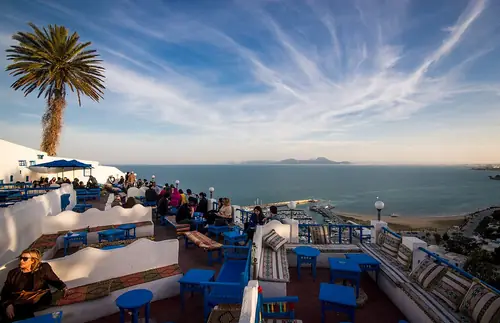
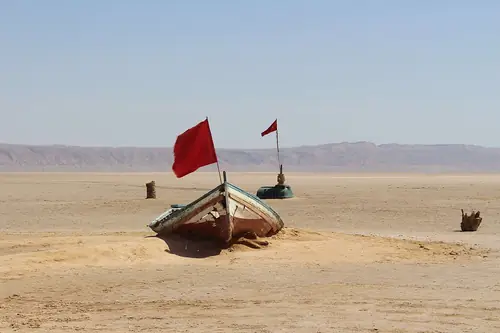
The must-sees: Carthage, Amphitheatre of El Jem, Sidi Bou Said, Chott el Djerid and Tozeur.
Which cities should I visit in Tunisia?
Tunis, Sousse, Djerba. The capital is Tunis.
How much should I budget for a trip to Tunisia?
Budget: around €30–60 per person per day, excluding flights. This is only a guide and depends above all on the accommodation and activities you choose.
What currency and languages are used in Tunisia?
Currency: Tunisian dinar (TND). Languages: Arabic, French.
How do I get to Tunisia?
The main international airport has the code TUN. Compare flights with the ‘Flights’ button on this page.
Do I need a visa to visit Tunisia?
Entry requirements depend on your nationality and change regularly. Check them on the country's official website or with your foreign ministry before booking, and make sure your passport is valid.
What should I eat in Tunisia?
Dishes to try while you're there: Fish couscous, brik, lablabi.
Louages, shared minibuses that leave once full, link every town and are the most common way to travel. SNCFT trains serve the coastal route Tunis–Sousse–Sfax–Gabès, and the Métro du Sahel connects Sousse, Monastir and Mahdia. Djerba is reached via the Roman causeway at El Kantara, by the Jorf–Ajim ferry, or by air from Tunis; domestic flights also serve Tozeur. Ride-hailing apps operate in Tunis, though their legal status keeps changing; car rental is common and driving is on the right.
Health and safety
Yellow fever
No certificate required on entry; vaccine generally not recommended.
Malaria
No transmission reported.
Water and food
Unless your accommodation says otherwise, drink sealed bottled or filtered water, and wash your hands often.
Sources: France Diplomatie, Viaggiare Sicuri, Belgian Foreign Affairs, GOV.UK, checked in November 2026. All 54 countries
Entry requirements (visas, vaccinations) and security conditions change regularly: check them with the official authorities before booking. Official tourism website: Office national du tourisme tunisien.
Affiliate cookiesWe would like to load a script from our partner Travelpayouts. It may set cookies so that we receive a commission when you book through our links, at no extra cost to you. If you decline, the site works in exactly the same way. Find out more
 AfriqueUnie
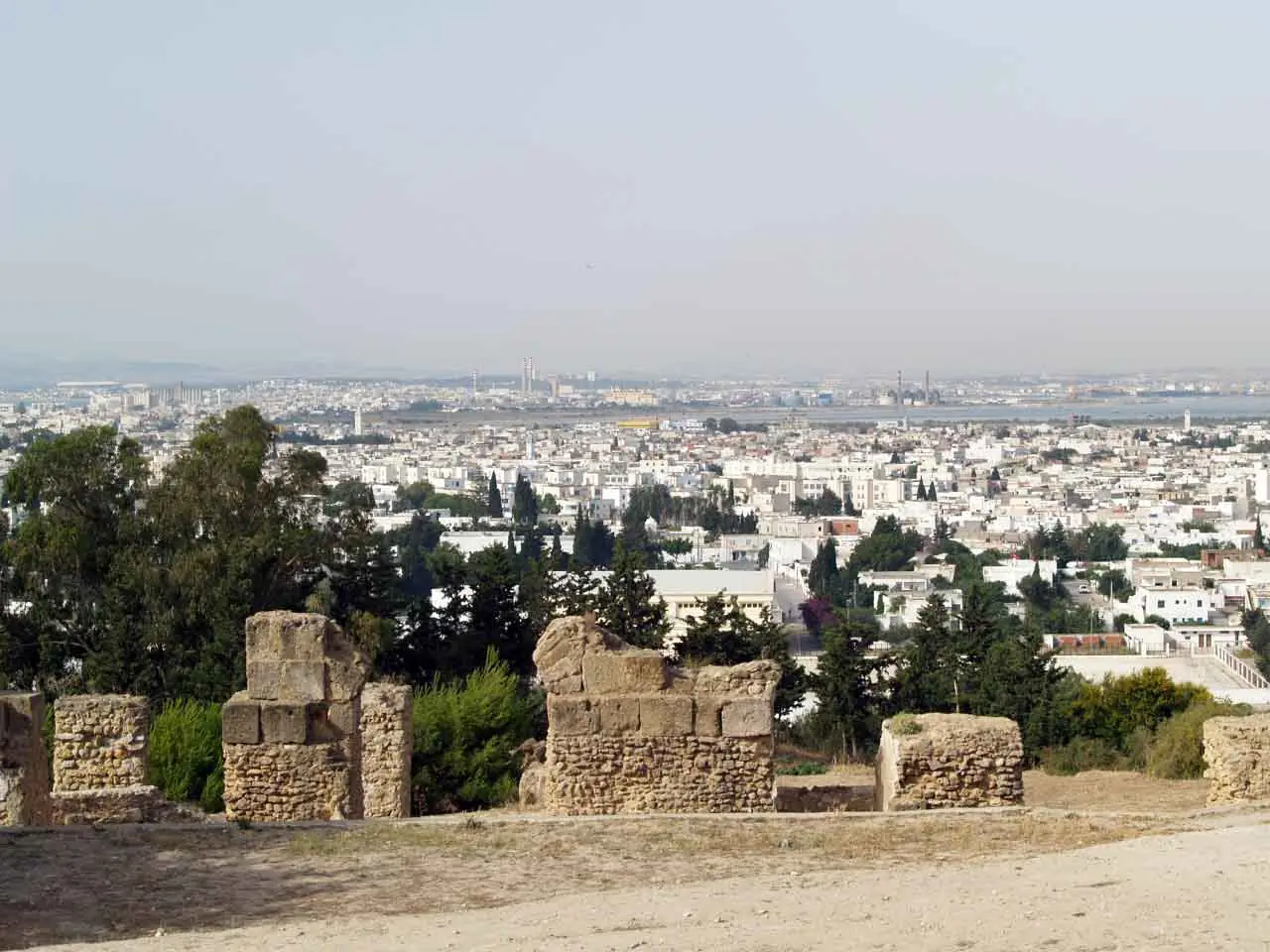 Photo: Profburp · Public domain
 Tunisia

 Tunisia or Egypt
 Tunisia or Algeria
 Libya
 Sudan