 AfriqueUnie
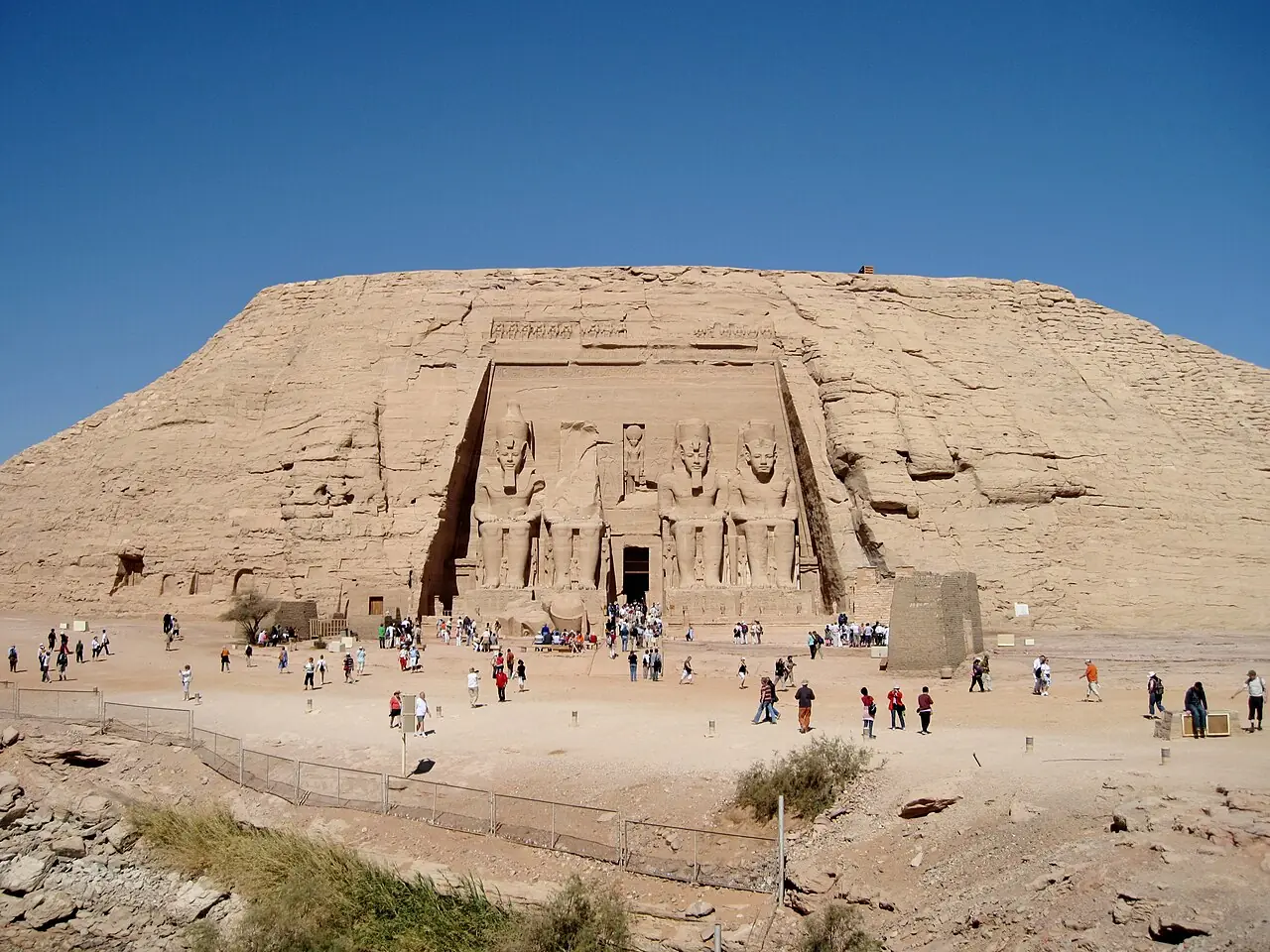 Photo: Olaf Tausch · CC BY 3.0
Published by Adama Doumbia, founder of Afrique Unie · updated 28 November 2026 · our method and sources
What to expect
Twice a year, around 22 February and 22 October, a remarkable phenomenon occurs in the Great Temple of Abu Simbel. At sunrise, the first rays pass through the temple entrance and travel some sixty metres through the halls carved into the rock to reach the sanctuary. There they light up three of the four seated statues at the back: Amun-Ra, the deified Ramesses II and Ra-Horakhty. The fourth, Ptah, a god associated with the underworld, remains in shadow.
According to a widespread theory, these dates corresponded to key moments of Ramesses II's reign, such as his birthday and his coronation, but this remains debated. We also know that moving the temple in the 1960s shifted the phenomenon by about a day. Around the event, the village of Abu Simbel comes alive with Nubian music and dancing, markets and festivities, drawing Egyptians and visitors from all over the world in a joyful, popular atmosphere.
Frequently asked questions
When is the Abu Simbel sun festival in 2027?
The sun lights up the sanctuary of the Great Temple around 22 February and 22 October: in 2027 the expected dates are 22 February and then 22 October. The last occurrence was on 22 October 2026. These dates are calculated from the usual phenomenon, so check the site's opening times with the Egyptian authorities.
How do I get to Abu Simbel from Aswan?
Abu Simbel is about 230 km south-west of Aswan as the crow flies, or around 300 km by road. Allow roughly three to four hours: excursions usually leave Aswan in the middle of the night to arrive before dawn. You can also fly to Abu Simbel Airport, 2 km from the village. Book well ahead, as places are in high demand on these days.
How long does the illumination of the sanctuary last?
The sunbeam lights the statues at the back for just a few minutes at sunrise. As only small groups can enter the sanctuary at a time, you need to queue before dawn. If you cannot get in, ask on site, as screens are sometimes set up outside to relay the phenomenon.
Is it safe to travel to Abu Simbel?
The UK does not advise against Abu Simbel, which is one of the exceptions to its Western Desert travel advice, but it says terrorist attacks are likely in Egypt and urges vigilance in crowds. French official advice strongly warns against the road to Sudan south of Abu Simbel and advises against the desert area west of the site unless essential. Stick to the usual tourist routes.
What else is there to see at Abu Simbel?
Next to the Great Temple of Ramesses II stands the smaller temple dedicated to Hathor and Queen Nefertari. Both monuments were dismantled and rebuilt higher up in the 1960s to escape the waters of Lake Nasser, a feat explained very well at the Nubian Museum in Aswan. Bring a jacket for the pre-dawn wait, which is often chilly in February.
Dates vary from year to year: confirm them with the organisers before booking.
 Mali
 Cape Verde
 Tanzania